Primary & Middle School Physics · Grades 1–9
19Sound Around Us
Hum your favorite song — and while you hum, lay two fingers gently on the front of your throat. Feel that trembling? You have just touched a sound at its birthplace. Every voice, every drum, every squeaky door makes its sound the very same way, and this chapter goes hunting for the trick.
19.1 Where sounds are born
Definition 19.1 (Vibration)
A vibration is a very fast trembling — a back-and-forth movement repeated many times each second, often too fast for the eye to follow. A plucked guitar string vibrates: you see only a blur, but your fingertip feels the buzzing.
Definition 19.2 (Sound)
A sound is what we hear when something vibrates and its trembling travels through the air to our ears. The vibrating thing is the sound’s source — a string, a drum skin, a bell, your own throat.
Method 19.3 (Making rice dance)
To see a sound being born:
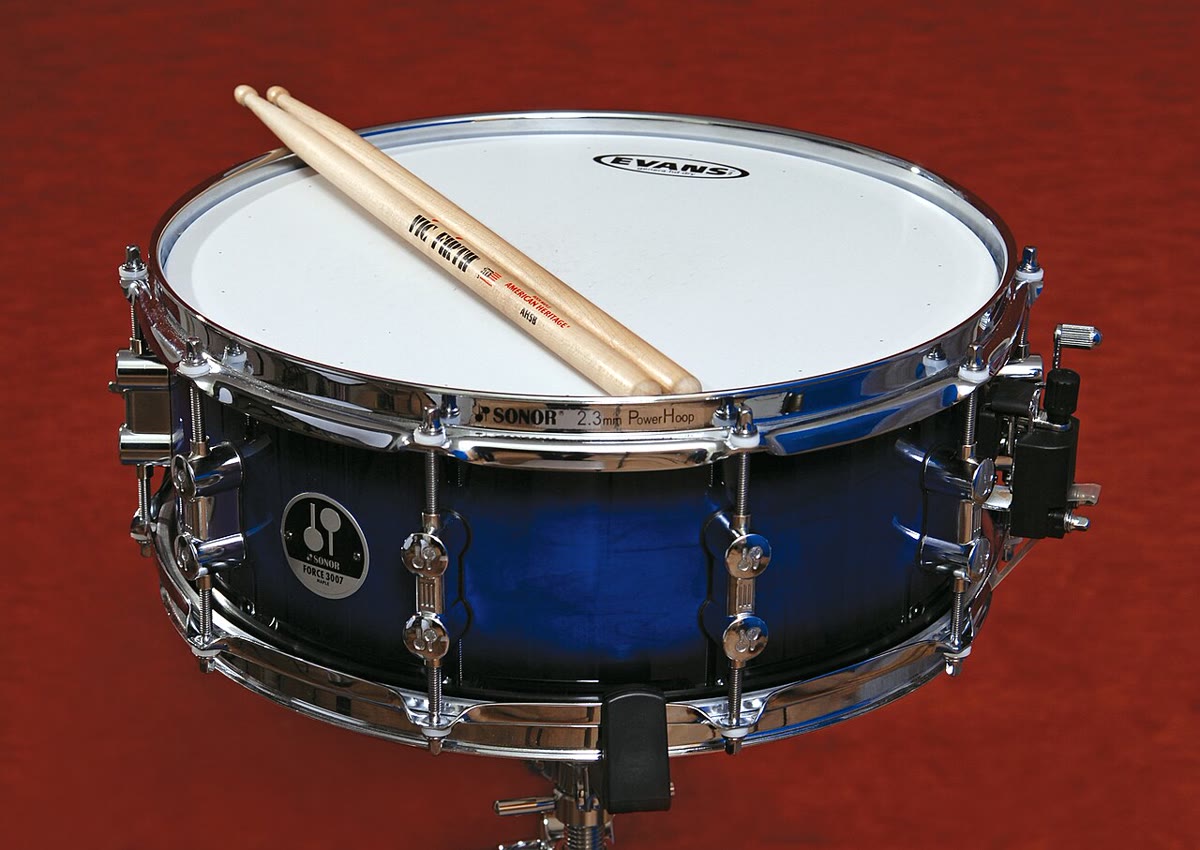
- scatter a few grains of rice on the skin of a drum (or on a tin’s plastic lid, or a stretched balloon skin);
- tap the skin near the grains — boom: the grains jump!
- now only shout at the skin from very close: the grains tremble again, without being touched.
The skin vibrates whenever it sounds — and even a sound arriving from your mouth sets it trembling.
Proposition 19.4 (No vibration, no sound)
Every sound comes from a vibration — and when the vibration stops, the sound stops with it, instantly. Strike a cymbal and let it ring; then grab it firmly with both hands: silence, the moment your grip stops the trembling.
Example 19.5 (Sound sources everywhere)
Hunt the vibration behind each sound: the guitar — plucked strings tremble; the drum — the struck skin trembles; your voice — two little folds in your throat tremble as air from your lungs rushes past (that is the buzz your fingers felt); the buzzing fly — its wings tremble hundreds of times a second; the slammed door — the whole door and its frame shudder for a moment.
19.2 Loud and quiet, high and low
Example 19.6 (Loud is a big trembling)
Pluck a stretched rubber band gently: a small blur, a quiet twang. Pluck it hard: a wide blur, a loud twang. The harder the source trembles — the wider its back-and-forth — the louder the sound. Watch the rice grains too: a gentle tap makes them shiver, a mighty boom throws them in the air.
Example 19.7 (High and low)
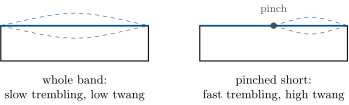
Stretch a rubber band over an open box and pluck; then pinch it in the middle and pluck the short half: the twang turns higher, like a bird’s chirp. Short, tight, thin things tremble faster and sing high; long, loose, thick things tremble slower and sing low. That is why the little flute chirps and the big tuba growls — and why the guitar’s thinnest string sings highest.
Remark 19.8 (Protect the little drum in your ear)
Deep in your ear, a tiny skin — thinner than paper — trembles with every arriving sound, just like the rice-grain drum. Sounds that are too loud shake it too hard: very loud music, machines and fireworks can damage it for good, and it does not grow back. Cover your ears near loud noise, and never shout into anyone’s ear — ears have no eyelids.
19.3 From the source to the ear
Example 19.9 (The journey of a clap)
A friend claps across the playground. The clap sets the air trembling; the trembling spreads out through the air in every direction, like the rings around a pebble dropped in a pond; some of it reaches your ear and sets your ear’s little skin trembling — and you hear the clap. Source, journey, ear: every sound you have ever heard made this trip. How fast is the journey, and what can it travel through? Next year’s sound chapter takes exactly those questions.
19.4 Exercises
Exercise 19.1 ★
What is a vibration? Name the vibrating part in: a guitar; a drum; your voice; a buzzing fly.
Solution
Solution of Exercise 19.1.
A very fast back-and-forth trembling. Guitar: the plucked string. Drum: the struck skin. Voice: the two little folds in the throat. Fly: its beating wings.
Exercise 19.2 ★
In the rice experiment, what do the jumping grains prove about a sounding drum skin?
Solution
Solution of Exercise 19.2.
That a sounding skin is a trembling skin: the grains jump because the skin under them moves rapidly up and down — even when only a shout, not a touch, sets it going.
Exercise 19.3 ★
Why does grabbing a ringing cymbal silence it instantly? Which law of the chapter is at work?
Exercise 19.4 ★
To make the rubber band twang louder, what do you change about your pluck? What does the blur of the band look like then?
Solution
Solution of Exercise 19.4.
Pluck harder: the band swings wider — a wider blur — and the twang is louder. Bigger trembling, bigger sound.
Exercise 19.5 ★
Which sings higher: the short pinched band or the whole band? The little flute or the big tuba? The guitar’s thinnest or thickest string?
Solution
Solution of Exercise 19.5.
The short pinched band; the little flute; the thinnest string. Short, small, thin things tremble faster and sing higher.
Exercise 19.6 ★
Hum with your fingers on your throat, then stop humming. What do your fingers feel, and exactly when does the feeling stop?
Exercise 19.7 ★
Tell the journey of a clap from your friend’s hands to your ear, in three steps.
Exercise 19.8 ★
Why must very loud sounds be kept away from ears? What tiny thing inside the ear is in danger, and what does it resemble from this chapter?
Solution
Solution of Exercise 19.8.
Very loud sounds shake the ear’s tiny skin — the ear’s own rice-grain drum, thinner than paper — hard enough to damage it for good; it never grows back.
Exercise 19.9 ★
A music box’s comb has teeth of different lengths. Which teeth play the high notes and which the low ones? Answer with the rule of Example 19.7.
Solution
Solution of Exercise 19.9.
The short teeth play the high notes, the long teeth the low ones: short things tremble faster and sing higher.
Exercise 19.10 ★★
Pour water into a glass bottle and blow across its mouth: a hoot! Add more water and blow again: the hoot turns higher. What is trembling to make the hoot — the glass, the water, or the air inside? Use the short-sings-high rule to defend your answer.
Solution
Solution of Exercise 19.10.
The air inside the bottle is the trembler — your breath sets it shivering. Adding water leaves a shorter column of air above the water, and short sings high: that is why the hoot rises. If the glass itself were the singer, adding water would hardly change the note.
Exercise 19.11 ★★
Maya says: “When the television is on mute, the screen still moves — so movement alone must make sound.” Use Definition 19.2 and the rice experiment to explain what kind of movement makes sound, and why the pictures on a screen make none.
Solution
Solution of Exercise 19.11.
Sound needs a vibration: a to-and-fro trembling fast enough to shake the air, like the drum skin that made rice dance. The pictures on a muted screen change, but nothing there trembles the air — changing colors shake nothing, so there is nothing for an ear to catch.