 Coach
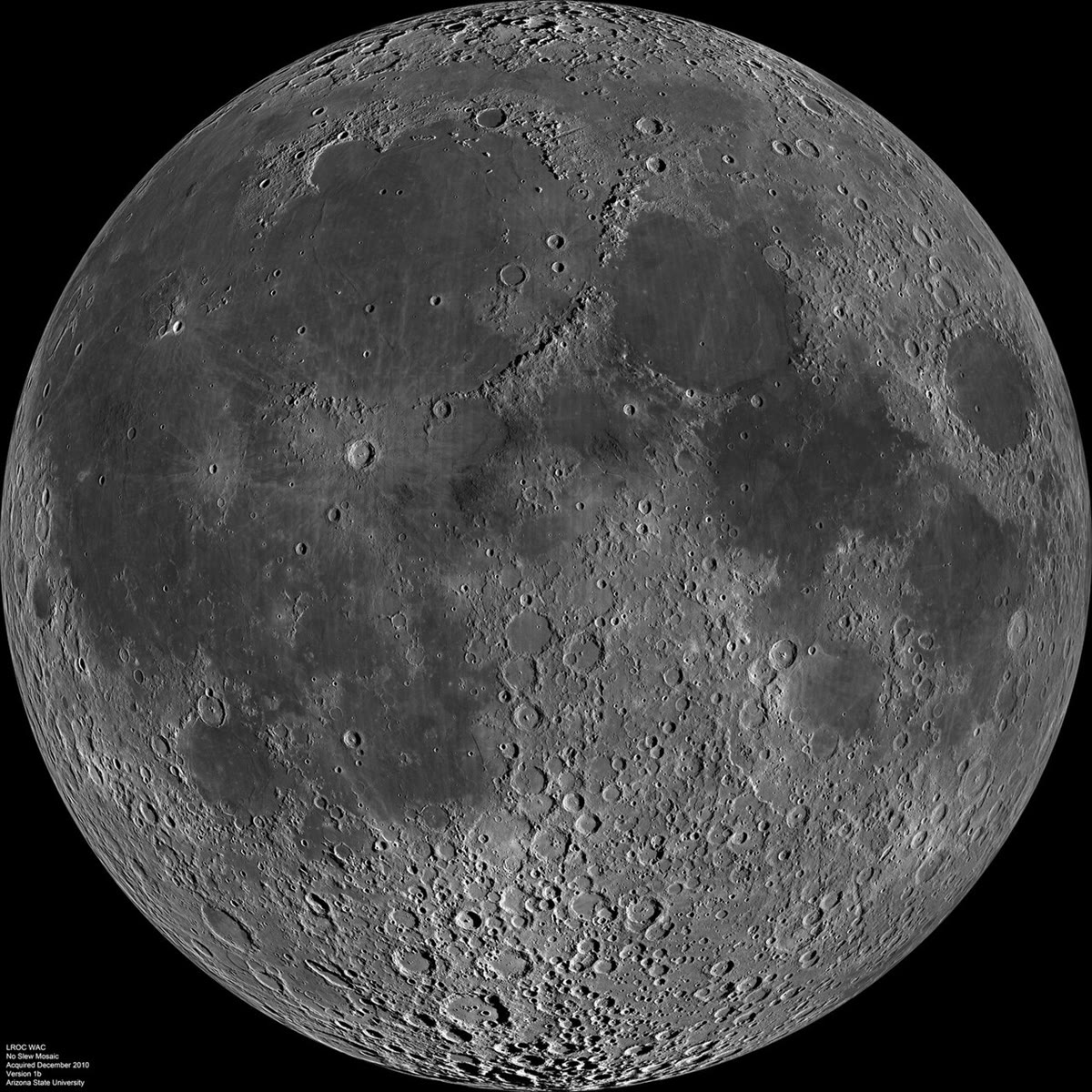
CoachThe Moon is a huge ball of gray rock that travels around the Earth, our faithful companion in space. It is much smaller than the Earth, and very far away — farther than any airplane flies, so far that the astronauts who visited it traveled for three days to get there.
Examples
Example 11.2 (Looking closely)
To the plain eye the Moon shows pale patches and bright zones — some people see a face in them. Through binoculars (a wonderful thing to try on a full-moon night) the patches sharpen into plains and round craters, bowl-shaped scars left by rocks from space that crashed there long ago. The Moon keeps its scars forever: it has no wind and no rain to wipe them away — indeed it has no air at all. No air also means a silent world: on the Moon, even a shout makes no sound.
Example 11.3 (The Moon that follows you)
Walk down the street on a moonlit evening: houses and trees slide past, but the Moon seems to follow you, always at your shoulder. It is not really chasing you — it is so far away that walking a whole street changes your view of it not at all, while the nearby houses change all the time. Very distant things seem to follow every traveler; the Moon does it best because it is the champion of far.
Example 11.4 (Moonlight is reflected sunlight)
Is the Moon a light source? Remember the test from last year: does it make its own light? It does not — the Moon is a ball of dark rock, like a huge pebble in the sky. What we call moonlight is sunlight reflected by that rock — bounced back toward us, the way a white wall lights a room without being a lamp. The Sun lights the Moon bright on one side; we see whatever part of that bright side faces us.