Primary & Middle School Physics · Grades 1–9
11The Moon in the Sky
Some evenings a thin silver smile hangs over the rooftops; two weeks later, a full round lantern floods the garden with pale light. It is the same Moon — our closest neighbor in the sky, and the only other world people have ever walked on. Time to get properly acquainted.
11.1 Our neighbor in the sky
Definition 11.1 (The Moon)
The Moon is a huge ball of gray rock that travels around the Earth, our faithful companion in space. It is much smaller than the Earth, and very far away — farther than any airplane flies, so far that the astronauts who visited it traveled for three days to get there.
Example 11.2 (Looking closely)
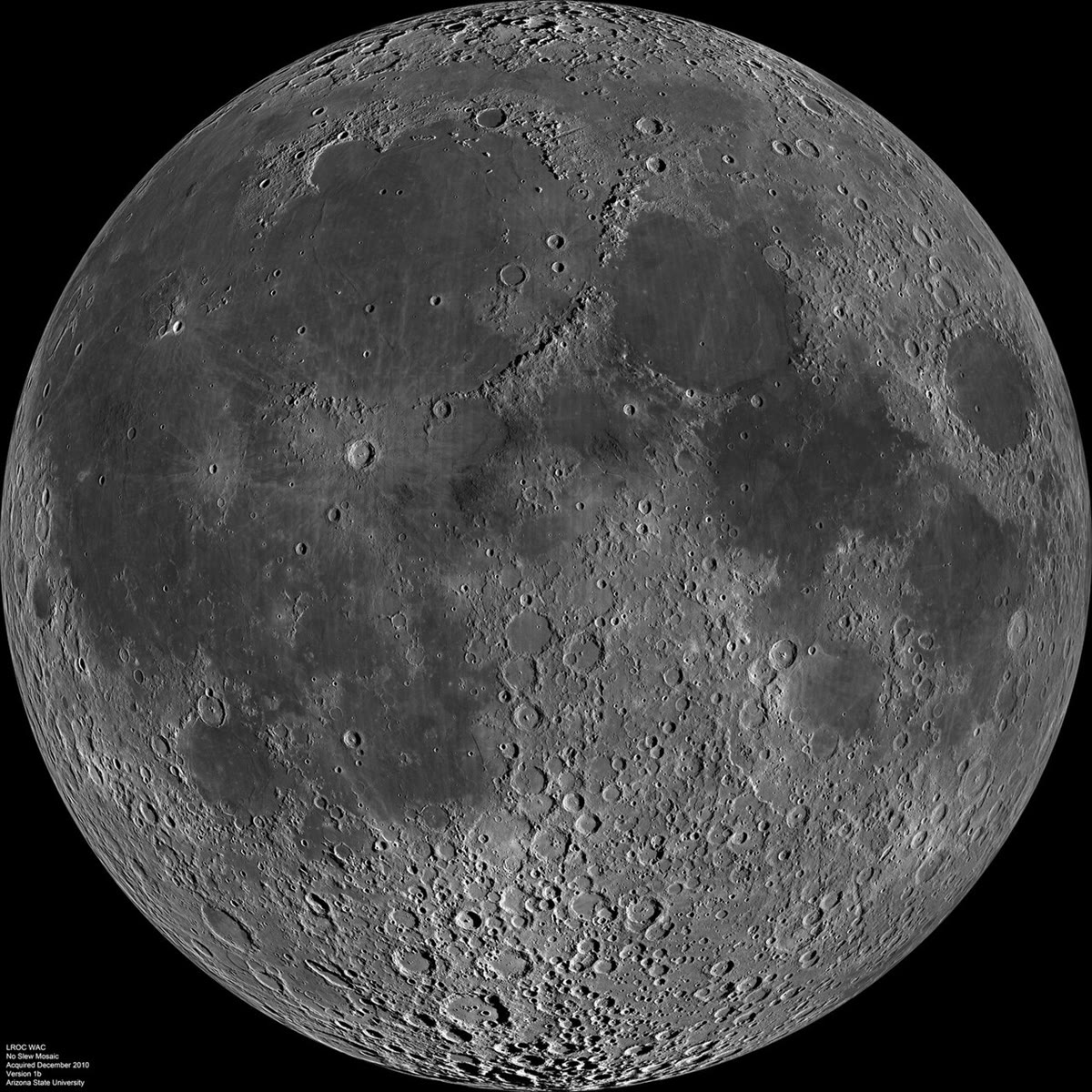
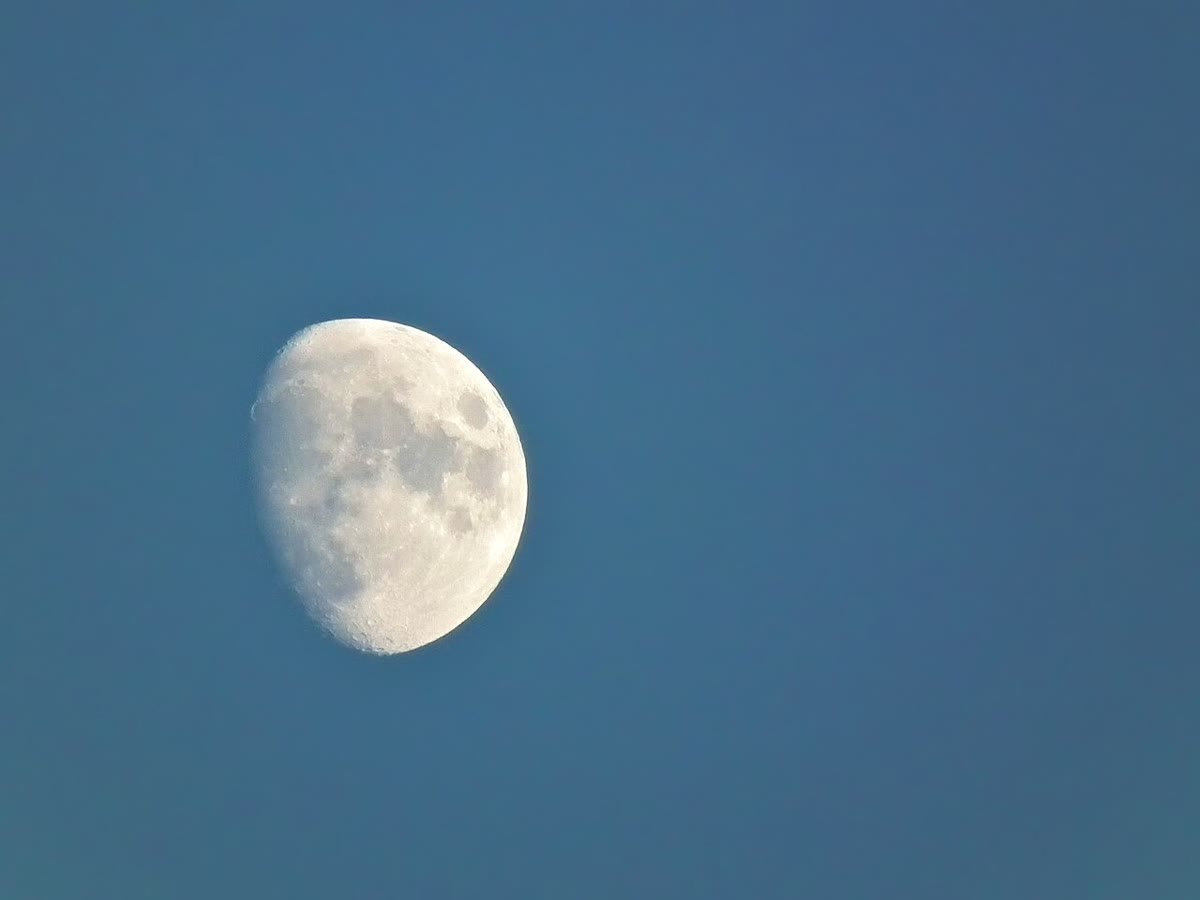
To the plain eye the Moon shows pale patches and bright zones — some people see a face in them. Through binoculars (a wonderful thing to try on a full-moon night) the patches sharpen into plains and round craters, bowl-shaped scars left by rocks from space that crashed there long ago. The Moon keeps its scars forever: it has no wind and no rain to wipe them away — indeed it has no air at all. No air also means a silent world: on the Moon, even a shout makes no sound.
Example 11.3 (The Moon that follows you)
Walk down the street on a moonlit evening: houses and trees slide past, but the Moon seems to follow you, always at your shoulder. It is not really chasing you — it is so far away that walking a whole street changes your view of it not at all, while the nearby houses change all the time. Very distant things seem to follow every traveler; the Moon does it best because it is the champion of far.
11.2 Reflected light
Example 11.4 (Moonlight is reflected sunlight)
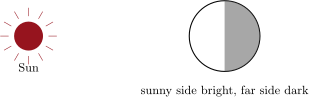
Is the Moon a light source? Remember the test from last year: does it make its own light? It does not — the Moon is a ball of dark rock, like a huge pebble in the sky. What we call moonlight is sunlight reflected by that rock — bounced back toward us, the way a white wall lights a room without being a lamp. The Sun lights the Moon bright on one side; we see whatever part of that bright side faces us.
Remark 11.5 (A daytime Moon)
Many people believe the Moon is a creature of the night — but look up on some afternoons and there it is, a pale ghost in the blue sky! The Moon travels on its own schedule around the Earth and does not care whether it is our daytime or our night. It simply shows less proudly by day, when the Sun’s glare fills the sky.
11.3 The Moon changes shape
Example 11.6 (The Moon’s changing shapes)
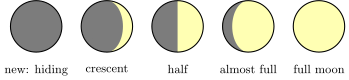
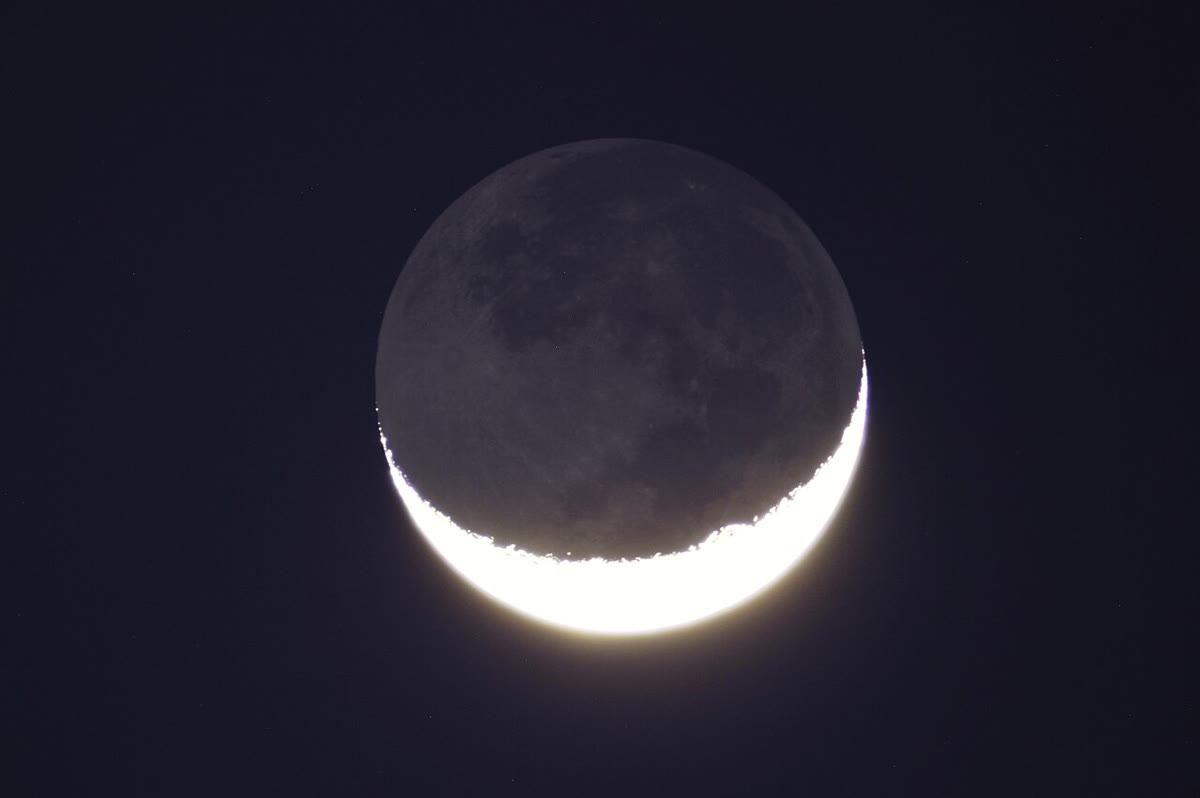
Watch the Moon over many evenings and it changes shape: a thin crescent like a fingernail clipping, then a half-circle, then a fat almost-round shape, then the perfect disc of the full moon — and then back down again, to a crescent facing the other way, until for a night or two the Moon seems to vanish entirely. The whole show takes about a month, and then it repeats, as reliably as day and night.
Method 11.7 (Keeping a Moon diary)
- Each clear evening, at about the same hour, look for the Moon;
- draw the shape you see in a little calendar square — a circle, and shade the dark part;
- if clouds hide it, write “clouds” and keep going;
- after two weeks, lay your drawings in a row.
Your own drawings will show the shape changing, a little more each night. Why the Moon does this is a delicious puzzle — it will be solved properly in a later year of this course, and your diary is the first step of the proof.
11.4 Exercises
Exercise 11.1 ★
Is the Moon bigger or smaller than the Earth? Nearer or farther than the clouds? How do we know people can visit it?
Solution
Solution of Exercise 11.1.
Much smaller than the Earth, and much farther than the clouds — farther than any airplane flies. We know people can visit because astronauts did: the trip took them three days each way.
Exercise 11.2 ★
What are the round bowl-shaped marks on the Moon called, and what made them? Why are they still there after so long?
Exercise 11.3 ★
Is the Moon a light source, like a lamp, or a light-catcher, like a white wall? Where does moonlight really come from?
Exercise 11.4 ★
Which half of the Moon does the Sun light: always the half facing the Sun, always the same half, or a different half at random?
Solution
Solution of Exercise 11.4.
Always the half facing the Sun — the sunny side is bright, the far side is in its own night.
Exercise 11.5 ★
Can the Moon ever be seen in the daytime? If a friend says no, what would convince them?
Solution
Solution of Exercise 11.5.
Yes — on many afternoons a pale Moon hangs in the blue sky. The best proof for a doubting friend: go outside on such an afternoon and point at it.
Exercise 11.6 ★
Name the Moon’s shapes in order, starting from the thin fingernail clipping and ending at the round lantern. About how long does the whole show take before it repeats?
Exercise 11.7 ★
On the Moon there is no air. What would happen to a shout there? And to a kite?
Exercise 11.8 ★
Start the Moon diary of Method 11.7 tonight. What two things must stay the same each evening to make the diary fair?
Solution
Solution of Exercise 11.8.
The same hour and the same honest drawing each evening (same place helps too): a fair diary changes only one thing at a time — the night.
Exercise 11.9 ★★
“The Moon followed our car all the way home!” says little Rosa. Explain to her, with the street-walk of Example 11.3, why very far things seem to follow, while nearby things slide past.
Solution
Solution of Exercise 11.9.
The houses are near, so driving past them changes how Rosa sees them — they slide by and are gone. The Moon is so far that the whole drive changes her view of it not at all: it stays at her shoulder, seeming to follow. The champion of far always “follows”.
Exercise 11.10 ★★
On a crescent night, look carefully: sometimes the dark part of the Moon glows very faintly, so the whole circle can just be guessed. The Sun does not shine on that part — but something else shines nearby. What big, bright, sunlit ball could be lighting the Moon’s dark side, the way the Moon lights our nights? (Hint: you are standing on it.)