
সব বই

পেশাদার

1 Markets I: The Ecosystem and Exchange-Traded Marketsবাজার অনলাইন 2 Markets II: Rates, FX and Creditবাজার অনলাইন 3 Markets III: Commodities, Energy and Cryptoবাজার অনলাইন 4 Quantitative Methodsপদ্ধতি অনলাইন 5 Derivatives and Volatilityডেরিভেটিভস অনলাইন 6 Rates, Credit, XVA and Riskসুদহার, ঋণ ও ঝুঁকি অনলাইন 7 Research Craft: Predictors, Backtests, Measurement, Portfoliosগবেষণা অনলাইন 8 Strategies I: Equities and Futuresকৌশল অনলাইন 9 Strategies II: Volatility, Relative Value, Macro and the Bank Desksকৌশল অনলাইন 10 Microstructure and Executionএক্সিকিউশন অনলাইন 11 Market Making and High-Frequency Tradingমার্কেট মেকিং অনলাইন 12 Machine Learning for Marketsমেশিন লার্নিং অনলাইন 13 Low-Latency Softwareপ্রযুক্তি অনলাইন 14 Networks, Hardware and Trading Infrastructureপ্রযুক্তি অনলাইন 15 Research, Data and Risk Platformsপ্রযুক্তি অনলাইন 16 The Desk and the Firmপ্রতিষ্ঠান অনলাইন 17 The Industry: Firms, Roles and Careersক্যারিয়ার অনলাইন 18 Interviews I: Maths, Probability and Speedক্যারিয়ার অনলাইন 19 Interviews II: Markets, Trading Games and the Final Roundক্যারিয়ার অনলাইন 20 Interviews III: Codeক্যারিয়ার অনলাইন
অ্যাপ পরিচিতি Coach সাইন ইন পড়া শুরু করো

বইগুলো এখনো বাংলা ভাষায় পাওয়া যায় না — ইংরেজি সংস্করণ দেখানো হচ্ছে।

Physics · পরিভাষা

The Moon কী?

অন্য নাম: Moon

Definition 11.1 Primary & Middle School Physics · অধ্যায় 11 — The Moon in the Sky

The Moon is a huge ball of gray rock that travels around the Earth, our faithful companion in space. It is much smaller than the Earth, and very far away — farther than any airplane flies, so far that the astronauts who visited it traveled for three days to get there.
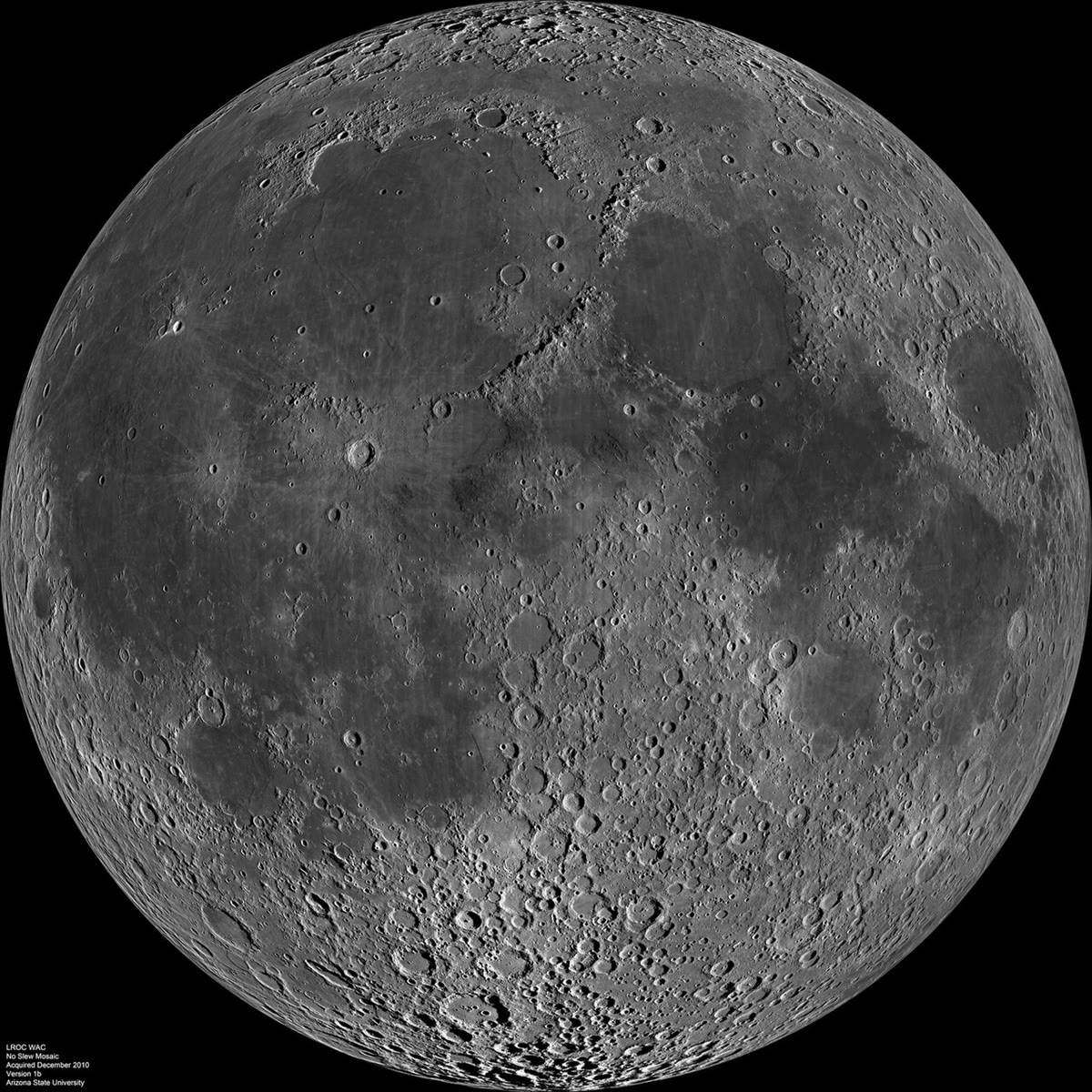
The Moon’s face, photographed from orbit: bowl-shaped craters everywhere, wide dark plains — and no air, no wind, no sound. Photo: NASA/GSFC/Arizona State University.

উদাহরণ

Example 11.2 (Looking closely)

To the plain eye the Moon shows pale patches and bright zones — some people see a face in them. Through binoculars (a wonderful thing to try on a full-moon night) the patches sharpen into plains and round craters, bowl-shaped scars left by rocks from space that crashed there long ago. The Moon keeps its scars forever: it has no wind and no rain to wipe them away — indeed it has no air at all. No air also means a silent world: on the Moon, even a shout makes no sound.

Example 11.3 (The Moon that follows you)

Walk down the street on a moonlit evening: houses and trees slide past, but the Moon seems to follow you, always at your shoulder. It is not really chasing you — it is so far away that walking a whole street changes your view of it not at all, while the nearby houses change all the time. Very distant things seem to follow every traveler; the Moon does it best because it is the champion of far.

Example 11.4 (Moonlight is reflected sunlight)

Is the Moon a light source? Remember the test from last year: does it make its own light? It does not — the Moon is a ball of dark rock, like a huge pebble in the sky. What we call moonlight is sunlight reflected by that rock — bounced back toward us, the way a white wall lights a room without being a lamp. The Sun lights the Moon bright on one side; we see whatever part of that bright side faces us.

প্রসঙ্গসহ পড়ো →