 Coach
CoachAn adaptation is a feature of a living thing’s body or behavior that fits it to the conditions of its environment — to the cold or the drought, to its food, to its hunters. Proposition 11.4 showed animals fitting their habitats; adaptation is that fit, examined piece by piece.
Examples
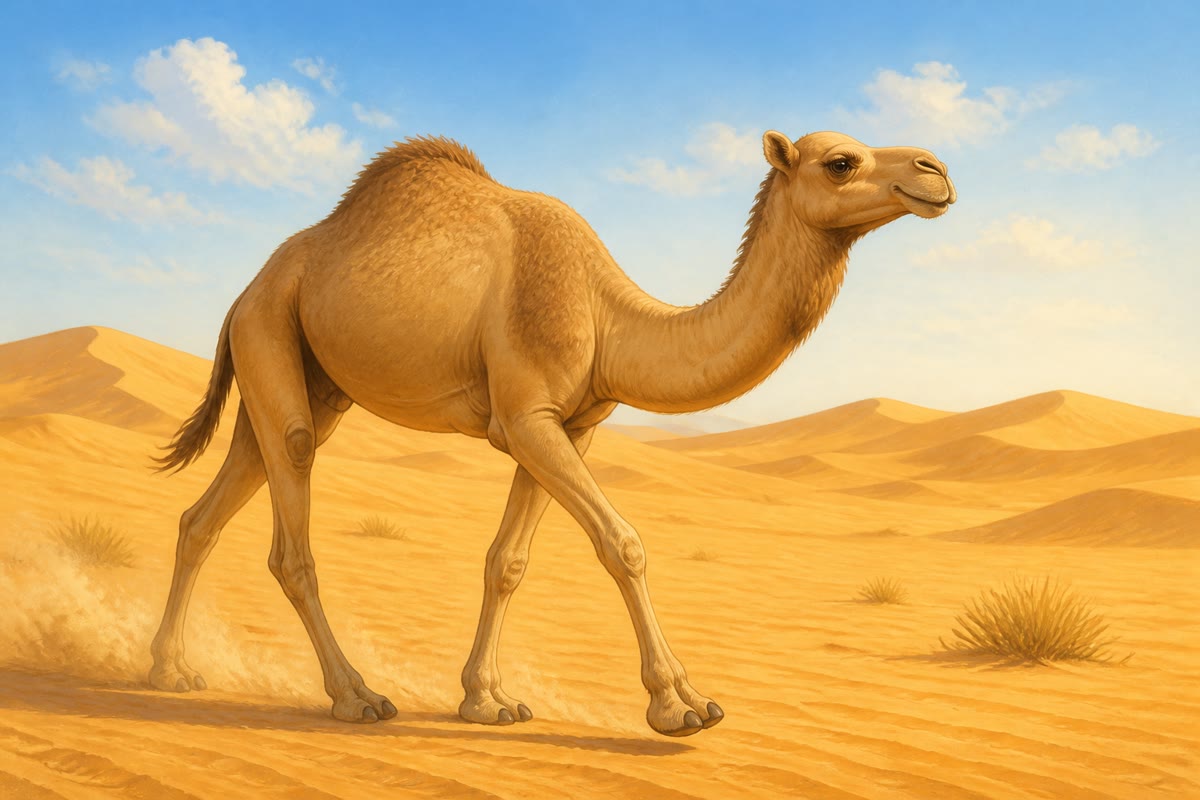
Example 28.2 (The camel, piece by piece)
The desert’s problems: heat, no water, soft sand. The camel’s answers: humps of fat — a food store for lean crossings; the ability to drink a hundred litres in minutes and then go days without; wide two-toed feet that do not sink in sand; nostrils that close against blowing dust and long double eyelashes to match. Every desert problem, met by a feature.
Example 28.3 (The polar bear, piece by piece)
The pack ice’s problems: cold, icy water, prey that is hard to approach on white ice. The bear’s answers: thick fur over a deep layer of fat — double insulation; broad, slightly webbed paws — snowshoes and paddles in one; white coat — invisible against the snow it hunts on. The same exactness, tuned to the opposite world.