
সব বই

পেশাদার

1 Markets I: The Ecosystem and Exchange-Traded Marketsবাজার অনলাইন 2 Markets II: Rates, FX and Creditবাজার অনলাইন 3 Markets III: Commodities, Energy and Cryptoবাজার অনলাইন 4 Quantitative Methodsপদ্ধতি অনলাইন 5 Derivatives and Volatilityডেরিভেটিভস অনলাইন 6 Rates, Credit, XVA and Riskসুদহার, ঋণ ও ঝুঁকি অনলাইন 7 Research Craft: Predictors, Backtests, Measurement, Portfoliosগবেষণা অনলাইন 8 Strategies I: Equities and Futuresকৌশল অনলাইন 9 Strategies II: Volatility, Relative Value, Macro and the Bank Desksকৌশল অনলাইন 10 Microstructure and Executionএক্সিকিউশন অনলাইন 11 Market Making and High-Frequency Tradingমার্কেট মেকিং অনলাইন 12 Machine Learning for Marketsমেশিন লার্নিং অনলাইন 13 Low-Latency Softwareপ্রযুক্তি অনলাইন 14 Networks, Hardware and Trading Infrastructureপ্রযুক্তি অনলাইন 15 Research, Data and Risk Platformsপ্রযুক্তি অনলাইন 16 The Desk and the Firmপ্রতিষ্ঠান অনলাইন 17 The Industry: Firms, Roles and Careersক্যারিয়ার অনলাইন 18 Interviews I: Maths, Probability and Speedক্যারিয়ার অনলাইন 19 Interviews II: Markets, Trading Games and the Final Roundক্যারিয়ার অনলাইন 20 Interviews III: Codeক্যারিয়ার অনলাইন
অ্যাপ পরিচিতি Coach সাইন ইন পড়া শুরু করো

বইগুলো এখনো বাংলা ভাষায় পাওয়া যায় না — ইংরেজি সংস্করণ দেখানো হচ্ছে।

Biology · পরিভাষা

Chemical composition of living matter কী?

অন্য নাম: chemical composition

Definition 1.1 High School Biology · অধ্যায় 1 — The Chemical Makeup of Living Things

The chemical composition of a sample of living matter is the list of the chemical elements it contains, with the fraction of the sample’s mass that each one represents. It is measured by taking the sample apart chemically — burning it, weighing what evaporates and what remains, analysing the gases released — not by looking at it.
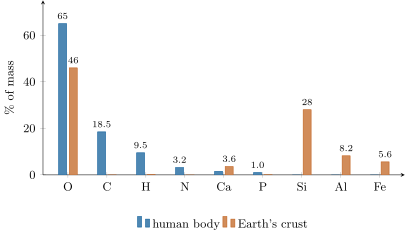
The same elements, two very different recipes: mass fractions of the main elements in a human body and in the rocks of the Earth’s crust (small bars carry no label: calcium is 1.5% of a body; carbon is 0.02% of the crust, hydrogen 0.14%, nitrogen 0.002%; silicon, aluminium and iron are only traces in a body). Carbon, hydrogen and nitrogen are abundant in living matter and rare in rock; silicon, aluminium and iron are the reverse.

উদাহরণ

Example 1.3 (Living matter versus rock)

The Earth’s crust is 46% oxygen too, but its next elements are silicon (28%), aluminium (8%) and iron (5.6%). Carbon makes up 0.02% of the crust and nitrogen 0.002%, against 18.5% and 3.2% of a body. A living thing is therefore not a sample of its surroundings: it concentrates a few elements by a factor of a thousand or more. That selection is the first chemical signature of life.

প্রসঙ্গসহ পড়ো →