 Coach
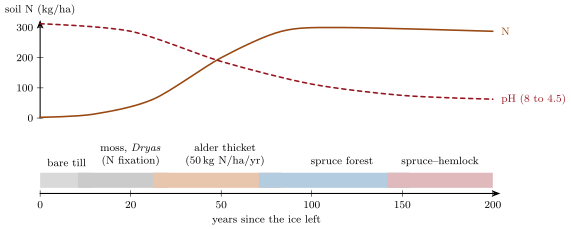
CoachSuccession is the directional change of a community over time after a disturbance, one set of species replacing another until a relatively stable community, the climax, persists. Primary succession starts on new substrate without soil or living organisms: rock left by a glacier, a lava flow, a dune, a new island. Secondary succession starts where a community has been destroyed but the soil and its seed bank remain: an abandoned field, a burnt or felled forest, a flooded meadow. The first arrivals, pioneer species, are dispersers that tolerate bare ground; late arrivals are competitors that tolerate shade and need soil.
Examples
Example 28.3 (An old field)
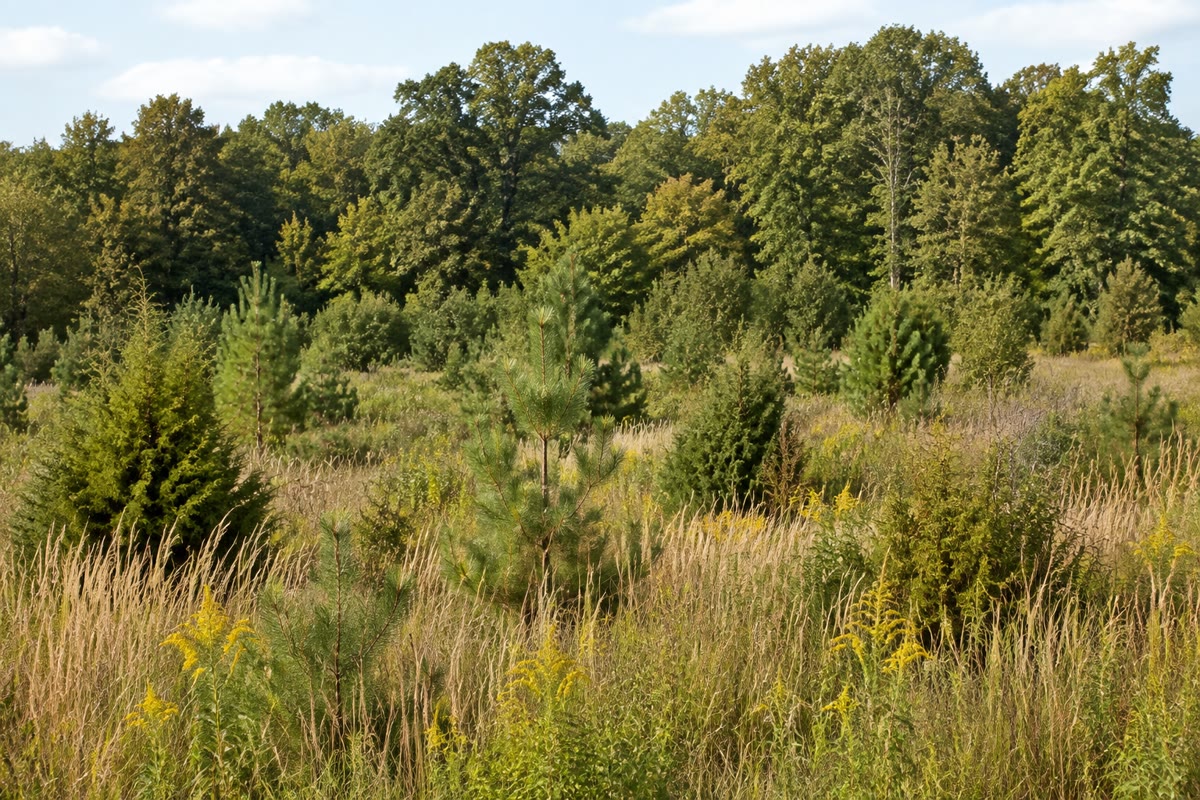
A field abandoned in the eastern United States is colonised the first year by annual weeds (crabgrass, ragweed) from the seed bank and the wind; by the third year perennial herbs and goldenrod dominate; by the tenth, shrubs and pine seedlings; by the twenty-fifth a pine wood, under whose shade the pines’ own seedlings cannot grow but oaks and hickories can; and by the hundredth an oak–hickory forest, whose seedlings tolerate its shade and which therefore replaces itself. Each stage is displaced by species that were worse dispersers and better competitors than itself; the soil was there from the start, and the whole sequence takes a human lifetime rather than the millennia of a primary succession.