Coach
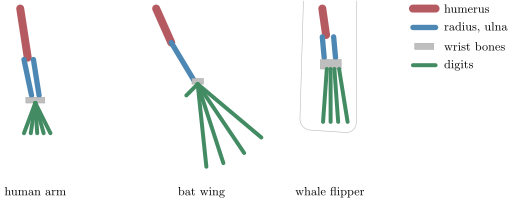
CoachTwo organs of two species are homologous when they have the same structure and the same position in the body plan — built of the same parts in the same relations — whatever their present function. The forelimbs of tetrapods are the standard example: one bone (humerus), two bones (radius and ulna), a cluster of wrist bones, then the digits. Organs that perform the same function with a different structure — the wing of a bird and the wing of a fly — are merely analogous, and say nothing about kinship.