Coach
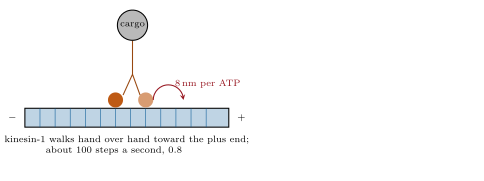
CoachA motor protein converts the free energy of ATP hydrolysis into directed movement along a filament: myosins along actin (myosin II, the muscle and contractile motor, toward the barbed end; myosin V, a two-headed vesicle carrier stepping ), kinesins along microtubules toward the plus end (kinesin-1 steps , one tubulin dimer, per ATP, hand over hand, at about ), and dyneins toward the minus end (cytoplasmic dynein, with its adaptor dynactin, hauls cargo back to the cell centre; axonemal dyneins bend cilia). A motor is processive if it takes many steps before detaching: kinesin-1 walks about a micrometre, a hundred steps, alone; a single myosin II head takes one stroke and lets go, so muscle needs hundreds of heads working on one filament. Motors read the polarity of the track, so a cell’s geography — plus ends at the periphery, minus ends at the centre — is a map of where each motor will take its cargo.