 Coach
CoachNervous tissue is made of neurons, cells with a body and long extensions (dendrites receiving signals, an axon carrying them away) that conduct electrical signals and pass them to other cells at synapses, and of glial cells, several times more numerous, which support, insulate and feed the neurons. It senses, integrates and commands.
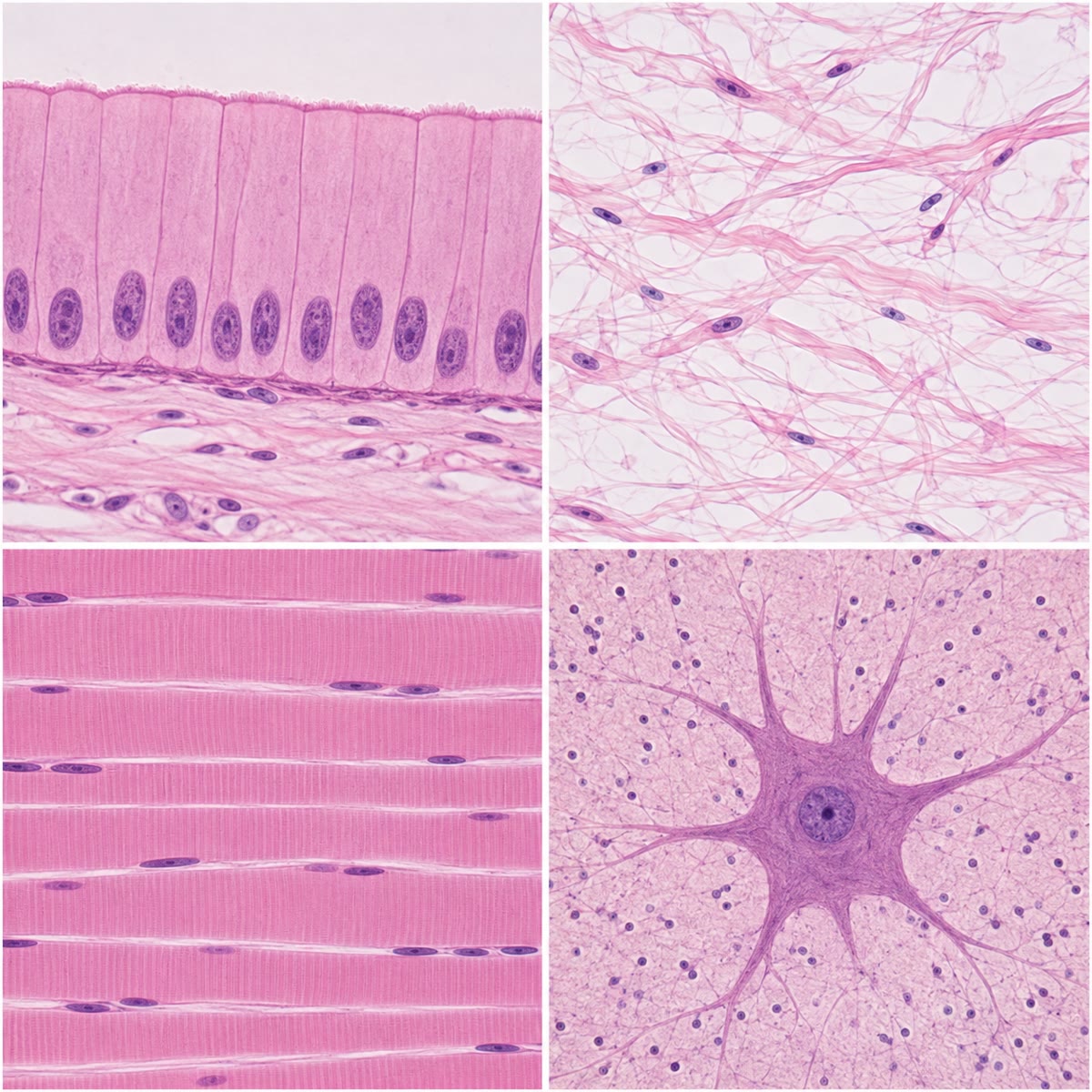
Examples
Example 4.12 (Where the tissues come from)
Epithelia derive from all three germ layers (skin from ectoderm, gut lining from endoderm, the lining of vessels and of the coelom from mesoderm); connective tissue, muscle and blood from mesoderm; nervous tissue from ectoderm. The frog’s skin is an ectodermal epithelium on mesodermal connective tissue; its gut, an endodermal epithelium wrapped in mesodermal muscle; its brain, ectoderm folded inward.