 Coach
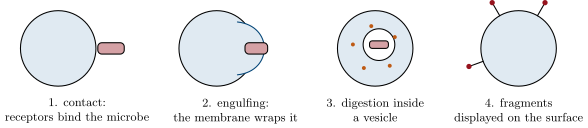
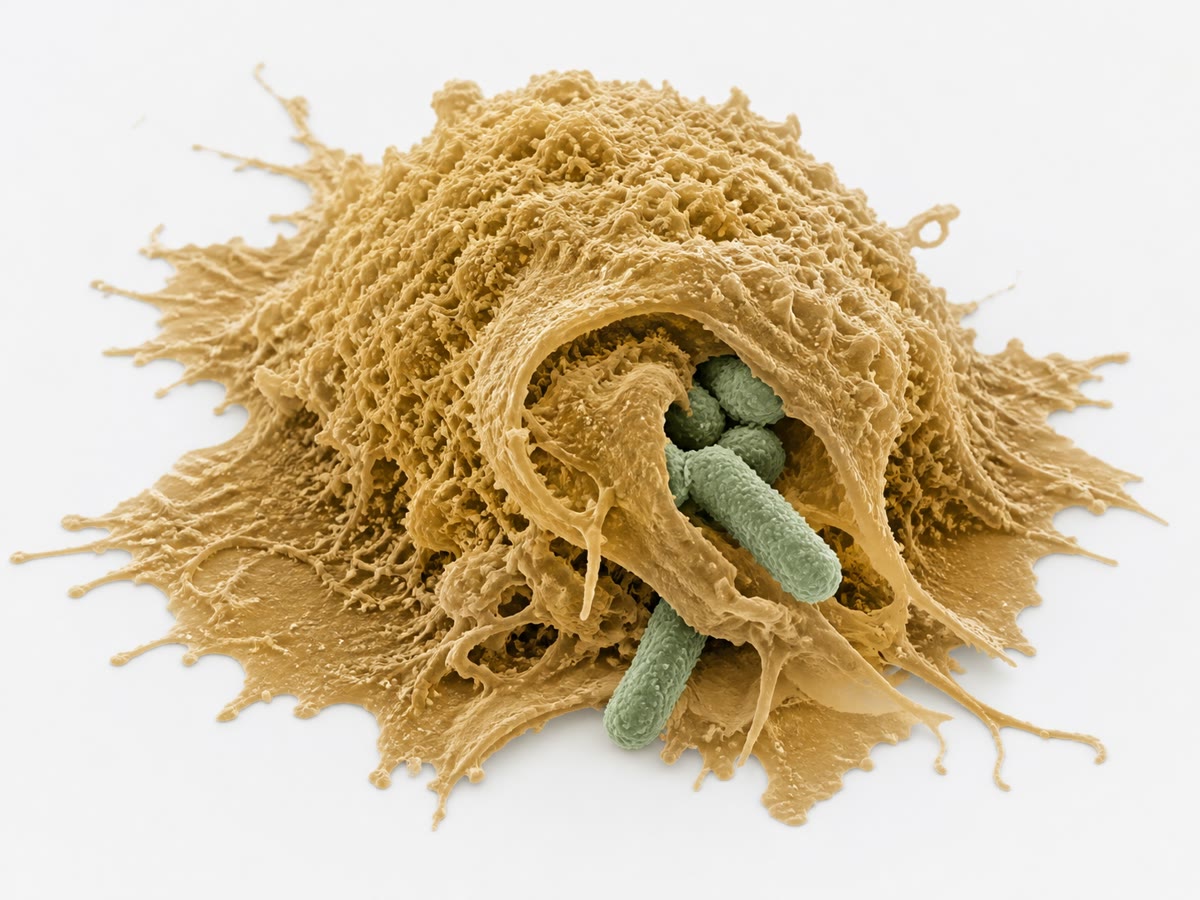
CoachPhagocytosis is the engulfing of a particle — a bacterium, a dead cell, a speck of dust — by a cell that wraps its membrane around it, draws it inside in a vesicle, and digests it with enzymes and reactive chemicals. The phagocytes of the innate response are the neutrophils, short-lived and numerous, and the macrophages, long-lived and resident. A macrophage that has digested a microbe keeps fragments of its proteins and displays them on its surface — the step that will connect this response to the next chapter’s.
Examples
Example 33.5 (The timetable of a splinter)
Minute 0: bacteria from the splinter in the tissue. Minutes 1–10: mast cells and macrophages recognise their wall fragments and release histamine and cytokines; vessels widen. Hour 1: redness, warmth, the first neutrophils crossing the vessel walls. Hours 2–12: neutrophils swarm, engulf bacteria, die; swelling and pain at their height. Day 1: monocytes arrive and become macrophages, clearing debris; pus visible. Day 2–3: bacteria gone, mediators no longer released, vessels return to normal, repair begins. If the bacteria multiply faster than the phagocytes clear them, the response widens, fever appears, and the adaptive response — already begun in the lymph node — takes over.
Example 33.7 (Fever)
Cytokines released at a large or persistent site of inflammation reach the brain, where they raise the body’s temperature set point: fever. A degree or two of extra heat speeds the phagocytes and slows many bacteria, at the cost of energy and discomfort; above the cost outweighs the benefit, which is where the antipyretic (prostaglandin-blocking) drugs are used. Fever is a regulated response, not a failure of regulation.