Coach
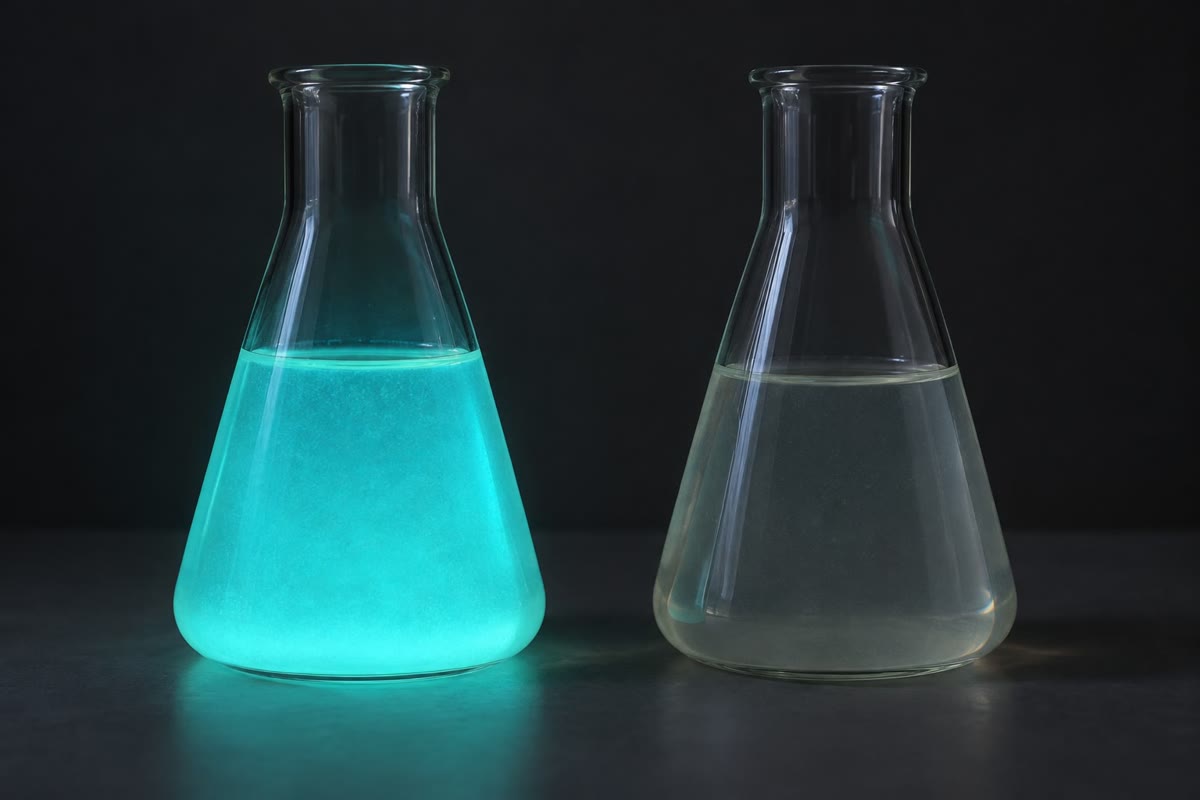
CoachBacteria detect their own density by quorum sensing: each cell secretes a small signal molecule, an autoinducer — acylated homoserine lactones in Gram-negatives, short peptides in Gram-positives — at a constant rate; the concentration in the medium rises with the number of cells, and when it crosses a threshold it binds a receptor that switches on a set of genes, among them the synthase of the autoinducer itself (hence the name). The genes so controlled are the ones that pay only in company: light in Vibrio fischeri, virulence factors in Staphylococcus aureus and Pseudomonas aeruginosa, biofilm matrix, competence for DNA uptake, and the killing of neighbours. Most bacterial sensing runs through two-component systems: a membrane histidine kinase that detects a stimulus and phosphorylates a cytoplasmic response regulator, which binds DNA — a cell has dozens, for phosphate, osmolarity, oxygen, and the autoinducers of other species.