Coach
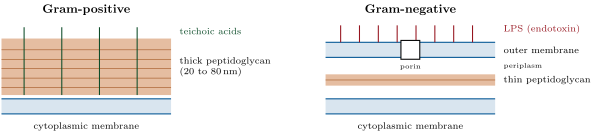
CoachEvery bacterium but a few is enclosed in a wall of peptidoglycan: chains of alternating N-acetylglucosamine and N-acetylmuramic acid, cross-linked by short peptides into a single molecule that surrounds the cell and resists the turgor pressure — several atmospheres — of the cytoplasm. Gram-positive bacteria have a thick wall of , many layers, threaded with teichoic acids; Gram-negative bacteria have a thin wall of one or two layers and, outside it, a second lipid bilayer, the outer membrane, whose outer leaflet is lipopolysaccharide (LPS, endotoxin — the molecule that the innate immune system of Chapter 15 recognises and that causes septic shock), enclosing a periplasm. Porins in the outer membrane admit small molecules and exclude many antibiotics. Outside may lie a polysaccharide capsule against phagocytes, flagella for swimming (Chapter 9) and pili for attachment and conjugation. Inside, the chromosome — one circular molecule of in most species — is folded into a nucleoid without a membrane, alongside plasmids. Some genera (Bacillus, Clostridium) can enclose a copy of the chromosome in a thick coat as an endospore, dehydrated and metabolically inert, which survives boiling, radiation and centuries of drought and germinates when nutrients return.