Coach
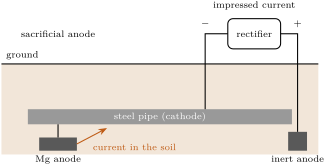
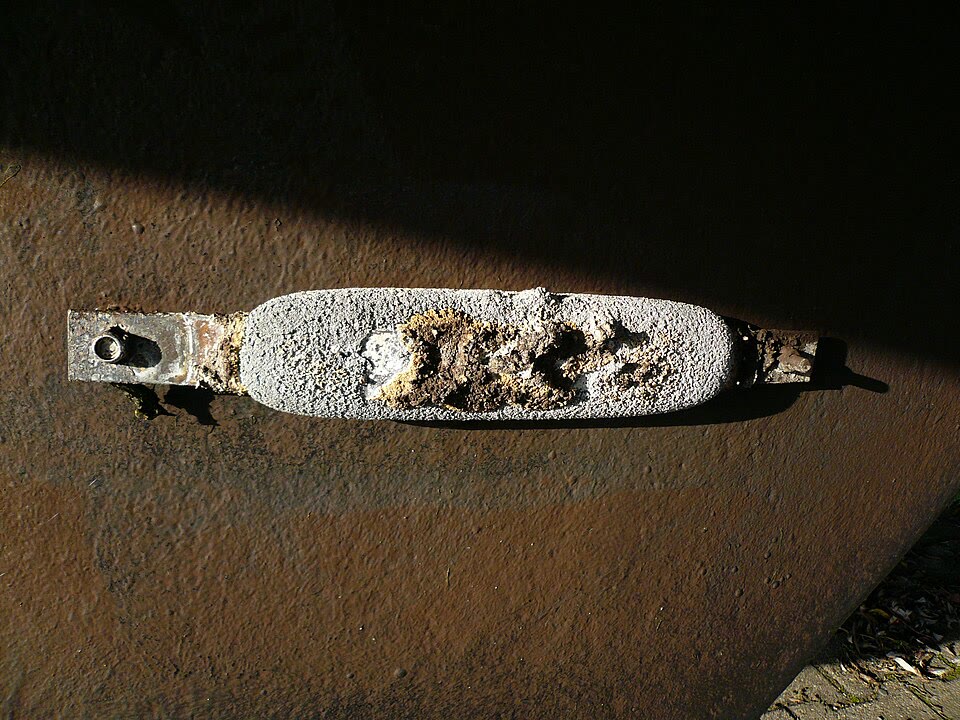
CoachCathodic protection lowers the potential of a metal structure until its oxidation stops, by making it the cathode of a cell. The cell can be formed with a sacrificial anode, a less noble metal (zinc, magnesium, aluminium alloys) connected to the structure and consumed in its place, or driven by a generator, in impressed-current protection, the anode being then an inert electrode buried nearby.