
全部书籍

专业

应用 关于 Coach 登录 开始阅读

书籍暂未推出简体中文版——当前显示英文版。

Chemistry · 术语表

什么是 Cathodic protection?

又称: sacrificial anode · impressed-current protection

Definition 12.10 University Chemistry — Year 2 · 第 12 章 — Corrosion and Protection

Cathodic protection lowers the potential of a metal structure until its oxidation stops, by making it the cathode of a cell. The cell can be formed with a sacrificial anode, a less noble metal (zinc, magnesium, aluminium alloys) connected to the structure and consumed in its place, or driven by a generator, in impressed-current protection, the anode being then an inert electrode buried nearby.
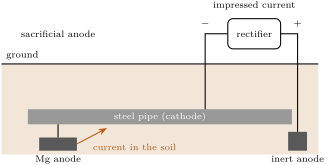
Cathodic protection of a buried pipe, schematic. Left: a magnesium anode, wired to the pipe, corrodes in its place. Right: a rectifier drives a current from an inert anode through the soil into the pipe.
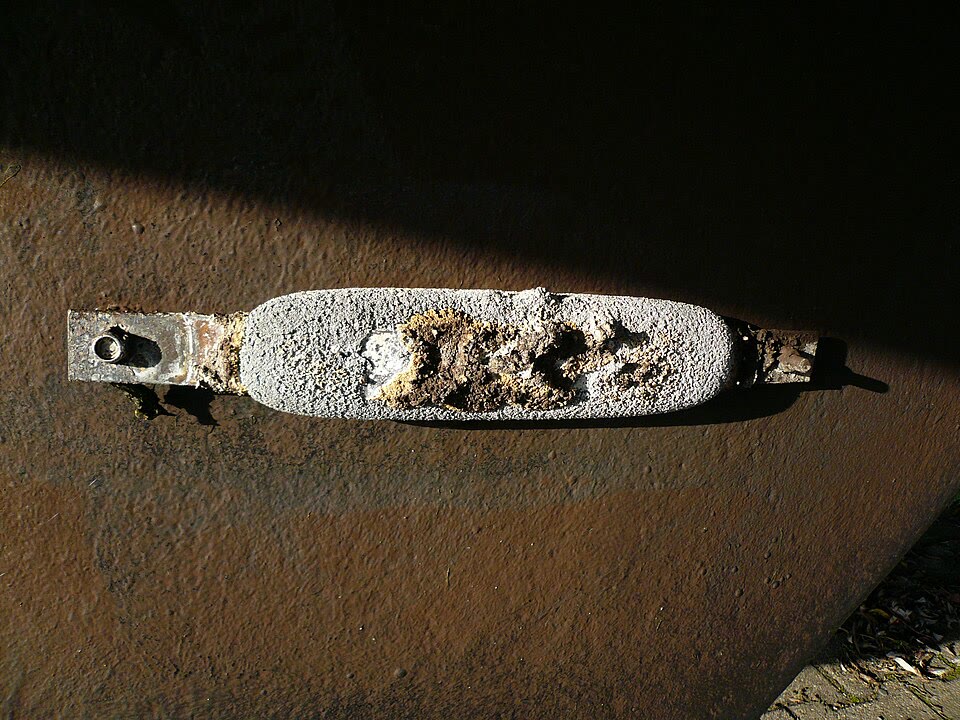
A zinc sacrificial anode bolted to the steel hull of a boat, after a season in the water: the zinc is eaten away, the steel around it is intact. (Photograph: Zwergelstern, CC BY-SA 3.0, Wikimedia Commons.)
在原文中阅读 →