 Coach
CoachAn opaque object absorbs part of the light it receives and diffuses the rest — re-emits it in every direction, toward our eyes among others. The color of an object is the color of the light it diffuses under the given illumination: the object supplies its absorption habits, the source the raw material. Change the lamp, change the color.
Examples
Example 11.11 (The red shirt)
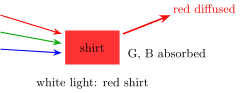
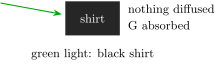
A shirt looks red in daylight: it absorbs the green and blue bands and diffuses the red one. Under a pure green light there is no red band to diffuse: the shirt absorbs everything and appears black. Under magenta light it diffuses the red band alone: still red. A white object diffuses every band it receives (under green light it looks green); a black object absorbs them all under every light — which is also why black clothing heats up in the sun.