 Coach
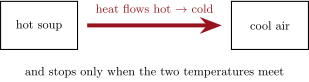
CoachHeat is energy on the move from a hotter thing to a colder one. The soup passes heat to the spoon, the radiator to the room, your hand to a snowball. Heat is not a stuff hiding inside hot things — it is a flow, and it always has a direction.
Examples
Example 34.3 (Reading the direction)
The teaspoon in the tea grows hot: heat flowed tea spoon. The lemonade with ice grows cold — careful! Nothing called “cold” flowed in: heat flowed out of the lemonade into the ice, melting it. Cold is not a flow; it is only the name we give the loser’s side. Physics books all say “the drink loses heat”, never “the drink gains cold”.
Example 34.5 (The slide mystery, solved)
The metal slide and the wooden bench spent the night at the same chilly temperature — the thermometer swore it long ago. Touch them: your hand is warmer than both, so heat flows from you into each. But the metal is a fast lane — it whisks your heat away in a rush, and that rush is what “icy” feels like. The wood takes your heat only in a trickle: barely cool. Your skin was never measuring temperature — it measures the speed of its own heat loss. Case closed, after four years.
Example 34.9 (The thermos)
The thermos flask is insulation’s masterpiece: a bottle inside a bottle, with the air between them pumped away to almost nothing — and where there is almost no stuff, heat’s flow finds almost no lane at all (a trick worth remembering: the same emptiness that silenced the bell in the jar). Add shiny walls to bounce warmth’s glow back in, and hot chocolate meets the afternoon still hot — or lemonade still cold: the thermos knows nothing of hot or cold, it only closes the lanes, both ways.