 Coach
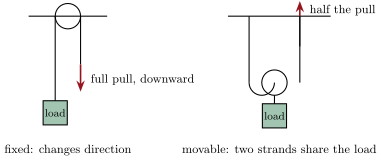
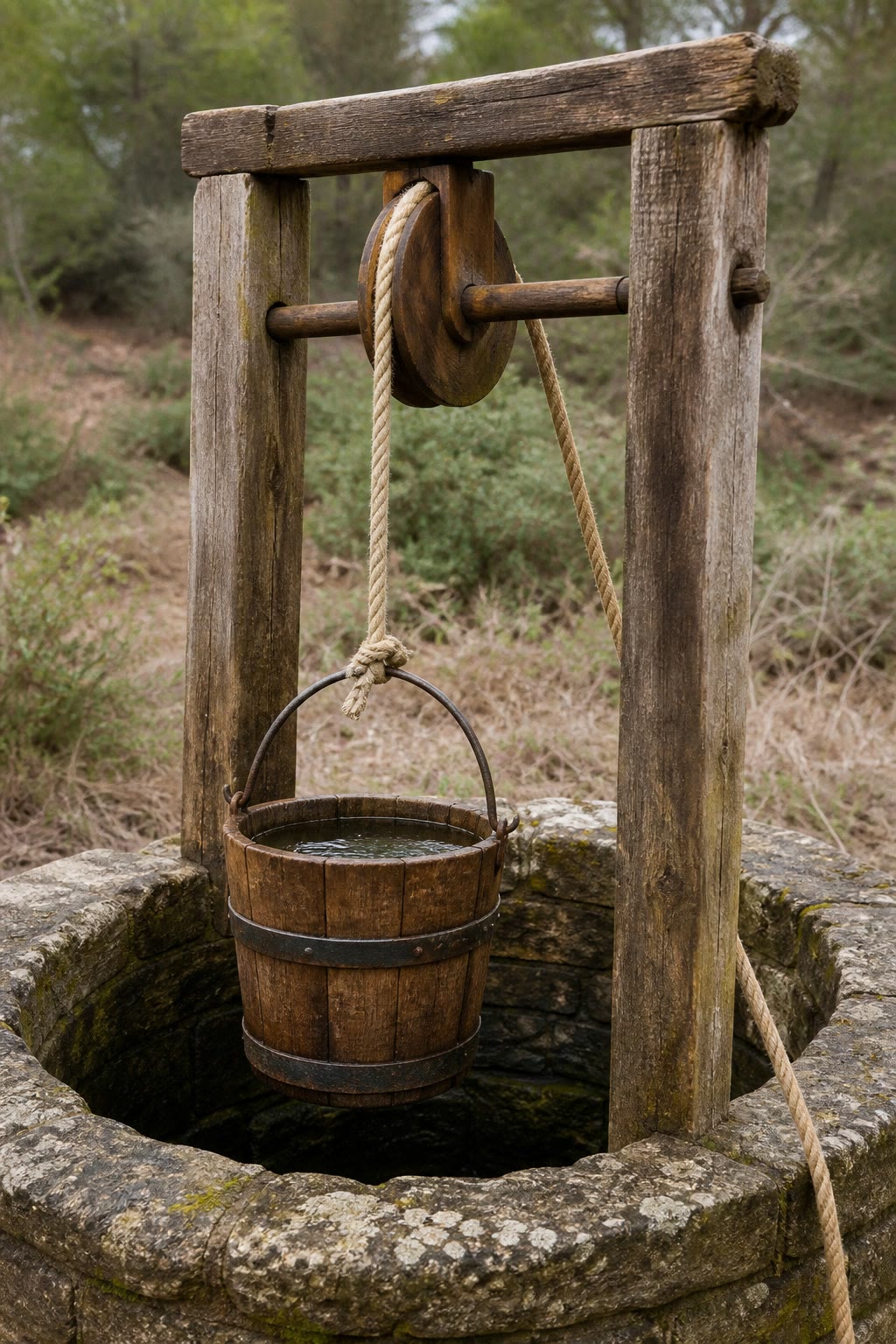
CoachA pulley is a wheel with a groove for a rope. A fixed pulley hangs from a beam and only changes the pull’s direction: haul down, the load goes up. A movable pulley rides on the rope with the load hooked to it: the load then hangs from two strands of rope, and each strand carries only half the weight.
Examples
Example 31.4 (Pulleys at work)
The flag rises up its pole while your hands pull comfortably down: a fixed pulley at the top — direction changed, effort unchanged, but hauling down lets your own weight help. The builder’s block-and-tackle chains several pulleys so the load hangs from four or six strands: each strand carries a quarter or a sixth of the weight, and one worker raises a piano. Watch the worker, though: metre after metre of rope races through their hands, while the piano creeps upward slowly.
Example 31.9 (Checking the rule)
The movable pulley: your hand pulls with half the force, and to raise the load you haul in of rope — both strands must shorten by a metre. The crowbar: your end sweeps a long arc, the boulder barely stirs. The ramp: the crate reaches the same height, but you pushed it along the whole slope. Every saving paid for, precisely.