Coach
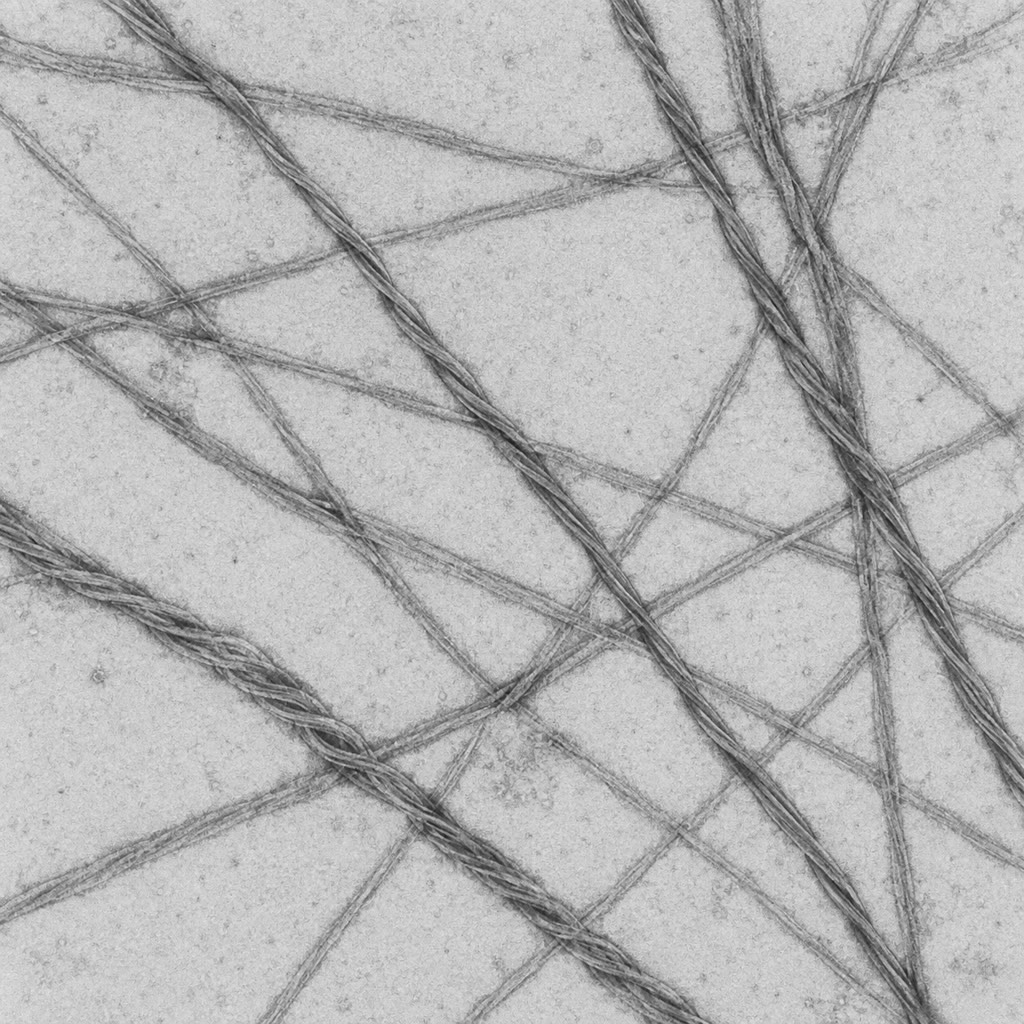
CoachAmyloid is an ordered aggregate of protein in which the chains stack into unbranched fibrils wide, the strands of each chain running perpendicular to the fibril axis and hydrogen-bonded to the strands of the next — the cross- structure, the same whatever the protein. Almost any protein can form it under destabilising conditions; in the misfolding diseases particular proteins do so in the body: amyloid- and tau in Alzheimer’s disease, -synuclein in Parkinson’s, huntingtin, transthyretin, islet amyloid in type 2 diabetes. A prion is an amyloid that propagates: the misfolded form of the prion protein PrP converts the normal form on contact into more of itself, so that the “infection” carries no nucleic acid, only a shape — the mechanism of scrapie, of bovine spongiform encephalopathy and of Creutzfeldt–Jakob disease, established by Prusiner from 1982 against long resistance.