 Coach
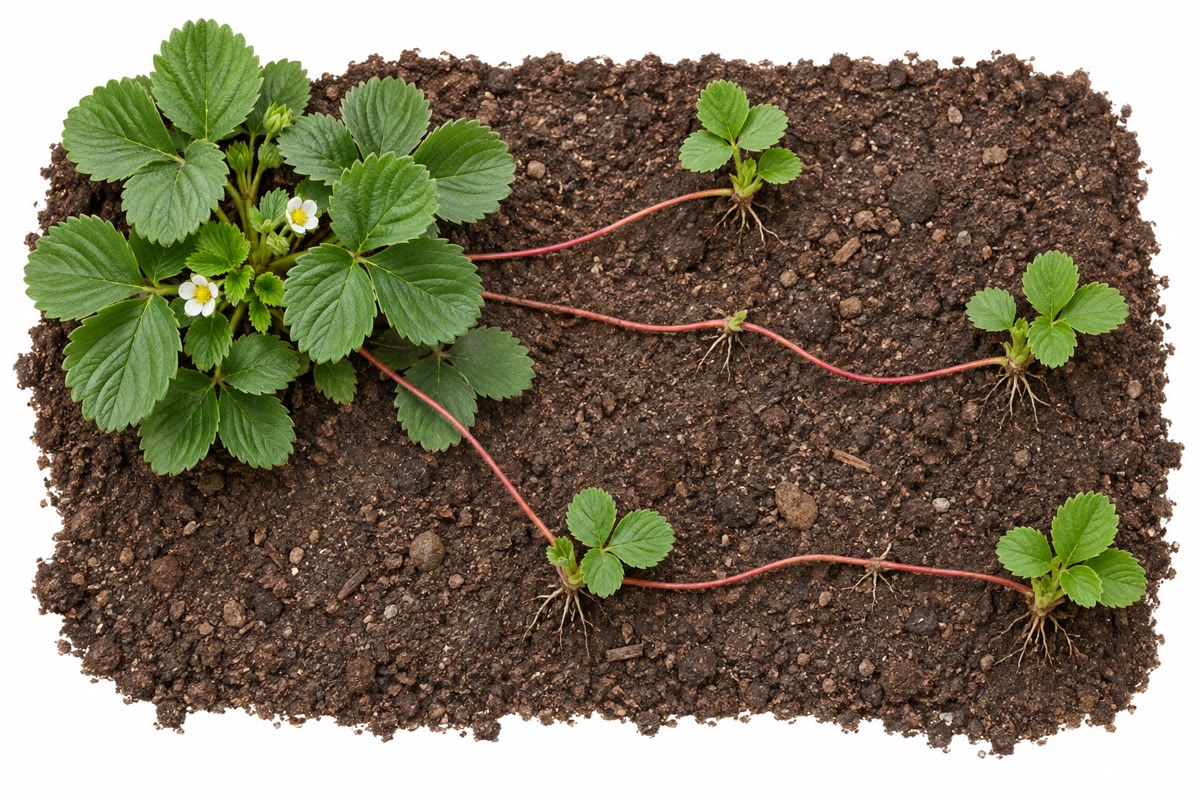
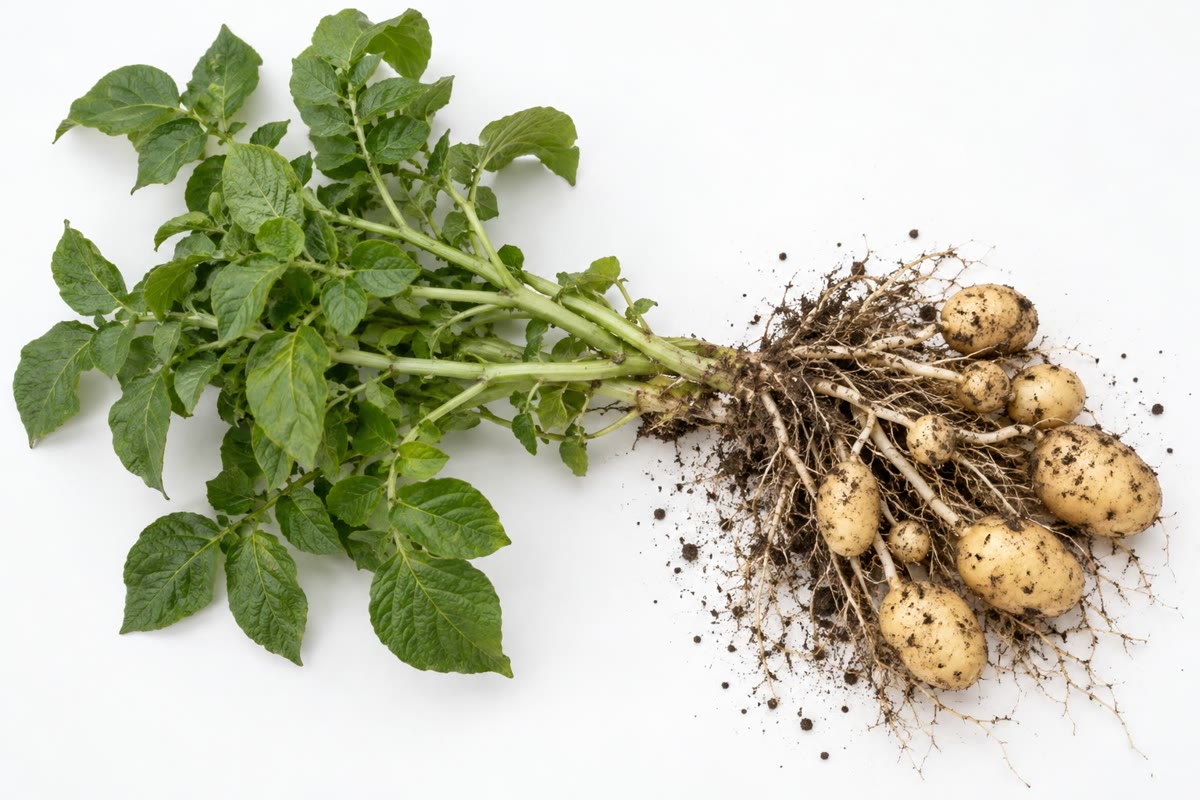
CoachAsexual reproduction produces new individuals from one parent by mitosis alone, without meiosis or fertilisation: the offspring are a clone, genetically identical to the parent and to each other, apart from the somatic mutations that accumulate. In plants the usual form is vegetative multiplication, in which part of the body — stem, root, leaf — roots and becomes a separate plant. A genet is the genetic individual, everything that grew from one zygote; a ramet is one physiologically separate unit of it. A strawberry bed may hold a thousand ramets of one genet; the aspen forest is one genet. Vegetative multiplication is possible because plant cells keep the capacity to divide and form any organ — they are totipotent — and because plants grow from meristems that can be reawakened almost anywhere.
Examples
Example 7.4 (The oldest organisms)
The aspen clone Pando (Utah) covers with about trunks that each live a century or so and are replaced by suckers from the same roots; the genet may be over ten thousand years old. A clone of the seagrass Posidonia in the Mediterranean stretches and may be a hundred thousand years old; a creosote bush ring in the Mojave has been dated to years, the central stems dying as the ring expands. In every case what is old is the genet; no cell in it is older than a few decades, and the genome has been copied thousands of times.
Example 7.6 (An aphid summer)
A parthenogenetic aphid matures in about eight days and produces some five daughters a day for two weeks; the daughters are born already pregnant (the embryos begin developing inside the mother’s embryos). With a generation time near ten days and a net rate of increase of about per generation, a single founder in April could, unchecked, leave descendants within four months — more in mass than every animal now alive. Ladybirds, lacewings, parasitoid wasps, fungi and rain keep the number to a few thousand per plant, and the autumn sexual generation resets the clone into recombined eggs before winter.
Example 7.11 (Monocultures of a clone)
In the 1840s most of the potato crop of Ireland was one clonal variety, the Lumper; the water mould Phytophthora infestans, arriving in 1845, met a country of genetically identical, uniformly susceptible plants and destroyed the crop in three successive years. The world’s export banana until the 1950s was a single clone, Gros Michel, wiped out of Central American plantations by a soil fungus; its replacement, Cavendish, is likewise a single clone and is now being lost, plantation by plantation, to a new strain of the same fungus, against which it has no variation to offer. A clone is the easiest target in nature, and the grower who plants one must supply the resistance that recombination would have supplied for free.