 Coach
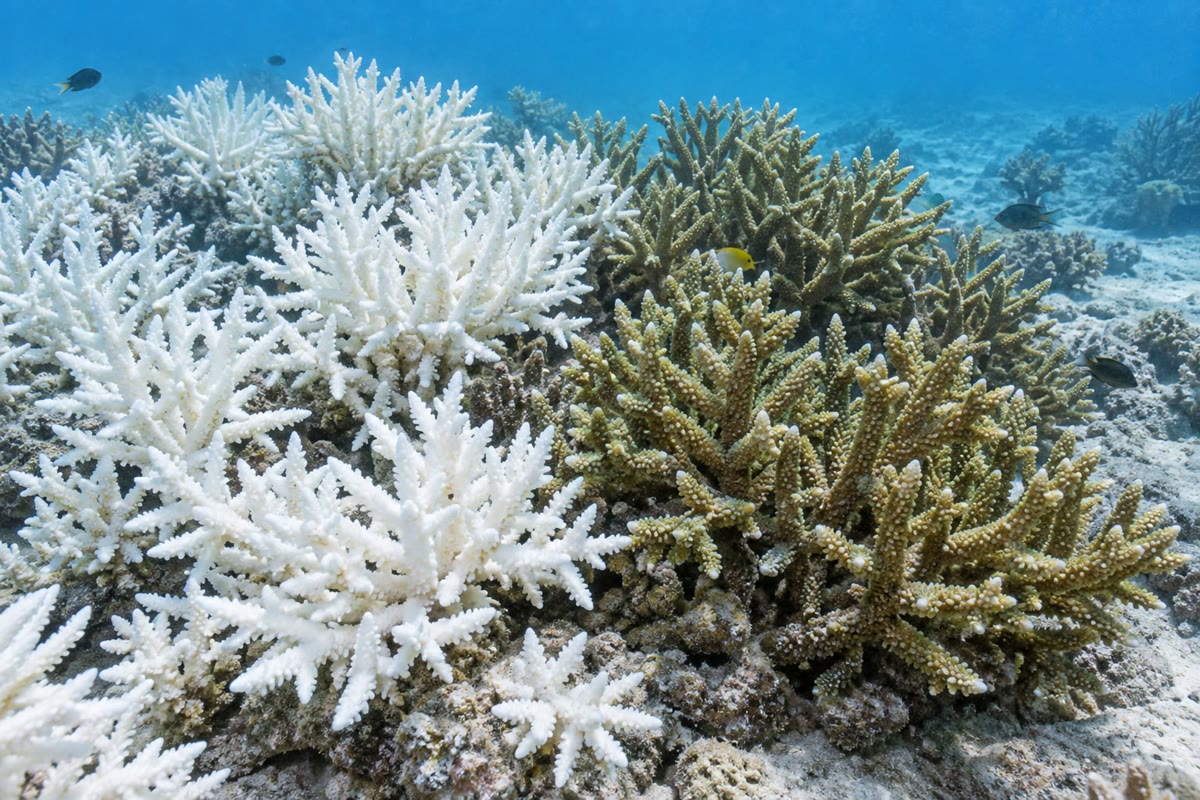
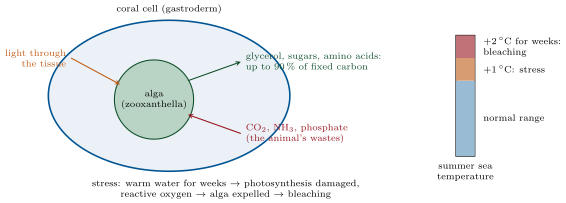
CoachReef-building corals house dinoflagellate algae (Symbiodiniaceae, the zooxanthellae) inside the cells of their gut lining, a million or more per square centimetre. The algae photosynthesise in the animal’s tissue, using the animal’s waste CO, ammonia and phosphate, and pass back up to of their fixed carbon as glycerol, sugars and amino acids, which feed the coral and the calcification that builds the reef; the coral, in turn, controls the algae’s nitrogen supply and hence their growth. The partnership works within a narrow thermal window: when the water stays about one to two degrees above the summer maximum for a few weeks, the algae’s photosynthesis is damaged, they release reactive oxygen into the host cells, and the coral expels them — bleaching, the white skeleton showing through the translucent animal. A bleached coral starves; it recovers if the water cools within weeks and dies if not. The frequency of bleaching has risen fivefold since 1980, and it is the mechanism by which warming is removing reefs.
Examples
Example 14.12 (Symbioses that make habitats)
A lichen is a fungus housing a green alga or a cyanobacterium, the fungus providing structure, water retention and minerals dissolved from rock, the photobiont providing sugar (and, if a cyanobacterium, nitrogen); lichens cover about of the land surface, colonise bare rock, and begin its conversion to soil. The tube worm Riftia of the deep-sea vents has no mouth or gut as an adult; it houses sulfide-oxidising bacteria in a trophosome and delivers them sulfide and oxygen on a haemoglobin that binds both, growing at over a metre a year in the dark on chemical energy. Termites digest wood with a gut community of protists and bacteria, and ruminants digest grass with a rumen the size of a bathtub in which bacteria, archaea and fungi ferment cellulose to fatty acids and methane; the cow lives on the fatty acids and on the bodies of the microbes themselves. In every case a metabolic capacity — photosynthesis, nitrogen fixation, sulfide oxidation, cellulose digestion — that the host lineage never evolved has been acquired by partnership in one step.