 Coach
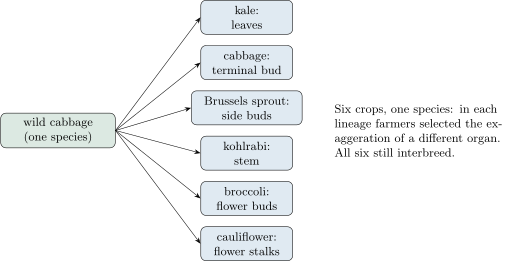
CoachDomestication is the transformation of a wild species into one that depends on humans and serves them, by artificial selection: at each generation, people keep and sow the seeds of the individuals with the traits they want, so that the alleles behind those traits rise in frequency. It is the selection of Chapter 25 with a human eye in place of the environment, and it works by the same arithmetic — faster, since the selecting is deliberate and severe.
Examples
Example 29.3 (What a crop has lost)
Maize cannot scatter its seed; cultivated wheat cannot shed its grain; the banana and the seedless grape make no seeds at all and are propagated by cuttings, every plant a clone. A crop’s survival is delegated to the farmer, and its genetic diversity has shrunk with every stage of selection: a modern variety is nearly uniform, and a whole region may grow one. The wild relatives, still diverse, are where the alleles a future crop may need — for a new disease, a drier climate — are kept (Chapter 5).