Biology · Glossary

What is Biodiversity?

Also known as: ecosystem · genetic diversity

Definition 30.2 Primary & Middle School Biology · Chapter 30 — Biodiversity

The biodiversity of a place is the variety of life it holds — above all, how many different species live there, and how well each is doing. A flowering meadow, rich in species, has high biodiversity; a paved yard, almost none.
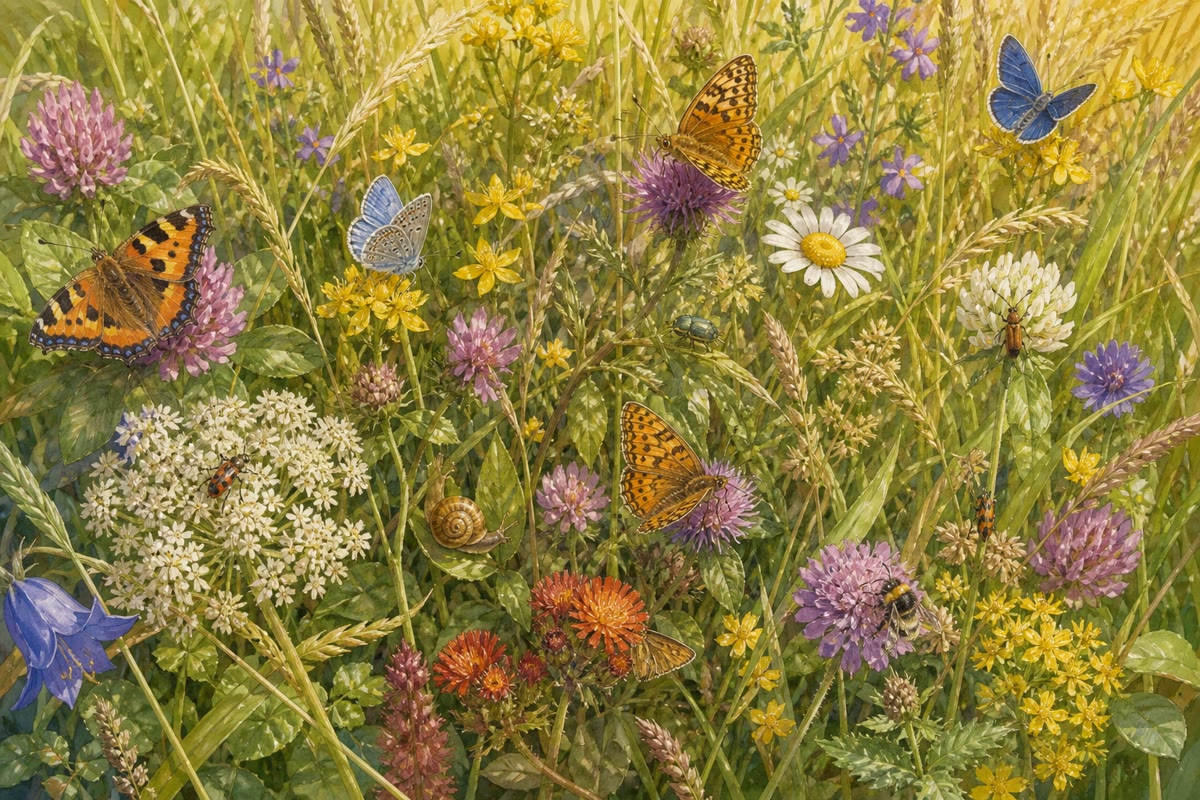
One square metre of meadow, mid-count: grasses, flowers, butterflies, beetles, a snail — and the count has barely begun.

Examples

Example 30.3 (Counting the planet)

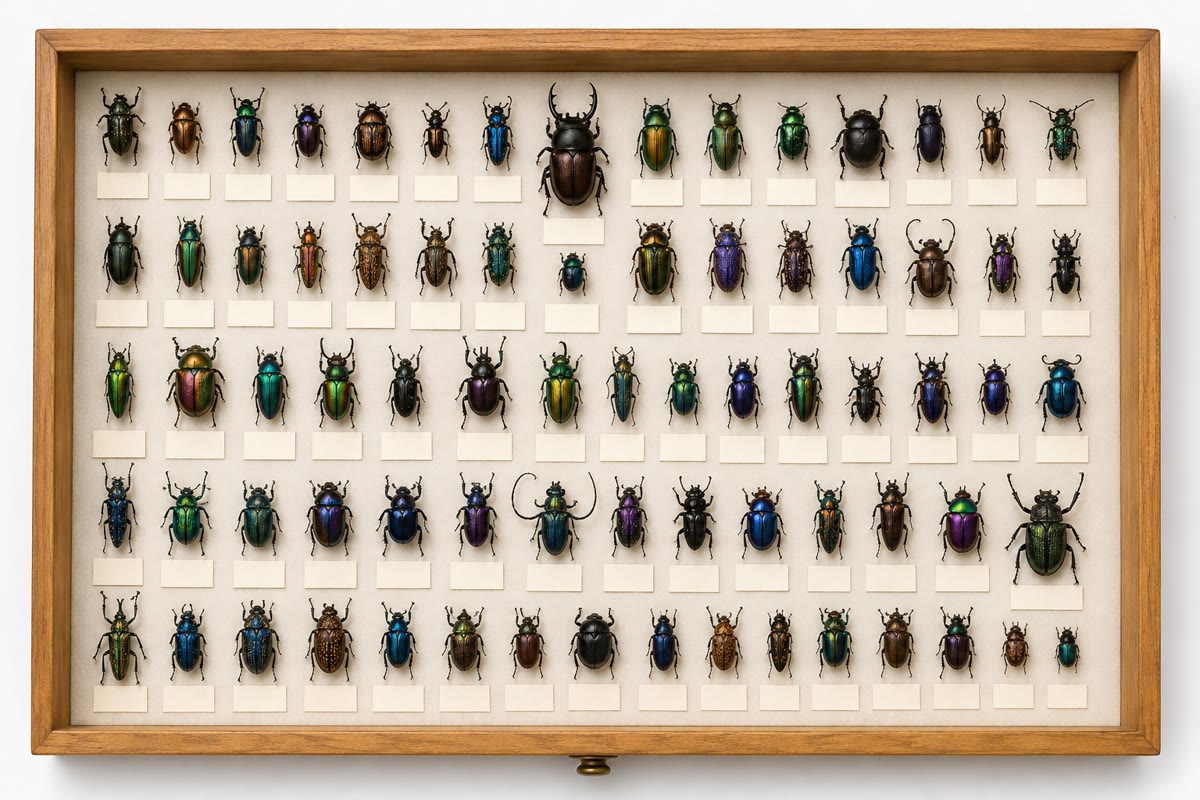
Scientists have named about two million species so far — and are sure that is only part of the total, since new species are found on every serious expedition: beetles above all (no group has more named species), but also fish, frogs, plants, even occasional mammals. Earth’s full species count is still unknown — most estimates run into the millions beyond what is named.
Read in context →
Definition 5.1 High School Biology · Chapter 5 — Biodiversity at Every Scale

Biodiversity is the diversity of living things, considered at three scales:

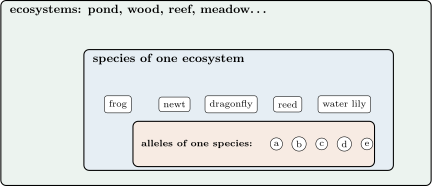
  • the diversity of ecosystems — of the living communities and the environments they occupy (a pond, a beech wood, a coral reef, a meadow), each with its own set of species;
  • the diversity of species within an ecosystem or on Earth — the number of species and their relative abundance;
  • the genetic diversity within a species — the number of alleles of its genes and the way they are shared out among its individuals and populations.
The three nested scales of biodiversity. Losing a pond loses a community of species; losing a species loses all its alleles; losing alleles impoverishes a species that still exists.

Examples

Example 5.8 (Blood-group alleles around the world)

The gene of the ABO blood groups has three common alleles, A, B and O. In western Europe their frequencies are about 0.27, 0.07 and 0.66; in eastern Asia about 0.20, 0.20 and 0.60; in some native populations of South America the O allele alone reaches 0.98. Same species, same gene, different distributions of its alleles: the genetic diversity of humans is real, and it is spread across populations rather than splitting them — most of the diversity of the species is found within any one population.

Example 5.12 (Reversing a loss)

Where hedgerows removed in the 1960s have been replanted, bird and insect richness returns within a decade; where wolves were reintroduced into a national park in 1995, the deer they hunt stopped stripping the riverside willows, the willows regrew, beavers returned, and the birds and fish that depend on beaver ponds with them. Protecting or restoring an ecosystem restores diversity at all three scales at once; a species kept alive in a zoo keeps only one of them.

Read in context →
Definition 29.12 University Biology — Year 1 · Chapter 29 — Classifying the Living World

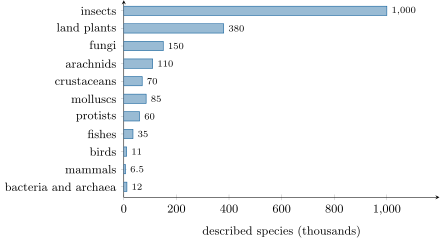
Biodiversity is the variety of life at every level: genetic diversity within species, the number and abundance of species, and the variety of communities and ecosystems. Its inventory is unfinished: some 22 million species have been described, of which a million are insects, 380000380\,000 plants, 150000150\,000 fungi, 7000070\,000 vertebrates and a few tens of thousands each of molluscs, crustaceans, protists and prokaryotes; the number of eukaryote species is estimated, from the rate at which new higher taxa are still being found, at close to 99 million, so that most species are unnamed, and most of those are small, tropical, or both. Species have always gone extinct — the background rate, from fossils, is about one species per million per year — and the present rate, driven by habitat loss, exploitation, invasive species and climate, is estimated at a hundred to a thousand times that.

Described species by group, in thousands (rounded). Half of all named species are insects, and the prokaryotes — the most diverse organisms by any molecular measure — have fewer described species than the mammals and birds together.
A museum drawer of pinned beetles: the collection is the inventory, and a drawer like this can hold species no one has yet named.
Read in context →