 Coach
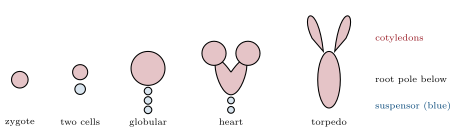
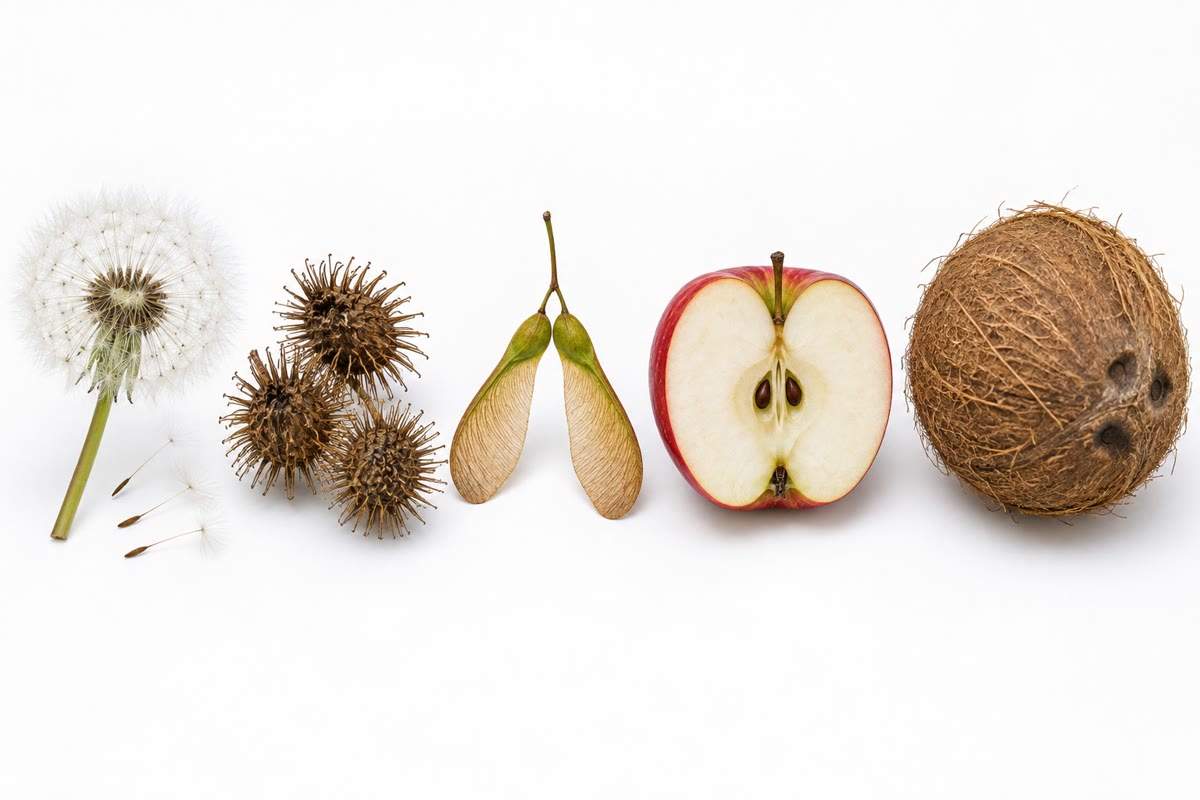
CoachThe zygote divides into a suspensor, which pushes the embryo into the endosperm, and an embryo proper that passes through globular, heart and torpedo stages as it lays down the root and shoot poles and one or two cotyledons (seed leaves) — the monocot–dicot distinction. In many dicots (beans, peas) the growing cotyledons absorb the endosperm and become the food store themselves; in cereals and most monocots the endosperm persists and the single cotyledon is a sucking organ. The integuments harden into the seed coat; the seed dehydrates to water, metabolism stops, and it enters dormancy, which ends only when a signal — water, cold, light, fire, the passage through a gut — says the season is right. Meanwhile the ovary wall grows into the fruit, whose form is a dispersal strategy: dry fruits that split (pods, capsules) or do not (grains, nuts, winged samaras), fleshy fruits that are eaten (berries, drupes with a stone, the apple, whose flesh is receptacle); the seed passes through the animal unharmed, its coat scarified, and is deposited with fertiliser kilometres away.
Examples
Example 6.9 (Dispersal distances)
A dandelion achene with its parachute descends at ; from in a wind it flies , and in a thermal, hundreds. A maple samara autorotates down at from : . A cherry stone dropped by a bird after a twenty-minute flight at : up to . An oak’s acorns fall at its foot unless a jay carries them, which it does by the thousand, a kilometre and more, and forgets a tenth of them: the oaks that recolonised Europe after the last ice age moved north at hundreds of metres a year, far faster than an acorn rolls, and it was the birds that moved them.