
Biology · Glossary

What is The parts of a flower?

Also known as: flower · petal · stamen · pollen · pistil

Definition 16.1 Primary & Middle School Biology · Chapter 16 — Flowers, Fruits and Seeds

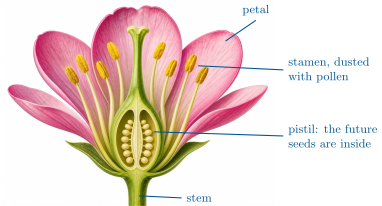
A flower is the part of the plant that will make the seeds. From the outside in:

  1. the petals, colored and scented, which attract visiting insects;
  2. the stamens, thin stalks dusted with pollen, a fine yellow powder;
  3. in the very center, the pistil, a little flask; deep inside it lie the flower’s future seeds.
Inside a flower, cut in half: petals around, pollen-bearing stamens, and the pistil in the center with the future seeds inside.

Examples

Example 16.2 (Dissecting a tulip)

Open a wilting tulip gently, petal by petal. Inside stand the stamens — brush one on your finger and it leaves yellow pollen dust — and in the middle the fat green pistil. Slice the pistil across (a grown-up’s knife-work) and there they are: rows of tiny pale future seeds.

Example 16.4 (Watching one cherry happen)

Follow a single cherry blossom. April: white petals, buzzing bees. May: petals snowing down; where each flower stood, a tiny green ball — the swelling pistil. June: the ball grown red and sweet — a cherry, with the stone (its seed) inside. The flower did not fall; only its petals did.
Read in context →
Definition 6.1 University Biology — Year 2 · Chapter 6 — Sexual Reproduction of Flowering Plants

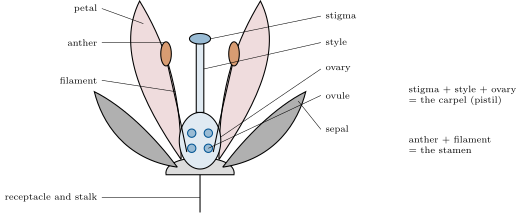
A flower is a short shoot whose leaves are transformed into four whorls. Outside, the sepals (together the calyx) protect the bud; then the petals (the corolla), which advertise; then the stamens, each a filament bearing an anther with four pollen sacs; and at the centre one or more carpels, each folded and sealed into a pistil with a receptive stigma, a style, and an ovary enclosing the ovules. A flower with both stamens and carpels is hermaphrodite (most species); monoecious plants bear separate male and female flowers on one individual (maize, oak, hazel), dioecious species on separate individuals (holly, willow, date palm). The whole point of the closed carpel — the character that names the angiosperms — is that the ovules are enclosed: pollen never reaches them directly, but must grow to them through the plant’s tissue, which lets the plant choose.

A flower in longitudinal section: sepals, petals, stamens (filament and anther) and, at the centre, the carpel — stigma, style and ovary — enclosing the ovules.
A flower in longitudinal section: sepals, petals, stamens (filament and anther) and, at the centre, the carpelstigma, style and ovary — enclosing the ovules.
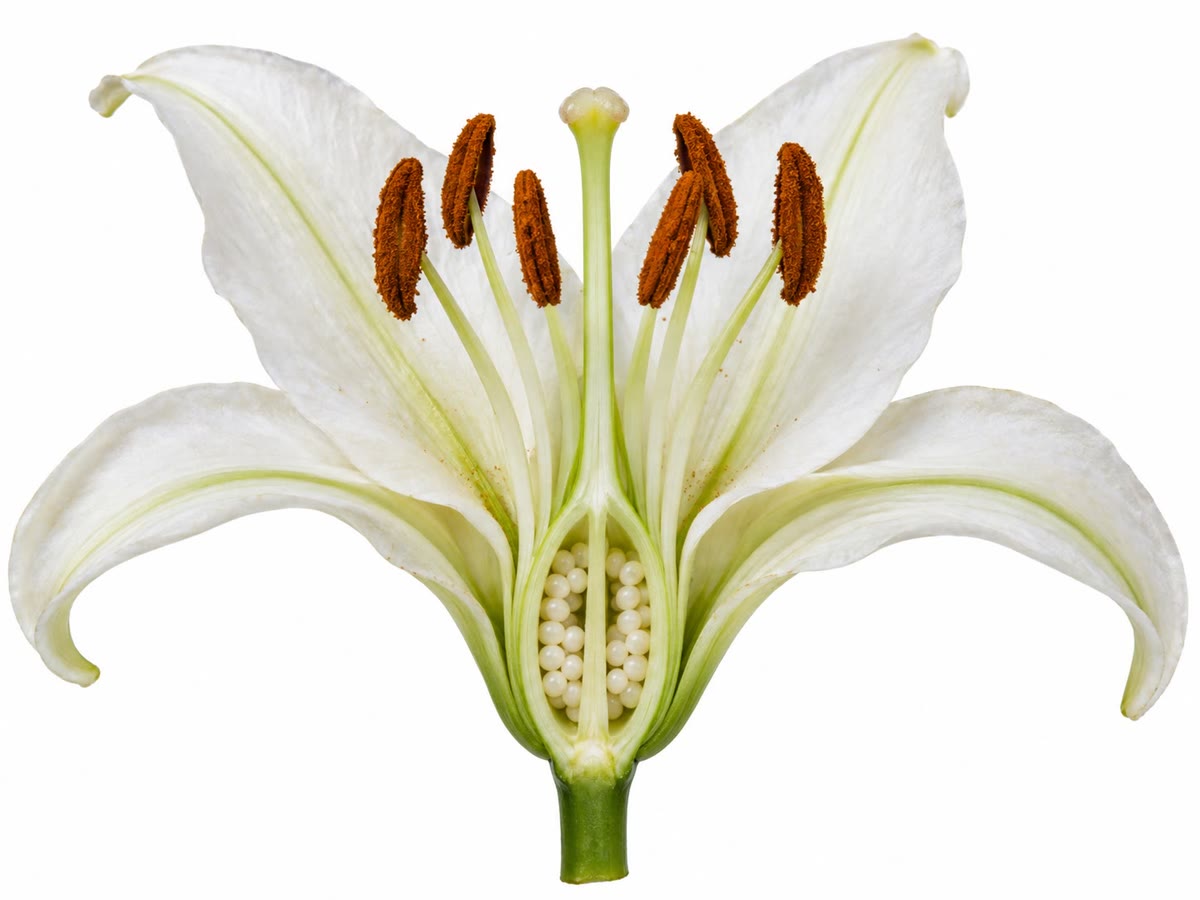
A lily cut lengthwise: six stamens with pollen-laden anthers, the long style with its sticky stigma, and the ovary opened to show the rows of ovules.
Read in context →