 Coach
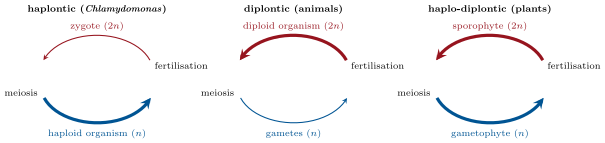
CoachEvery sexual life cycle contains one fertilisation, which doubles the chromosome number, and one meiosis, which halves it; the cycles differ in what happens between them. In a haplontic cycle the zygote is the only diploid cell and undergoes meiosis at once; the organism is haploid and its gametes are made by mitosis (Chlamydomonas, many algae and fungi). In a diplontic cycle meiosis makes gametes directly, the gametes are the only haploid cells, and the organism is diploid (animals, the brown alga Fucus). In a haplo-diplontic cycle meiosis makes spores, which grow by mitosis into a haploid organism, the gametophyte, that makes gametes by mitosis; the zygote grows by mitosis into a diploid organism, the sporophyte, that makes spores by meiosis. Two multicellular bodies alternate — the alternation of generations — and this is the cycle of every land plant and of many algae.
Examples
Example 5.11 (The groups compared)
| mosses | ferns | conifers | |
|---|---|---|---|
| dominant generation | gametophyte | sporophyte | sporophyte |
| gametophyte | leafy shoot, cm | prothallus, mm, free | pollen grain (4 cells); ovule contents (thousands of cells) |
| spores | one kind | one kind | microspores, megaspores |
| fertilisation | sperm swim in water | sperm swim in water | pollen tube |
| dispersal unit | spore | spore | seed |
| vascular tissue | none | xylem, phloem | xylem, phloem, wood |