 Coach
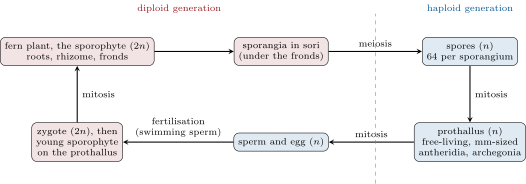
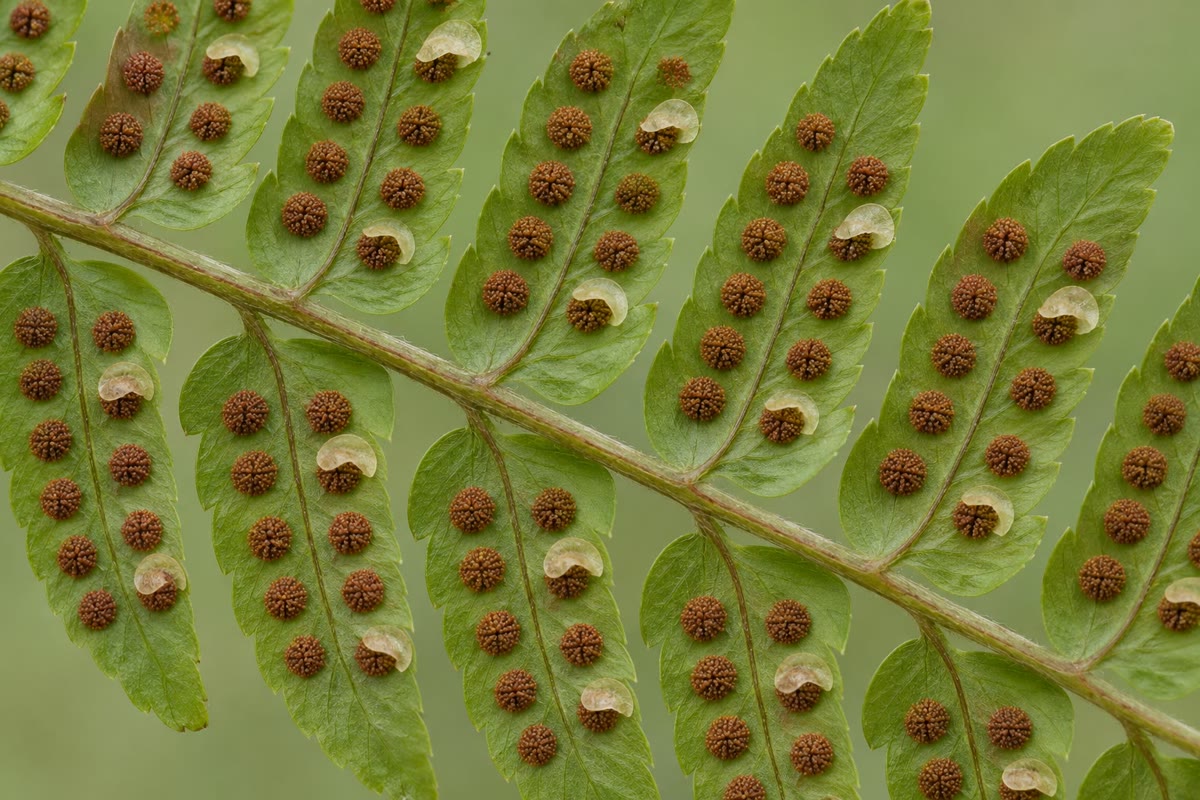
CoachThe fern is the sporophyte: a rhizome with roots, xylem and phloem, and fronds. On the underside of fertile fronds, clusters of sporangia (sori, often under a protective flap) each make 64 spores by meiosis and fling them by the snap of a drying ring of thick-walled cells. A spore that lands on damp soil grows into a prothallus: a heart-shaped green gametophyte a few millimetres across, one cell thick, with rhizoids, living free for a few weeks. It bears antheridia and archegonia on its underside; sperm swim in the soil film to the egg; the zygote grows into a young sporophyte that draws its first food from the prothallus and then roots, and the prothallus dies. The two generations are both independent, but unequal: the sporophyte lives for decades and can be metres tall, the gametophyte for weeks and millimetres.
Examples
Example 5.4 (The cost of swimming sperm)
A moss sperm swims at about ; to reach an archegonium away it needs of continuous water film — a splash of rain, a heavy dew. Fertilisation is therefore confined to wet weather and to short distances, and most mosses, ferns and their relatives live in damp places or reproduce in the wet season; the antheridia of some mosses sit in a splash cup whose shape throws raindrops, and the sperm they carry, half a metre. It is this dependence that the seed plants escaped.
Example 5.11 (The groups compared)
| mosses | ferns | conifers | |
|---|---|---|---|
| dominant generation | gametophyte | sporophyte | sporophyte |
| gametophyte | leafy shoot, cm | prothallus, mm, free | pollen grain (4 cells); ovule contents (thousands of cells) |
| spores | one kind | one kind | microspores, megaspores |
| fertilisation | sperm swim in water | sperm swim in water | pollen tube |
| dispersal unit | spore | spore | seed |
| vascular tissue | none | xylem, phloem | xylem, phloem, wood |