 Coach
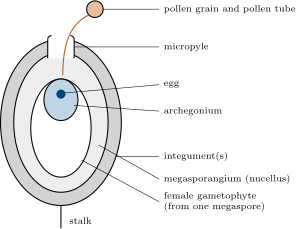
CoachMosses and most ferns are homosporous: one kind of spore, one kind of gametophyte bearing both sexes. Seed plants (and a few ferns and clubmosses) are heterosporous: microspores, small and many, grow into male gametophytes; megaspores, large and few, into female ones. In seed plants both are reduced to almost nothing and neither leaves the sporophyte’s tissues on its own. The male gametophyte is the pollen grain: a microspore that has divided two or three times inside its wall, carried by wind or animals to the female organ, where it grows a pollen tube and delivers its sperm — no water needed. The female gametophyte develops inside the megasporangium, which stays on the parent enclosed in one or two integuments with a pore, the micropyle: the whole structure is the ovule. After fertilisation the ovule becomes the seed: an embryo sporophyte, a store of food, and a coat made from the integuments, dormant until conditions are right.

Examples
Example 5.9 (Pollen in the wind)
A pine pollen grain, across with two bladders, falls at about ; a large tree releases some grains in a season, enough to coat ponds yellow. The chance that one grain lands on a given ovule is tiny, and the strategy works only in numbers: wind pollination is cheap per grain, costly in grains, and confined to plants that grow in stands of their own species — conifers, grasses, oaks. The flowering plants (Chapter 6) found a way to deliver pollen by animals, one grain at a time to the right address.
Example 5.11 (The groups compared)
| mosses | ferns | conifers | |
|---|---|---|---|
| dominant generation | gametophyte | sporophyte | sporophyte |
| gametophyte | leafy shoot, cm | prothallus, mm, free | pollen grain (4 cells); ovule contents (thousands of cells) |
| spores | one kind | one kind | microspores, megaspores |
| fertilisation | sperm swim in water | sperm swim in water | pollen tube |
| dispersal unit | spore | spore | seed |
| vascular tissue | none | xylem, phloem | xylem, phloem, wood |