 Coach
CoachThe molecules of a living thing fall into two groups. Mineral matter is made of molecules that also exist outside living things: water and the dissolved mineral salts (ions such as , , , , phosphate and bicarbonate). Organic matter is made of molecules built on a skeleton of carbon atoms bonded to hydrogen, and usually to oxygen and nitrogen — molecules that, on Earth, are made only by living things or from their remains.
Examples
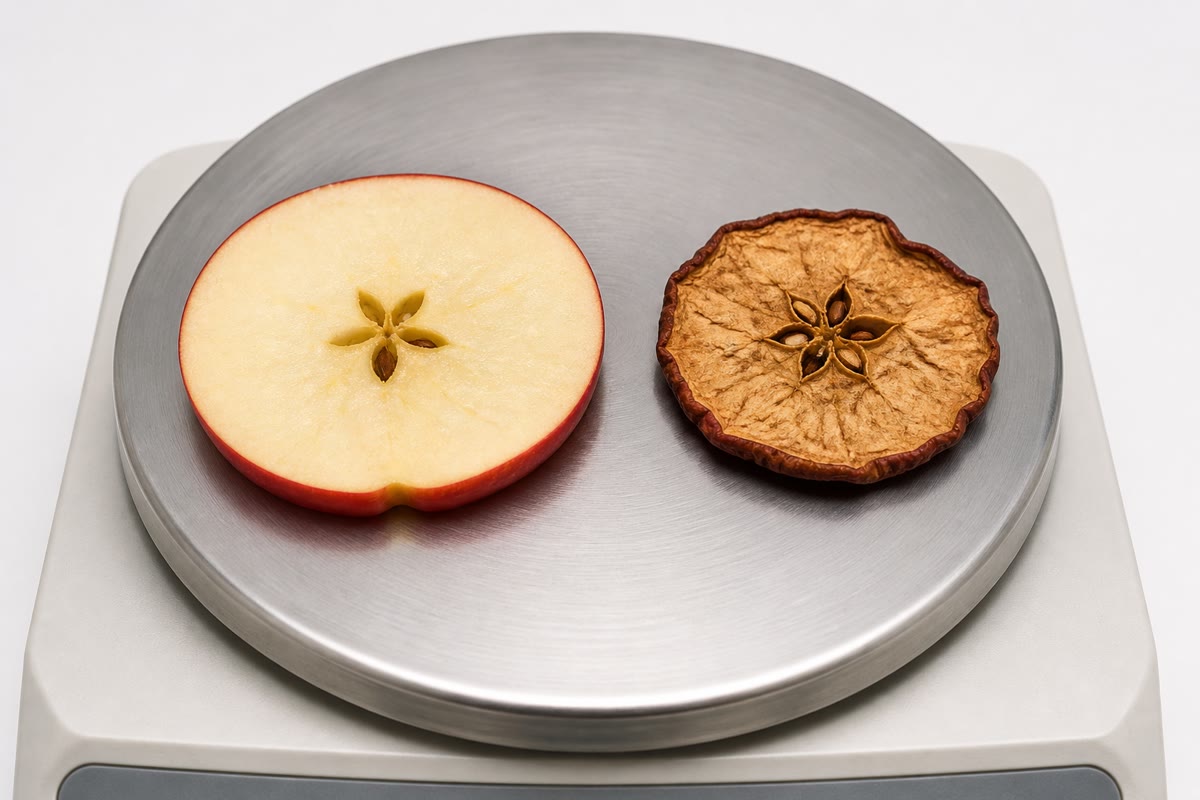
Example 1.7 (Drying an apple slice)
A slice of fresh apple of mass is dried until its mass settles at . Water lost: , i.e. , or 85% of the fresh mass. The that remain are the dry matter: organic molecules plus mineral salts. Burn that dry matter and about of pale ash — the mineral salts — survives; the rest, the organic part, has left as carbon dioxide and water vapour.
Example 1.9 (Mineral salts you can name)
Calcium phosphate stiffens bone and teeth (calcium is 1.5% of body mass, almost all in the skeleton). Sodium and chloride ions set the salinity of blood, close to ; potassium ions are concentrated inside cells; iron sits at the heart of haemoglobin; iodine is needed to make the hormone of the thyroid gland. A mineral salt is never a source of energy, but a body deprived of one of them fails at a precise task.