 Coach
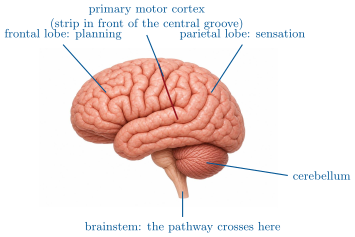
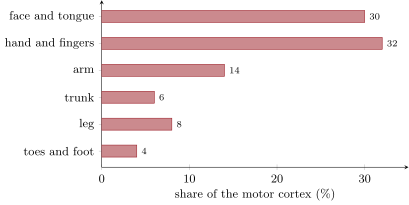
CoachThe primary motor cortex is a strip of the cerebral cortex running over the top of each hemisphere, just in front of the groove that separates the frontal lobe from the parietal. Its neurons are the origin of voluntary movement: their axons descend through the brainstem and the spinal cord to the motor neurons of the muscles. The strip is a map of the body: each part of it commands one part of the body, in an order that runs from the foot at the top of the hemisphere to the face at its side, and each part’s area is proportional not to the size of the body part but to the fineness of its movements — the hand and the face take up most of it.
Examples
Example 36.4 (Reading a paralysis)
Right arm and leg paralysed, face too, sensation kept: a lesion of the left hemisphere’s motor cortex or its fibres above the crossing — the woman of the opening. Both legs paralysed, arms and face spared, reflexes of the legs exaggerated: the spinal cord damaged at the level of the lower back. One arm paralysed and limp, its reflexes absent: the nerve or the motor neurons themselves, below which nothing can fire. The map, the crossing and the arc locate the damage before any scan.