 Coach
CoachA mutagen is a physical or chemical agent that raises the rate of mutation by damaging DNA. Ultraviolet light welds neighbouring thymines together on a strand; X-rays and radioactivity break the strands; chemicals such as the benzopyrene of tobacco smoke or the aflatoxin of mouldy grain attach to bases and distort the helix. A cell exposed to a mutagen carries induced mutations in addition to its spontaneous ones — still at random positions, only more of them.
Examples
Example 13.6 (Ultraviolet on yeast)
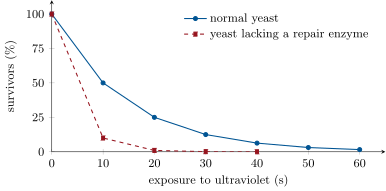
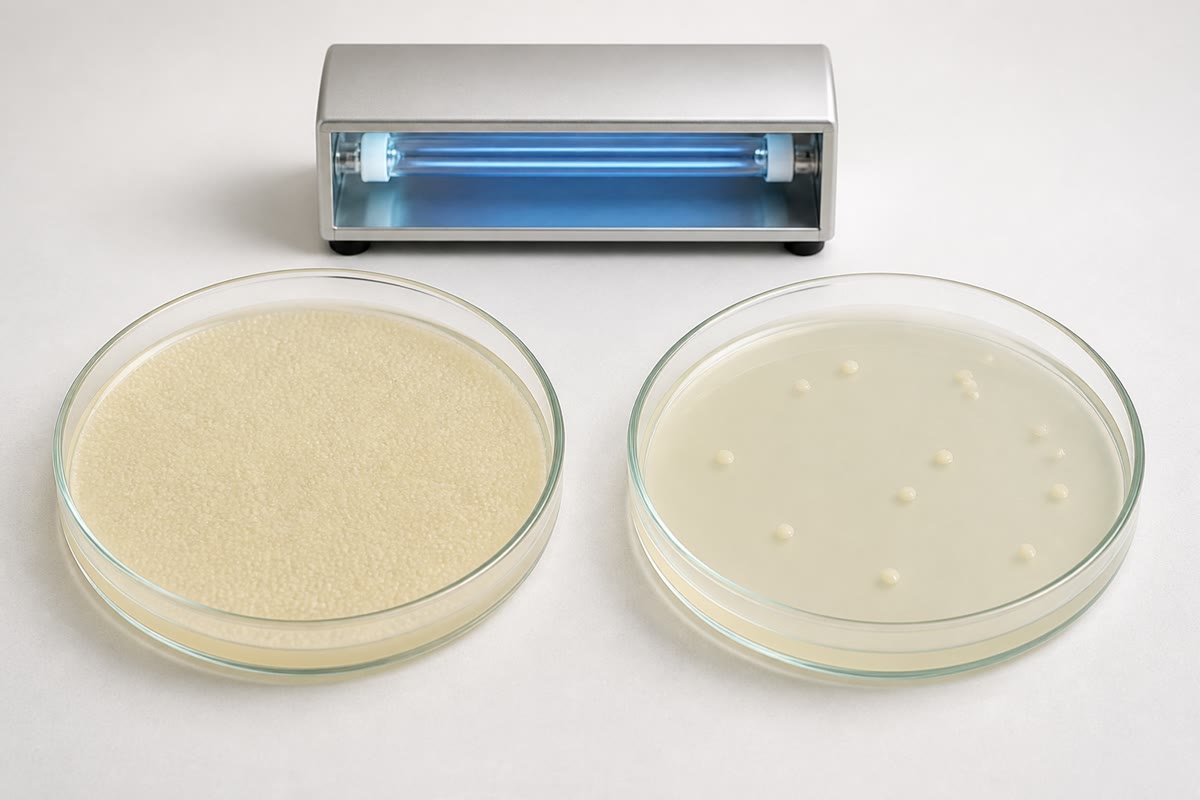
Yeast cells spread on plates and exposed to ultraviolet light for increasing times: after half the cells fail to form a colony, after a quarter, after an eighth — each dose halves the survivors. Among the survivors, the proportion of colonies with a visibly changed trait (colour, shape, inability to grow on a certain sugar) rises from one in a million to one in a thousand. The lamp kills by damaging DNA beyond repair, and mutates by damaging it just short of that.