
সব বই

পেশাদার

1 Markets I: The Ecosystem and Exchange-Traded Marketsবাজার অনলাইন 2 Markets II: Rates, FX and Creditবাজার অনলাইন 3 Markets III: Commodities, Energy and Cryptoবাজার অনলাইন 4 Quantitative Methodsপদ্ধতি অনলাইন 5 Derivatives and Volatilityডেরিভেটিভস অনলাইন 6 Rates, Credit, XVA and Riskসুদহার, ঋণ ও ঝুঁকি অনলাইন 7 Research Craft: Predictors, Backtests, Measurement, Portfoliosগবেষণা অনলাইন 8 Strategies I: Equities and Futuresকৌশল অনলাইন 9 Strategies II: Volatility, Relative Value, Macro and the Bank Desksকৌশল অনলাইন 10 Microstructure and Executionএক্সিকিউশন অনলাইন 11 Market Making and High-Frequency Tradingমার্কেট মেকিং অনলাইন 12 Machine Learning for Marketsমেশিন লার্নিং অনলাইন 13 Low-Latency Softwareপ্রযুক্তি অনলাইন 14 Networks, Hardware and Trading Infrastructureপ্রযুক্তি অনলাইন 15 Research, Data and Risk Platformsপ্রযুক্তি অনলাইন 16 The Desk and the Firmপ্রতিষ্ঠান অনলাইন 17 The Industry: Firms, Roles and Careersক্যারিয়ার অনলাইন 18 Interviews I: Maths, Probability and Speedক্যারিয়ার অনলাইন 19 Interviews II: Markets, Trading Games and the Final Roundক্যারিয়ার অনলাইন 20 Interviews III: Codeক্যারিয়ার অনলাইন
অ্যাপ পরিচিতি Coach সাইন ইন পড়া শুরু করো

বইগুলো এখনো বাংলা ভাষায় পাওয়া যায় না — ইংরেজি সংস্করণ দেখানো হচ্ছে।

Biology · পরিভাষা

Nerve nets, ganglia and brains কী?

Definition 17.9 University Biology — Year 3 · অধ্যায় 17 — Organization of Nervous Systems

Cnidarians (jellyfish, hydra) have a nerve net: neurons distributed through the body wall, connected in every direction, with ring-shaped condensations around the bell margin that coordinate swimming — no centre, and conduction in both directions along each cell. Bilaterian animals concentrate neurons into ganglia — clusters with a shared neuropil — arranged along a ventral cord in arthropods and annelids, with a head ganglion enlarged where the sense organs are: cephalisation. Molluscs vary from the simple ganglia of a clam to the octopus, whose half-billion neurons are the most of any invertebrate and two thirds of which lie in the arms, each arm’s cord controlling its own reaching and grasping. Vertebrates build a dorsal hollow tube, expanded at the front into the brain of the previous section, protected by bone and a barrier, and myelinated. The same signalling molecules, channels, transmitters and many of the same developmental genes (the Hox code of the hindbrain, the eye-patterning factors) run all of them: the parts are ancient and shared, the arrangements diverse.
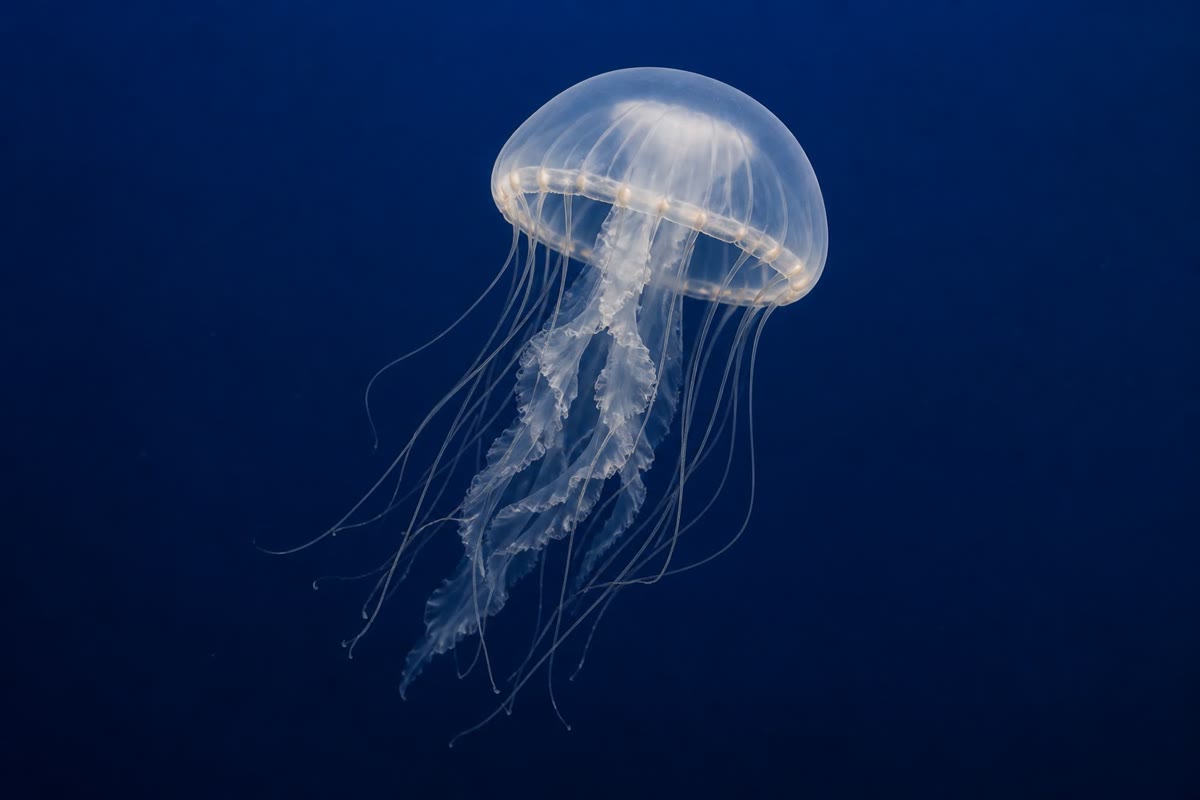
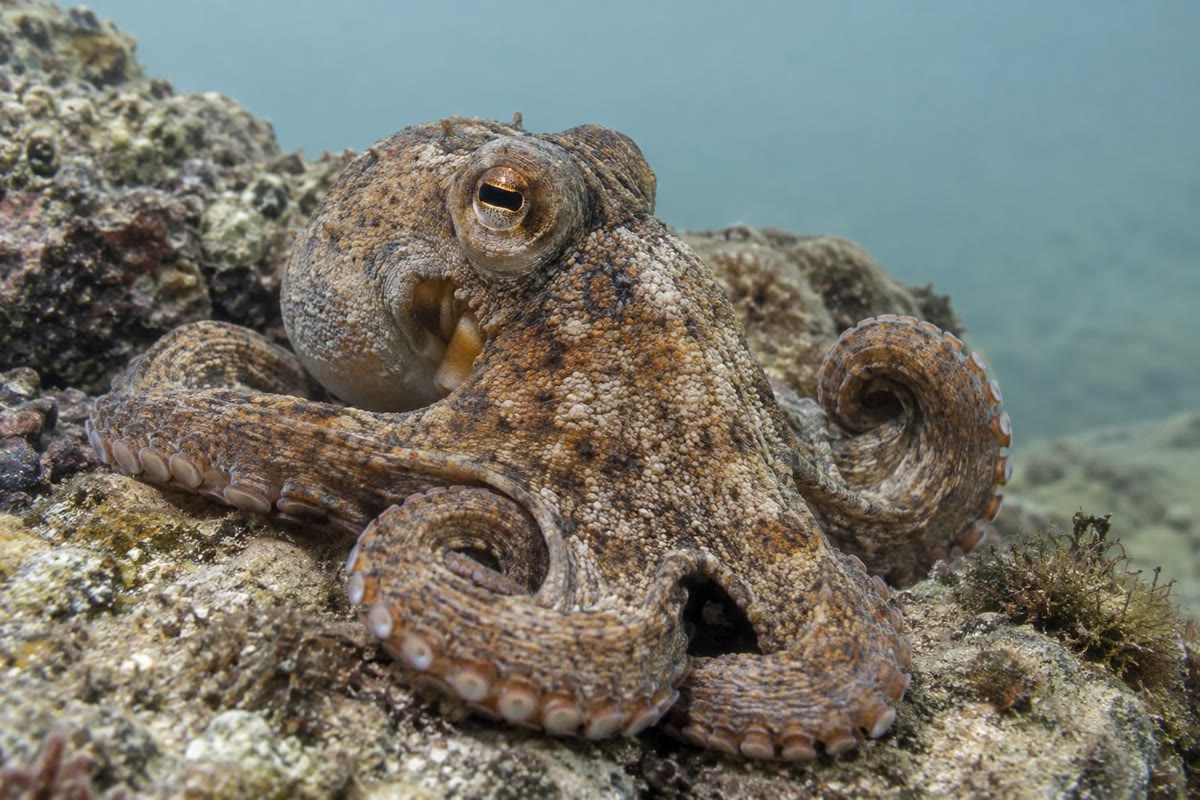
Two ways to organise neurons. Left: a jellyfish, whose nerve net and marginal rings coordinate swimming with no brain. Right: an octopus, with half a billion neurons, most of them in the arms, and the largest brain of any invertebrate. Two ways to organise neurons. Left: a jellyfish, whose nerve net and marginal rings coordinate swimming with no brain. Right: an octopus, with half a billion neurons, most of them in the arms, and the largest brain of any invertebrate.
Two ways to organise neurons. Left: a jellyfish, whose nerve net and marginal rings coordinate swimming with no brain. Right: an octopus, with half a billion neurons, most of them in the arms, and the largest brain of any invertebrate.

উদাহরণ

Example 17.10 (Counting neurons)

A nematode has 302302 neurons, every one named and every synapse mapped; a fruit fly 1.4×1051.4\times 10^{5}; a honeybee 10610^{6}; a mouse 7×1077\times 10^{7}; an octopus 5×1085\times 10^{8}; a human 8.6×10108.6\times 10^{10}; an elephant 2.6×10112.6\times 10^{11}, most of them in its cerebellum. Brain mass scales with body mass across mammals roughly as Mbrain∝Mbody0.75M_{\text{brain}} \propto M_{\text{body}}^{0.75}, so a mouse’s brain is a larger fraction of its body than an elephant’s; species above the line for their size — dolphins, primates, humans by a factor of seven — are said to be encephalised. What tracks cognition best is not brain mass but the number of neurons in the cerebral cortex: about 1.6×10101.6\times 10^{10} in a human, 5.6×1095.6\times 10^{9} in the elephant with its three-times-larger brain, 2×1092\times 10^{9} in a chimpanzee. The human brain is not special in its cells or its plan; it has more cortical neurons than any other, packed more densely, and it is the number, not the weight, that seems to count.

প্রসঙ্গসহ পড়ো →