Coach
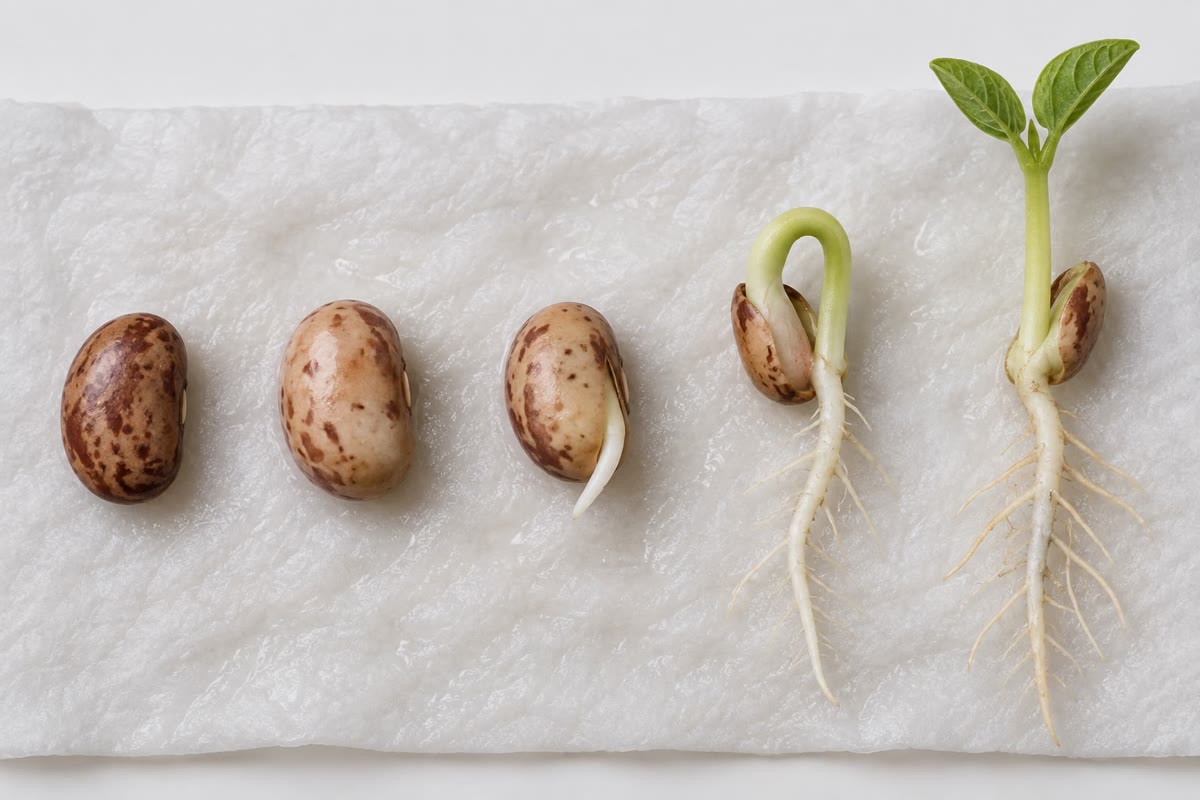
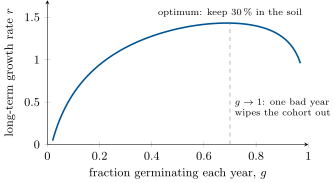
CoachA viable seed that does not germinate in conditions that would support growth is dormant. Dormancy is imposed during seed maturation by abscisic acid (ABA), which also drives the accumulation of reserves and the drying of the embryo, and it is maintained by the seed coat (impermeable to water or oxygen, mechanically restraining) or by the embryo’s own state. It is broken by the signals that mark the end of the unfavourable season: weeks of cold and damp (stratification, the seed’s vernalisation), light — for small seeds that must be near the surface, sensed by phytochrome — or darkness, alternating temperatures, the leaching of inhibitors by rain, the scarification of the coat by soil or a gut, smoke and heat after fire. The decision is a balance between ABA and gibberellin: the breaking signals lower ABA and raise gibberellin, which mobilises the reserves (Chapter 6) and lets the radicle grow. A population of seeds is not uniform: a fraction germinates at the first opportunity, the rest wait a year or more, so that no single bad season kills the whole cohort — the seed bank, a hedge against an unpredictable world.