 Coach
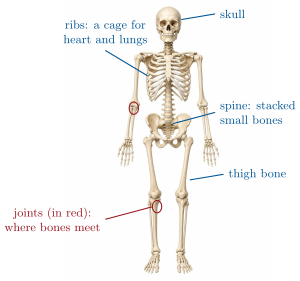
CoachThe skeleton is the frame of about bones inside the body. Its main regions:
- the skull, a solid helmet of bone around the brain;
- the spine (backbone), a bendable column of small bones stacked from neck to hips, holding the trunk upright;
- the ribs, curved bones forming a cage around heart and lungs;
- the limb bones: long bones in arms and legs — the thigh bone is the longest of the body.

Examples
Example 17.2 (Feel your frame)
No X-ray needed: press gently and the skeleton reports. Knuckles; the ridge of the shin; the chain of small bumps down the middle of your back — the spine, one small bone after another; the ribs you can count under your fingers. The frame is right under the skin.
Example 17.5 (The spine’s trick)
No single bone in your back can curl — yet you can roll forward almost into a ball. The spine is a column of more than small bones, each turning a few degrees on its neighbors: many small bends making one big one. That is also why you should bend knees, not back, to lift something heavy — knees are built for big folds, the spine for gentle ones.