সব বই

পেশাদার

1 Markets I: The Ecosystem and Exchange-Traded Marketsবাজার অনলাইন 2 Markets II: Rates, FX and Creditবাজার অনলাইন 3 Markets III: Commodities, Energy and Cryptoবাজার অনলাইন 4 Quantitative Methodsপদ্ধতি অনলাইন 5 Derivatives and Volatilityডেরিভেটিভস অনলাইন 6 Rates, Credit, XVA and Riskসুদহার, ঋণ ও ঝুঁকি অনলাইন 7 Research Craft: Predictors, Backtests, Measurement, Portfoliosগবেষণা অনলাইন 8 Strategies I: Equities and Futuresকৌশল অনলাইন 9 Strategies II: Volatility, Relative Value, Macro and the Bank Desksকৌশল অনলাইন 10 Microstructure and Executionএক্সিকিউশন অনলাইন 11 Market Making and High-Frequency Tradingমার্কেট মেকিং অনলাইন 12 Machine Learning for Marketsমেশিন লার্নিং অনলাইন 13 Low-Latency Softwareপ্রযুক্তি অনলাইন 14 Networks, Hardware and Trading Infrastructureপ্রযুক্তি অনলাইন 15 Research, Data and Risk Platformsপ্রযুক্তি অনলাইন 16 The Desk and the Firmপ্রতিষ্ঠান অনলাইন 17 The Industry: Firms, Roles and Careersক্যারিয়ার অনলাইন 18 Interviews I: Maths, Probability and Speedক্যারিয়ার অনলাইন 19 Interviews II: Markets, Trading Games and the Final Roundক্যারিয়ার অনলাইন 20 Interviews III: Codeক্যারিয়ার অনলাইন
অ্যাপ পরিচিতি Coach সাইন ইন পড়া শুরু করো

বইগুলো এখনো বাংলা ভাষায় পাওয়া যায় না — ইংরেজি সংস্করণ দেখানো হচ্ছে।

Biology · পরিভাষা

Structural methods কী?

Definition 7.6 University Biology — Year 3 · অধ্যায় 7 — Structural Biology of Proteins

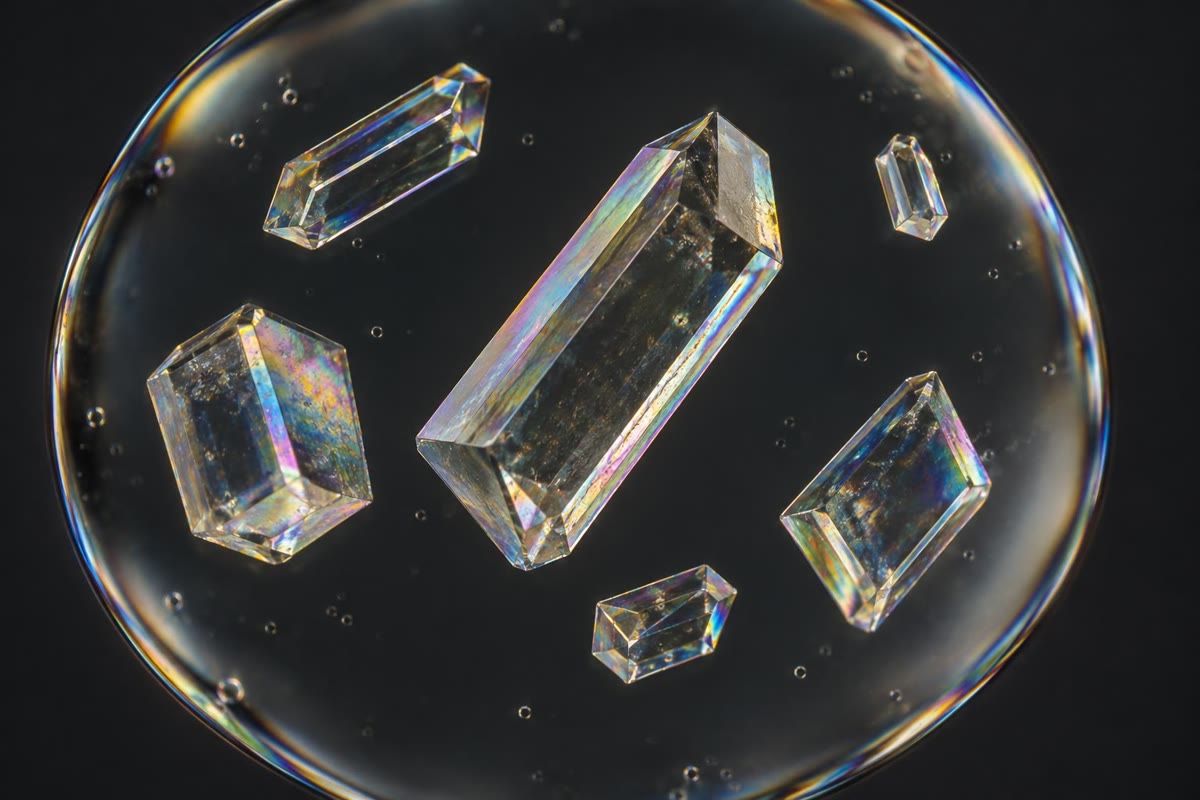
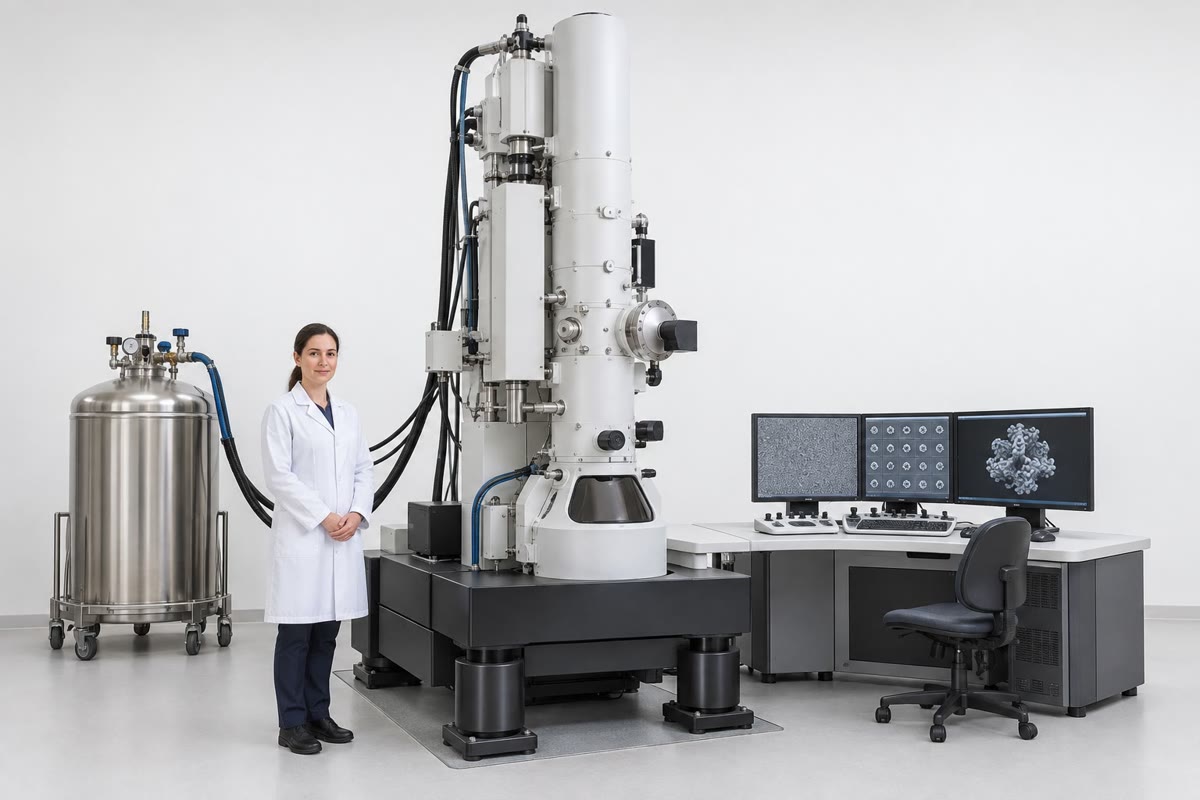
X-ray crystallography grows a crystal of the protein, exposes it to a beam of X-rays and records the diffraction pattern; the positions of the spots give the lattice and their intensities, once the phases of the waves are recovered, give the electron density of the unit cell, into which the chain is built. Nuclear magnetic resonance (NMR) measures, in solution, the couplings between the nuclei of atoms close in space, from which distances and hence a structure are computed; it works for proteins under about 40 kDa40\,\mathrm{kDa} and reports their motions. Cryo-electron microscopy images thousands to millions of single molecules frozen in a thin film of vitreous ice, each in a random orientation, and reconstructs the three-dimensional density by combining them; since direct electron detectors (2013) it reaches atomic resolution and needs no crystal, so that large complexes, membrane proteins and flexible assemblies that never crystallised are now solved routinely. The resolution of a structure is the smallest spacing at which two features are separated: at 0.35 nm0.35\,\mathrm{nm} the backbone and large side chains are placed, at 0.2 nm0.2\,\mathrm{nm} every atom, at 0.1 nm0.1\,\mathrm{nm} hydrogens.

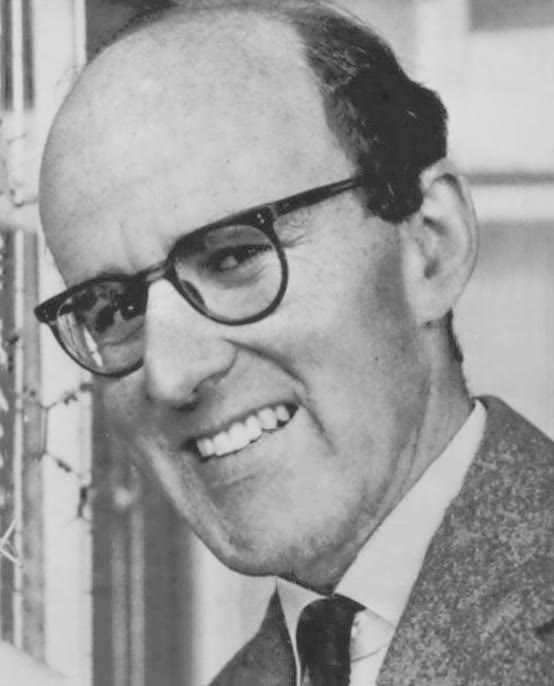
Max Perutz in 1962, the year of his Nobel prize for the structure of haemoglobin (Associated Press, public domain). Centre: protein crystals in a hanging drop, the starting point of crystallography. Right: a cryo-electron microscope, the instrument that made crystals unnecessary. Max Perutz in 1962, the year of his Nobel prize for the structure of haemoglobin (Associated Press, public domain). Centre: protein crystals in a hanging drop, the starting point of crystallography. Right: a cryo-electron microscope, the instrument that made crystals unnecessary. Max Perutz in 1962, the year of his Nobel prize for the structure of haemoglobin (Associated Press, public domain). Centre: protein crystals in a hanging drop, the starting point of crystallography. Right: a cryo-electron microscope, the instrument that made crystals unnecessary.
Max Perutz in 1962, the year of his Nobel prize for the structure of haemoglobin (Associated Press, public domain). Centre: protein crystals in a hanging drop, the starting point of crystallography. Right: a cryo-electron microscope, the instrument that made crystals unnecessary.
প্রসঙ্গসহ পড়ো →