 Coach
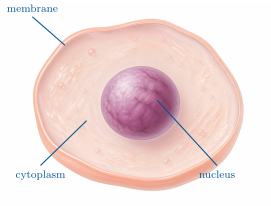
CoachSeen properly, every cell shows the same basic equipment:
- the membrane, the cell’s thin outer envelope, which holds it together and controls what enters and leaves;
- the cytoplasm, the jelly filling where the cell’s work goes on;
- the nucleus (Remark 29.6’s dark spot), the command center that directs the cell’s life and its division.
Membrane, cytoplasm, nucleus: the three-part kit of nearly every cell in every plant, animal and fungus.
Examples
Example 45.3 (Telling the slides apart)
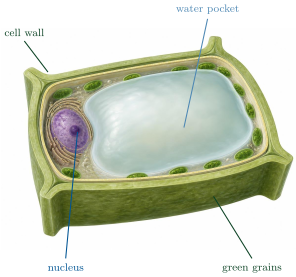
Back at the microscope with Example 29.5’s two slides, the differences now have names. Onion skin: straight walls meeting at corners — cell walls; a nucleus pushed to the side — the water pocket’s doing. Cheek cells: no walls, soft rounded outlines — membrane only — nucleus near the middle. One glance now reads plant or animal.