Primary & Middle School Biology · Grades 1–9
29A First Look at Cells
Look at the back of your hand: smooth skin, one seamless surface. Now imagine a magnifying glass strong enough to zoom in a thousand times. The seamless surface would dissolve into a pavement of tiny compartments, fitted together like flagstones — and every living thing you have met in this book, moss to whale, is paved the same way. Biology’s biggest secret is small.
29.1 Living things are made of cells
Definition 29.1 (Cell)
A cell is the smallest living building block of a living thing. Almost all cells are far too small to see with the naked eye; a body is built of them as a wall is built of bricks. Your own body is made of tens of thousands of billions of cells.
Proposition 29.2 (The cell principle)
Every living thing is made of cells — every animal, every plant, every mushroom, down to living things that are just one cell. This shared construction is one of the great signs of the unity of life: however different the daisy and the whale, up close they are built of the same kind of small living units.
Proof. Admitted at this level. ∎
Example 29.3 (How small is small?)
A typical cell of your body measures about a fiftieth of a millimetre. Line up of them and they span one millimetre — a pencil dot could cover the parade. That is why nobody suspected cells for most of human history: the building blocks of life are smaller than the eye’s smallest visible speck.
29.2 The instrument that revealed them
Definition 29.4 (Microscope)
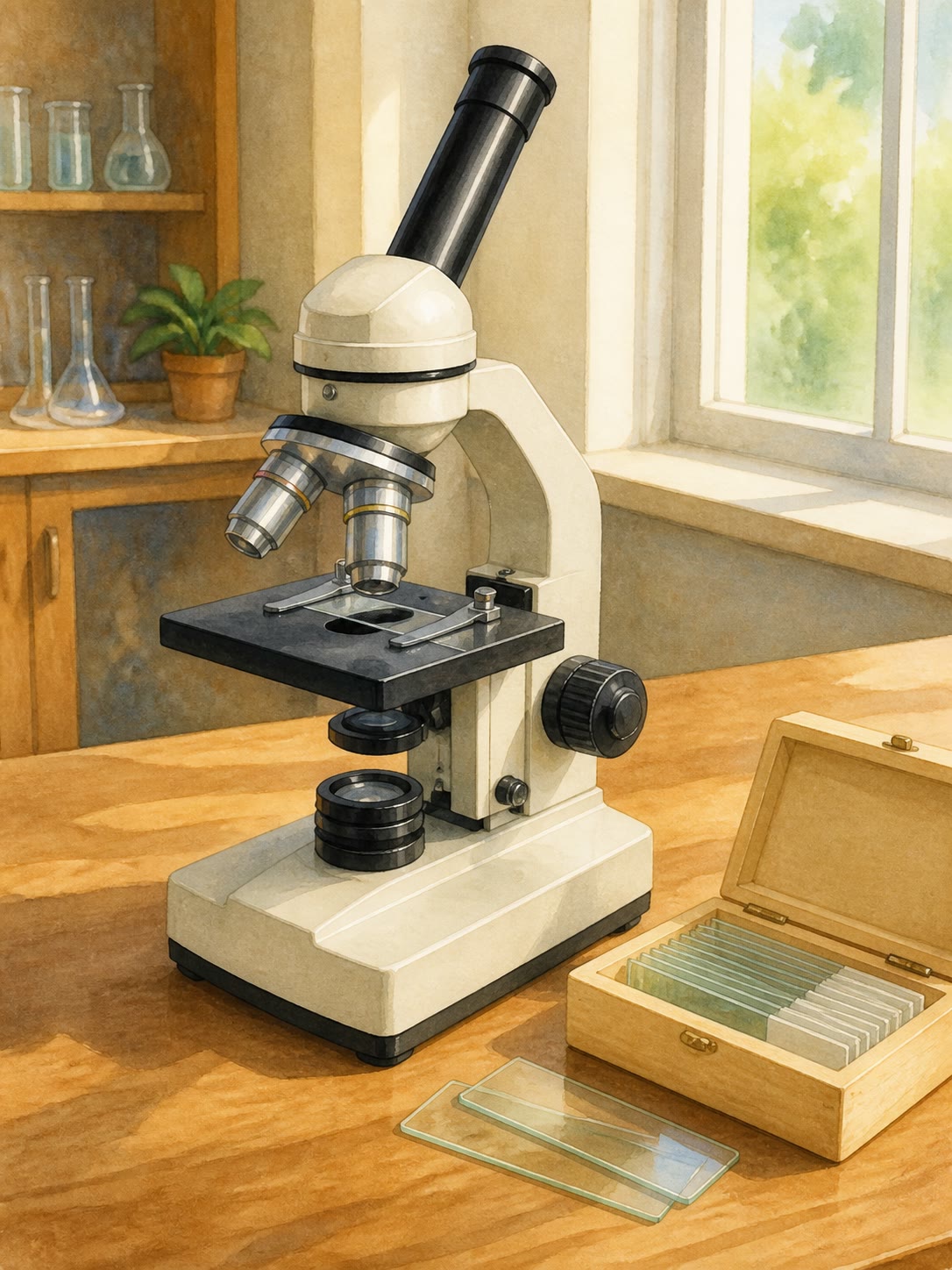
A microscope is an instrument whose lenses magnify very small things hundreds of times. Pointed at thin slices of living material, it revealed what no eye had ever seen: the cells. The name itself was coined by an early observer who thought the little compartments in a slice of cork looked like monks’ small rooms — cells.
Example 29.5 (Two classics under the lens)
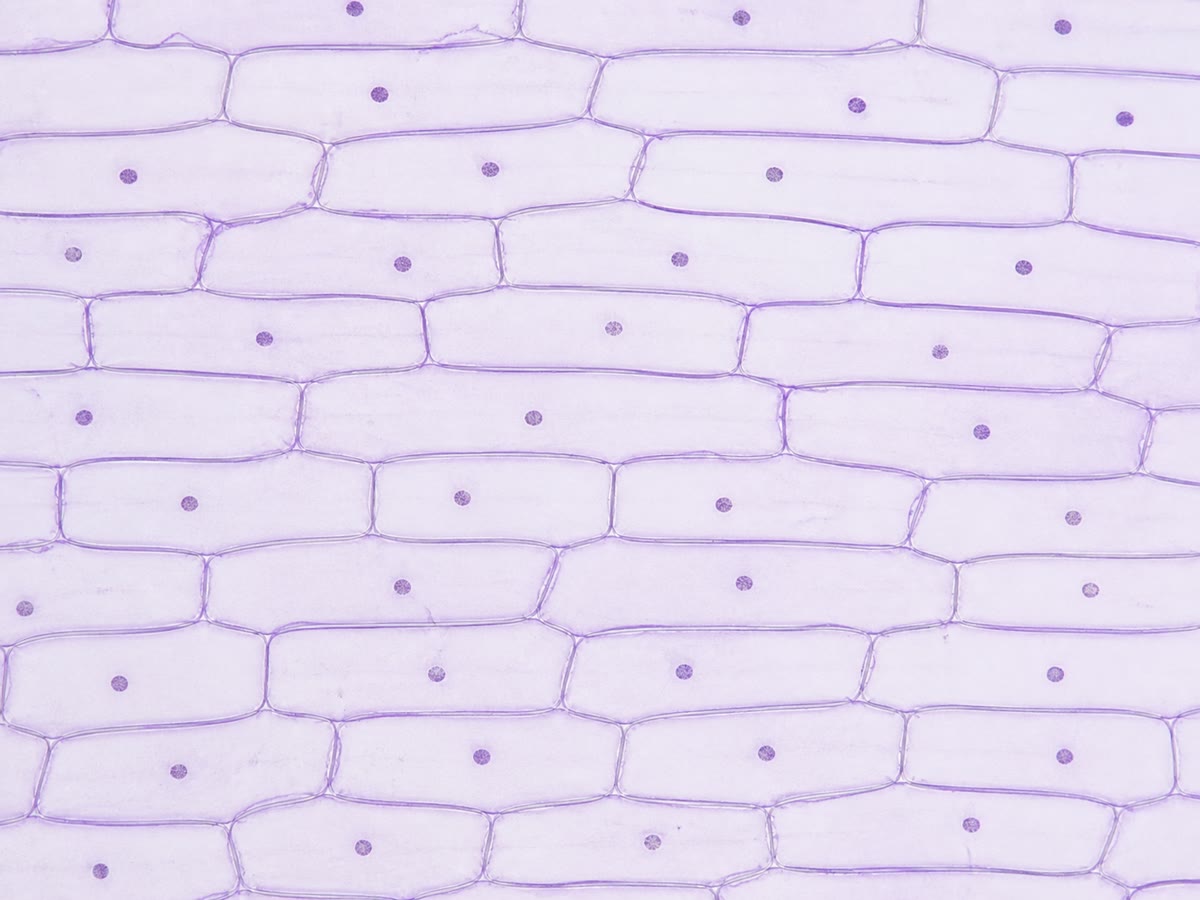
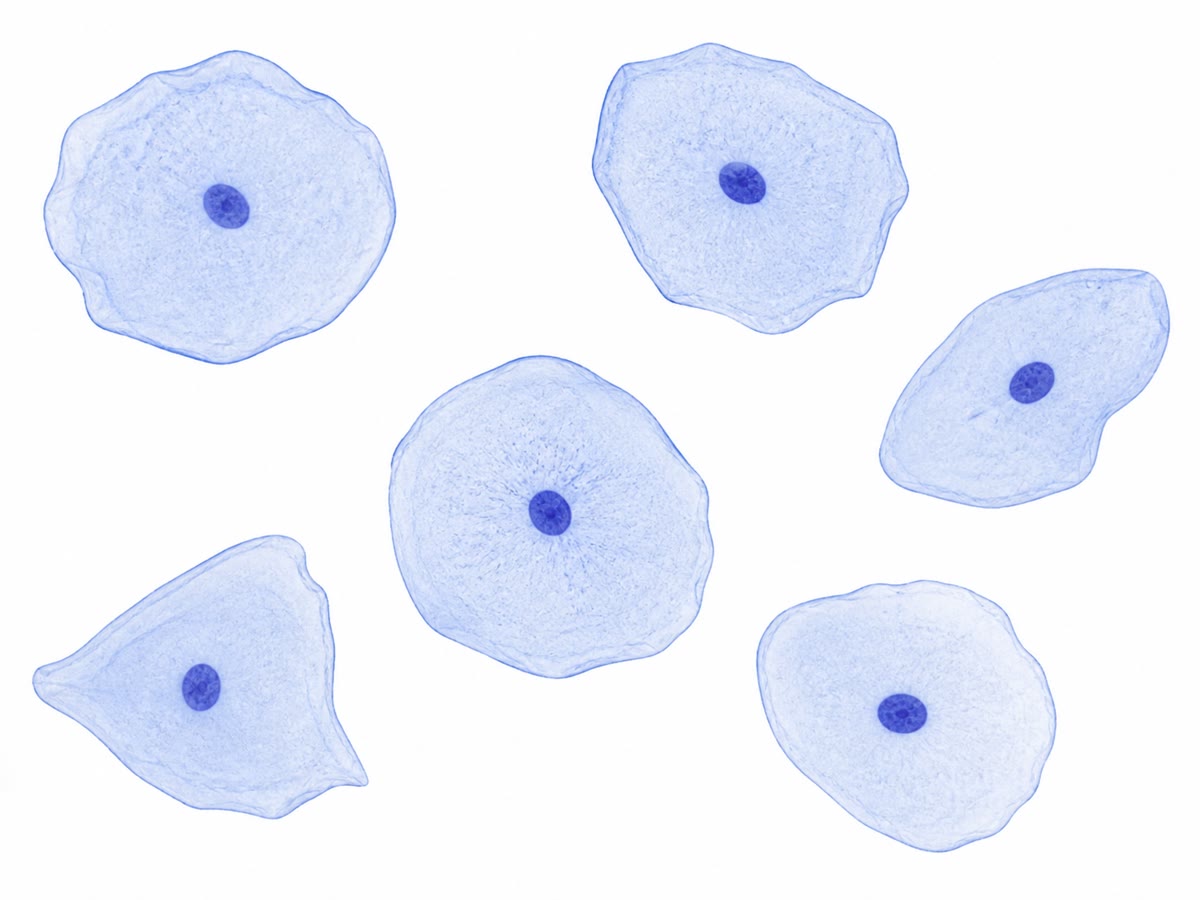
Two observations any school microscope can repeat: a shred of the thin skin inside an onion shows neat rows of brick-like cells, wall against wall; a gentle scrape from the inside of a cheek shows scattered, rounder cells — yours. Plant and animal, side by side, both cellular.
Remark 29.6 (The dark spot)
In both views, most cells show a small darker spot inside: the cell’s command center, called its nucleus. What the nucleus commands with — the famous thread of instructions coiled inside it — is a story for the later years of this book; for now, note only that the little rooms are not empty.
29.3 From one cell to a body
Proposition 29.7 (Bodies grow by their cells)
A body grows, and repairs itself, because its cells can divide: one cell splits into two living cells, two into four, and so on. Growing taller (Proposition 15.7) is, underneath, cells multiplying; a healing scrape (Remark 17.3) is cells rebuilding. And every body, even the largest, began as a single cell — the fertilized egg cell of Definition 23.1.
Proof. Admitted at this level. ∎
Example 29.8 (From one to trillions)
The fertilized egg divides into cells, then , , … Repeated division, over months and years, built the tens of thousands of billions of cells reading this sentence. Every cell of you descends from that first one.
Remark 29.9 (Whole lives in one cell)
Some living things never go beyond one cell — and need nothing more. A drop of pond water teems with them: single cells that swim, feed, and divide, whole lives at microscope scale. The germs of Definition 6.1 are mostly such single-celled living things — old acquaintances, now with an explanation.
29.4 Exercises
Exercise 29.1 ★
What is a cell? Roughly how many make up your body?
Solution
Solution of Exercise 29.1.
The smallest living building block of a living thing. Your body is made of tens of thousands of billions of them.
Exercise 29.2 ★
Why did nobody know about cells for most of history? Which instrument changed that?
Solution
Solution of Exercise 29.2.
Because cells are smaller than the smallest speck the eye can see. The microscope — magnifying thin slices hundreds of times — revealed them.
Exercise 29.3 ★
Describe what the microscope shows in onion skin, and in a cheek scrape. What do the two views have in common?
Exercise 29.4 ★
What is the small dark spot visible in most cells called?
Exercise 29.5 ★
About how many body cells, lined up, span one millimetre — and how long is one cell, in millimetres?
Exercise 29.6 ★
What are cells doing, underneath, when a child grows taller? And when a scraped knee heals?
Exercise 29.7 ★
Every human body began as how many cells? What was that first cell, by Definition 23.1?
Solution
Solution of Exercise 29.7.
One. It was the fertilized egg cell — the joining of one sperm cell and one egg cell.
Exercise 29.8 ★
A cell divides into ; each of those divides again, and so on. Continue the doubling from : how many cells after divisions? After ?
Exercise 29.9 ★★
Explain the sentence: “the daisy and the whale show the unity of life.” What do they share, by Proposition 29.2?
Solution
Solution of Exercise 29.9.
However different in size, shape and life, both are built of the same kind of small living units — cells. The shared construction plan, common to all living things, is what “unity of life” means.
Exercise 29.10 ★★
A drop of pond water holds living things of one single cell each. Check them against the signs of life of Proposition 1.3: which signs can a single cell show?
Solution
Solution of Exercise 29.10.
All of them: a single cell is born (of a dividing parent cell), feeds, grows, divides — making new living things like itself — and dies. One cell is enough for a complete life.
Exercise 29.11 ★★★
An elephant’s cells are about the same size as a mouse’s. What, then, makes the elephant bigger — larger cells, or more cells? What does your answer say about how growing works, by Proposition 29.7?