Coach
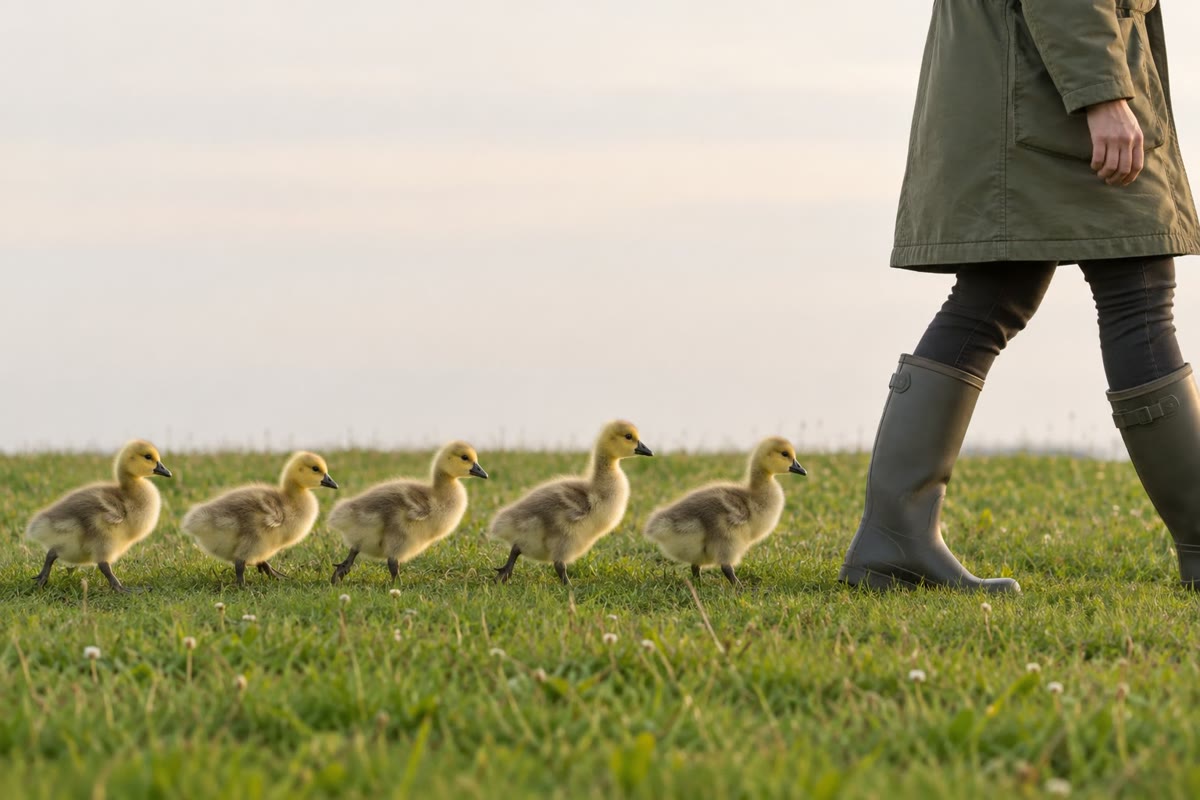
CoachTinbergen (1963) said a complete account of any behaviour must answer four questions: its mechanism (what stimuli and neural machinery produce it), its development (how it arises in the individual, from genes and experience), its function (how it contributes to survival and reproduction) and its evolutionary history (how it arose from ancestral behaviour). The ethologists who framed them had established the first two. Many behaviours are fixed action patterns: stereotyped sequences released by a simple sign stimulus and run to completion once begun — a greylag goose rolls a displaced egg back to the nest with its bill, and completes the motion even if the egg is removed halfway; a herring gull chick pecks at a red spot on any bill-shaped object, and pecks more at a stick with three red bands than at a real gull’s head; a male stickleback attacks anything red on its underside, including a passing mail van seen through the window. Others are learned within a window: imprinting, by which a gosling in its first day follows and thereafter treats as its parent whatever moves — a goose, Lorenz, a cardboard box — is fast, irreversible and confined to a critical period; song learning in birds, the Year 2 volume’s example, is the same shape. The dichotomy of innate and learned is false: a behaviour has a genetic programme that specifies what is to be learned, when, and from whom, and the programme is what evolves.