 Coach
CoachA mixture is a homogeneous mixture when its different parts cannot be told apart by eye, even with a magnifying glass: it looks the same everywhere. It is a heterogeneous mixture when at least two different parts can be seen.
Examples
Example 8.6 (Four mixtures)
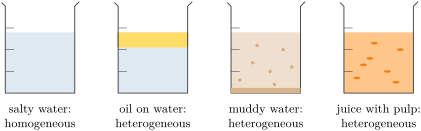
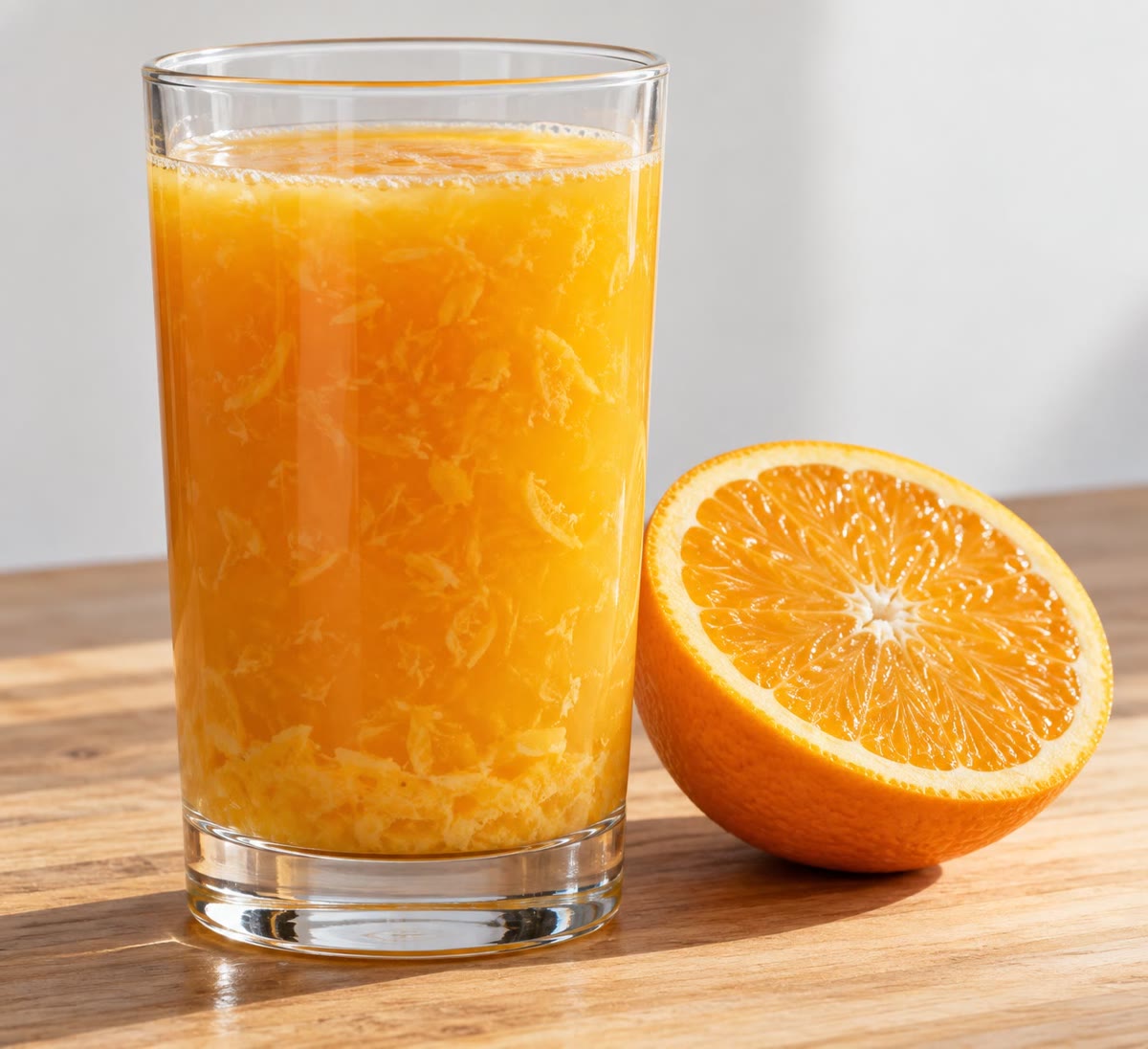
Salty water and air are homogeneous: their parts cannot be seen. Oil on water is heterogeneous: two layers. Muddy water is heterogeneous: grains float in it and settle. Orange juice with pulp is heterogeneous: the bits of pulp can be seen.
Example 8.11 (Four waters)
- Distilled water, made in a laboratory, is very nearly a pure substance: water and nothing else.
- Tap water is a homogeneous mixture: water with small amounts of dissolved substances (a drop dried on a dark plate leaves a white ring).
- Mineral water is a homogeneous mixture whose label gives the dissolved substances, in milligrams per litre.
- Sea water is a homogeneous mixture holding about of salts in each kilogram.