School Chemistry — Grades 1 to 12 · Grades 1–12
8Pure Substances and Mixtures
A bottle of mineral water lists on its label a dozen dissolved substances, with their amounts in milligrams per litre. The water that comes out of a laboratory’s purifier lists none. Both are clear and colourless, both quench thirst — yet only one of them is what a chemist calls pure. This chapter gives the word “pure” its exact meaning, and shows how to tell a pure substance from a mixture without tasting anything.
You already know
To mix is to put different things together; a solid that dissolves in water leaves the liquid clear, and the clear liquid is a solution (Chapter 2). Mixes can be taken apart by sieving, decanting, filtering and evaporating (Chapter 3). Every material has properties that can be tested: hard or soft, transparent or not, floats or sinks (Chapter 1).
8.1 Chemical species and pure substances
Definition 8.1 (Chemical species)
A chemical species is one particular kind of substance, with its own name and its own properties: water, sugar, salt, oxygen, ethanol (the alcohol of wine), iron.
Definition 8.2 (Pure substance)
A pure substance is made of one single chemical species and nothing else: distilled water, a crystal of sugar, a gold ring of pure gold.
Definition 8.3 (Mixture)
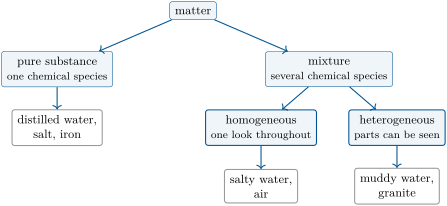
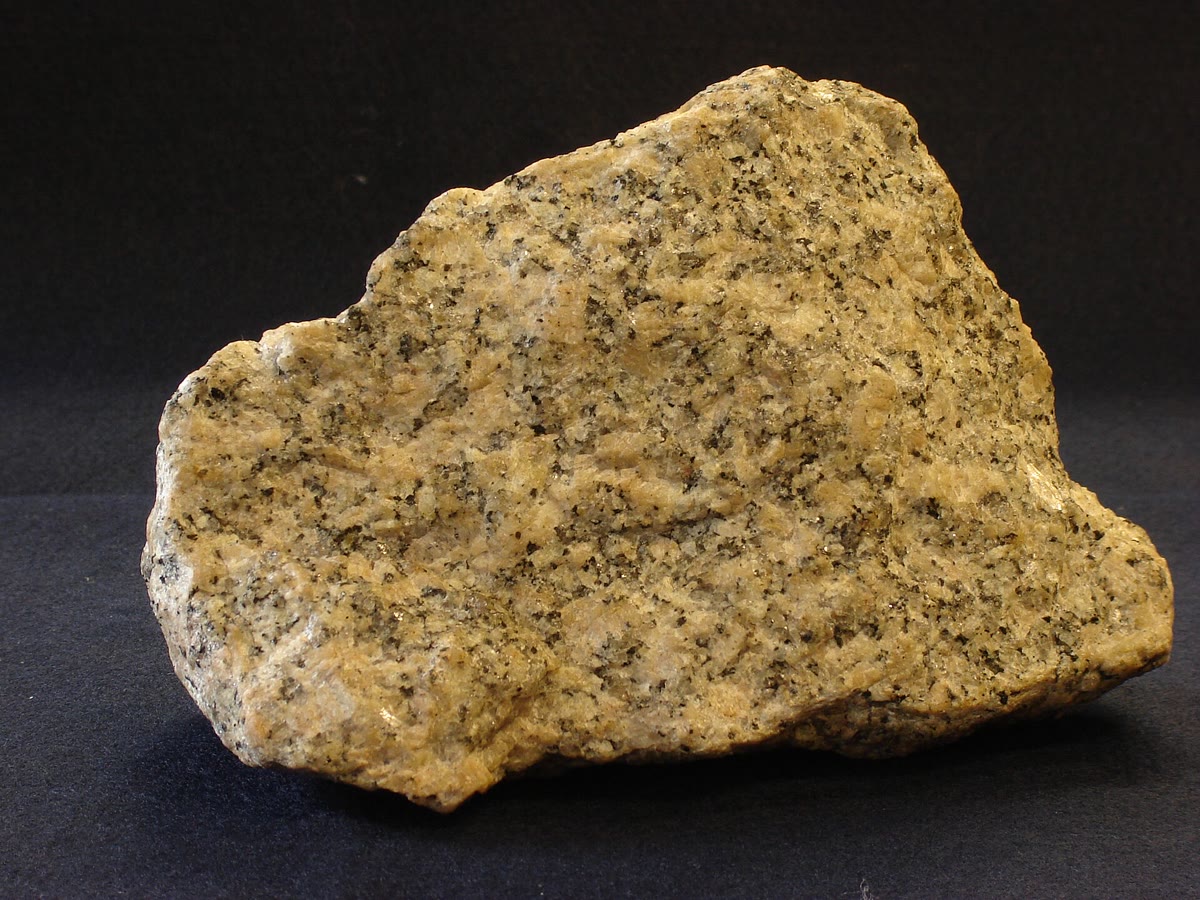
A mixture contains several chemical species. Air, sea water, mineral water, milk, granite and orange juice are mixtures.
Remark 8.4 (Pure in everyday language)
A carton of “pure orange juice” means that nothing has been added to the juice. To a chemist the juice is still a mixture: water, sugars, acids, vitamins, colours and flavours, many chemical species. “Pure mountain water” is a mixture too: water with dissolved salts.
8.2 Homogeneous and heterogeneous mixtures
Definition 8.5 (Homogeneous and heterogeneous mixtures)
A mixture is a homogeneous mixture when its different parts cannot be told apart by eye, even with a magnifying glass: it looks the same everywhere. It is a heterogeneous mixture when at least two different parts can be seen.
Example 8.6 (Four mixtures)
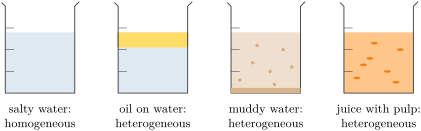
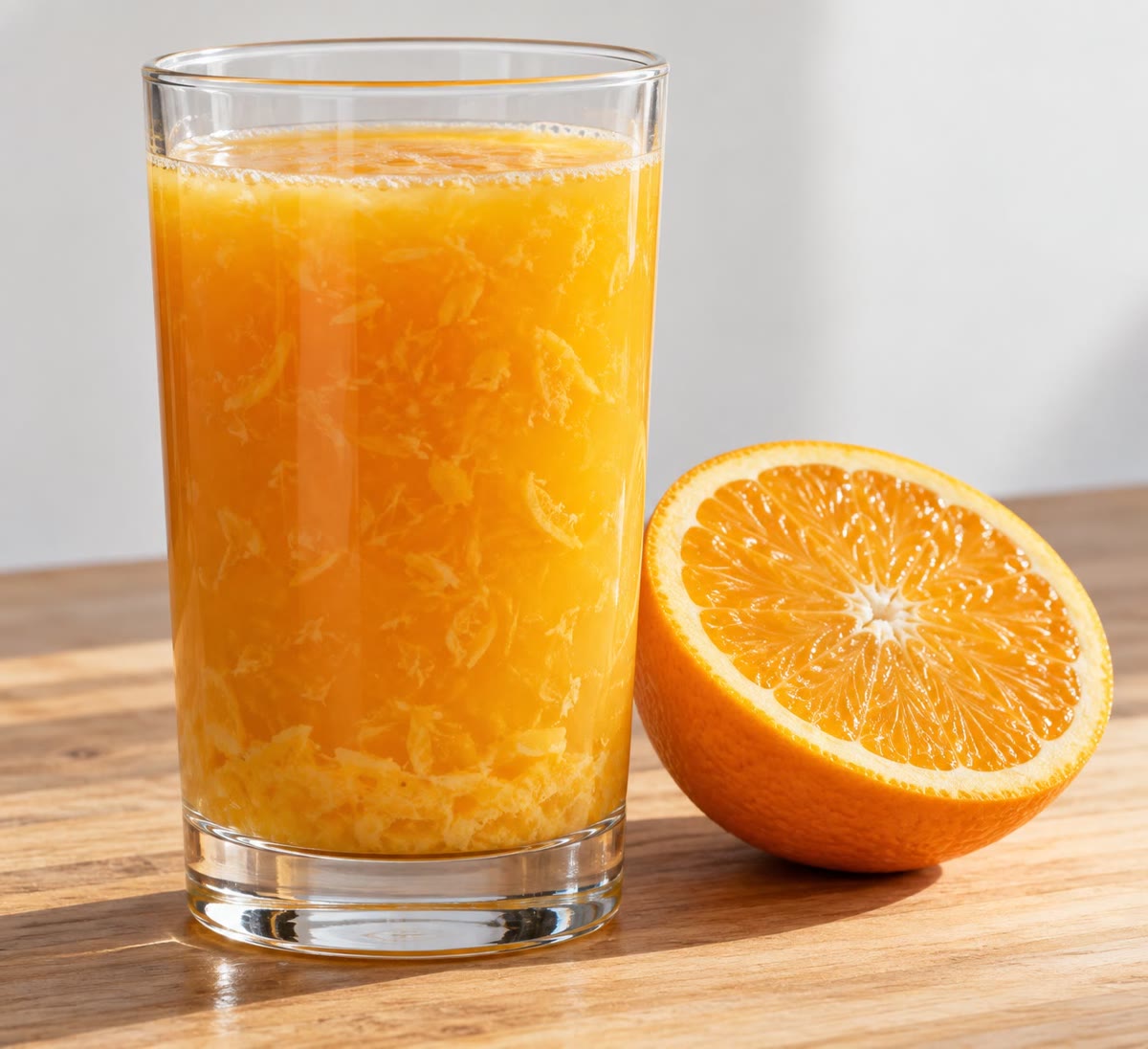
Salty water and air are homogeneous: their parts cannot be seen. Oil on water is heterogeneous: two layers. Muddy water is heterogeneous: grains float in it and settle. Orange juice with pulp is heterogeneous: the bits of pulp can be seen.
Remark 8.7 (Homogeneous does not mean pure)
Salty water looks exactly like pure water. Looking is not enough to tell a pure substance from a homogeneous mixture: we must measure something.
8.3 Identifying a pure substance by its constants
Proposition 8.8 (A pure substance has its own constants)
Each pure substance melts at its own fixed temperature, boils at its own fixed temperature (at normal pressure), and has its own mass for a given volume, its density. These numbers are its constants; the physics book explains what they measure. For a few pure substances:
| pure substance | melts at | boils at | mass of |
|---|---|---|---|
| water | about | ||
| ethanol | |||
| propanone (acetone) | — | ||
| salt (sodium chloride) | — | ||
| iron | — |
Proposition 8.9 (A mixture has no fixed boiling temperature)
A mixture does not boil at one fixed temperature: salty water starts to boil a little above , and its temperature keeps rising while it boils, as the water leaves and the salt that stays behind gets more concentrated.
Method 8.10 (Is this liquid pure? Which one is it?)
- Heat it, in the laboratory, and read its temperature while it boils.
- If the temperature stays fixed, the liquid is probably a pure substance: compare that temperature with a table of constants.
- If the temperature keeps rising, it is a mixture.
- Confirm with a second constant, for instance the mass of a known volume.
In the lab — Boiling salty water
The teacher heats pure water and salty water side by side, each with a thermometer in it. The pure water boils at and stays there as long as it boils. The salty water starts boiling a little above , and the thermometer creeps upwards minute after minute.
8.4 Water, pure and not
Example 8.11 (Four waters)
- Distilled water, made in a laboratory, is very nearly a pure substance: water and nothing else.
- Tap water is a homogeneous mixture: water with small amounts of dissolved substances (a drop dried on a dark plate leaves a white ring).
- Mineral water is a homogeneous mixture whose label gives the dissolved substances, in milligrams per litre.
- Sea water is a homogeneous mixture holding about of salts in each kilogram.
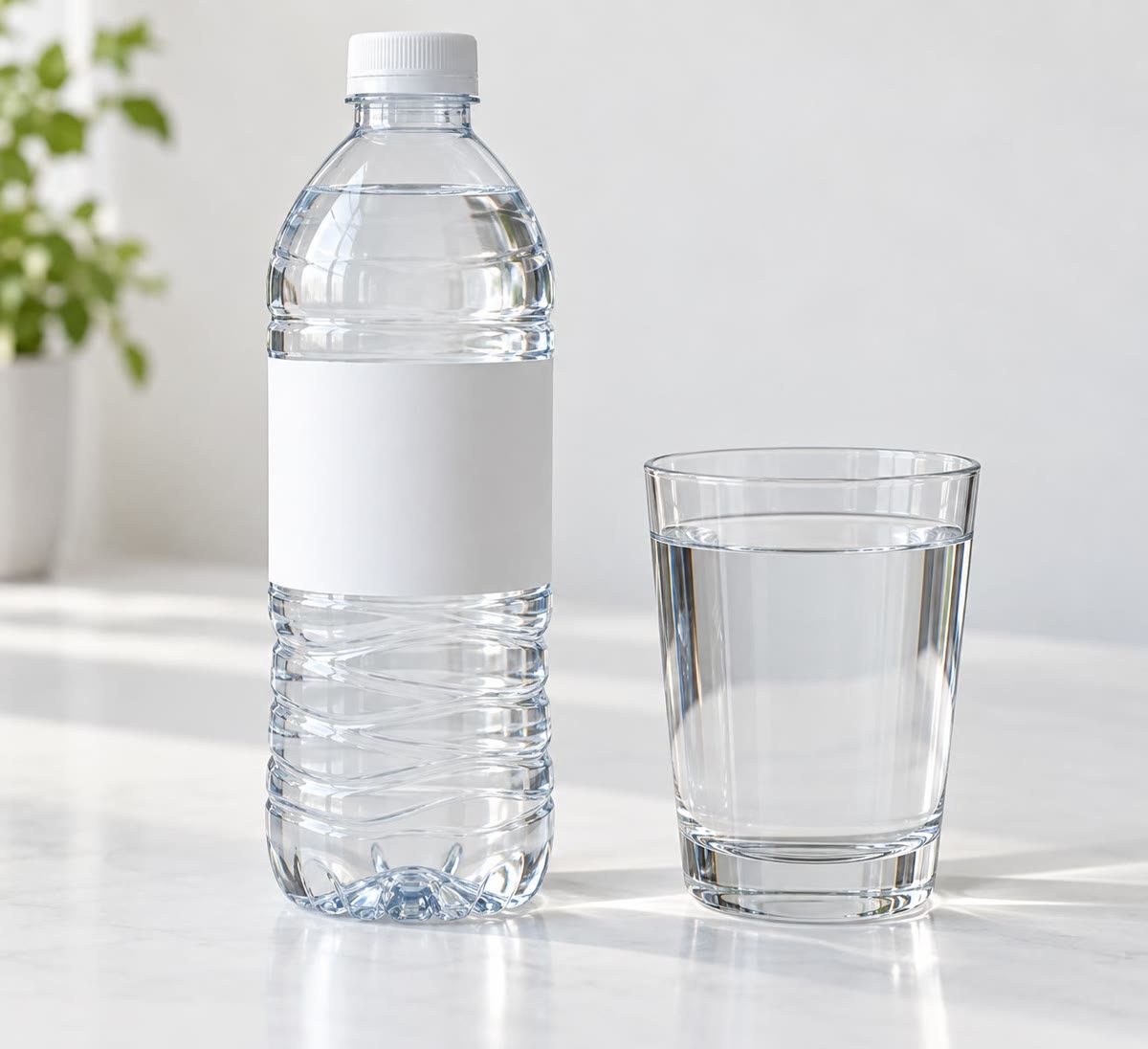
Example 8.12 (Reading a mineral-water label)
A label reads: calcium , magnesium , sodium , hydrogencarbonate , sulfate , chloride . (These figures are an example.) In one litre there are mg of dissolved substances, about half a gram: tiny beside the of water, but enough to make it a mixture.
8.5 Exercises
Exercise 8.1 ★
Pure substance or mixture? Distilled water, air, sea water, a block of pure iron, milk, a sugar crystal.
Solution
Solution of Exercise 8.1.
Pure substances: distilled water, the block of pure iron, the sugar crystal. Mixtures: air, sea water, milk.
Exercise 8.2 ★
Homogeneous or heterogeneous? Salty water, granite, oil on water, tap water, muesli.
Solution
Solution of Exercise 8.2.
Homogeneous: salty water, tap water. Heterogeneous: granite, oil on water, muesli.
Exercise 8.3 ★
What is a chemical species? Give three examples.
Solution
Solution of Exercise 8.3.
One particular kind of substance, with its own name and properties: for instance water, salt, ethanol (also sugar, oxygen, iron).
Exercise 8.4 ★
A liquid boils at , and its temperature stays at while it boils. Use the table of constants to suggest what it is.
Solution
Solution of Exercise 8.4.
A fixed boiling temperature suggests a pure substance; is the boiling temperature of ethanol.
Exercise 8.5 ★
Why is “pure orange juice” not a pure substance for a chemist?
Solution
Solution of Exercise 8.5.
It contains many chemical species (water, sugars, acids, vitamins, flavours): it is a mixture. “Pure” on the carton only means that nothing was added.
Exercise 8.6 ★★
A liquid starts to boil at and its temperature rises while it boils. Is it a pure substance? What could it be?
Solution
Solution of Exercise 8.6.
No: a pure substance boils at a fixed temperature. It is a mixture, probably water with something dissolved in it, such as salty water.
Exercise 8.7 ★★
Look at the figure of the four beakers. In which beaker could a filter separate the parts of the mixture? In which beaker could it not?
Solution
Solution of Exercise 8.7.
A filter could separate the muddy water (the grains stay on the paper) and the juice with pulp (the pulp stays). It cannot separate salty water (the salt is dissolved) nor oil from water (both liquids pass through; they are separated by pouring off the top layer).
Exercise 8.8 ★★
A metal cube of volume has a mass of . What is the mass of ? Which metal of the table could it be?
Solution
Solution of Exercise 8.8.
for : iron.
Exercise 8.9 ★★
Using the mineral-water label of the example, what percentage of the dissolved mass is hydrogencarbonate? Round to the nearest whole number.
Solution
Solution of Exercise 8.9.
: about .
Exercise 8.10 ★★
Sea water holds about of salts per kilogram. What mass of salts is there in a bucket of sea water? What percentage of the mass of sea water is salt?
Solution
Solution of Exercise 8.10.
of salts. Percentage: .
Exercise 8.11 ★★★
Two clear, colourless liquids look identical. Describe two measurements, made in a laboratory, that would show whether they are the same pure substance.
Solution
Solution of Exercise 8.11.
Measure their boiling temperatures (each must stay fixed while boiling, and the two must be equal), and weigh the same volume of each (equal masses). Two equal constants, both fixed, point to the same pure substance.
Exercise 8.12 ★★★
A mixture is made of of water and of ethanol. What percentage of its mass is ethanol? Can it be identified with the table of constants? Explain.
Solution
Solution of Exercise 8.12.
ethanol. It is a mixture: it has no fixed boiling temperature and appears nowhere in the table, which lists only pure substances.
8.6 Problem: Three Colourless Liquids
Problem 8.1
Weekend problem — three unlabelled flasks of clear, colourless liquid, and the measurements that tell them apart
A laboratory assistant finds three flasks, A, B and C, whose labels have fallen off. All three hold a clear, colourless liquid. The laboratory uses only three such liquids: distilled water, ethanol and sea water brought back from a field trip. The assistant makes three kinds of measurements, in the laboratory.
Part I — Looking.
- The three liquids look exactly alike. Can the assistant tell, by looking, which ones are pure substances? Explain.
- If one of them is a mixture, is it homogeneous or heterogeneous?
- Which kind of measurement can show that a liquid is a pure substance?
Part II — Measuring. Each liquid is heated until it boils. Liquid A boils at and its temperature stays there. Liquid B boils at and stays there. Liquid C starts to boil at , and its temperature keeps rising slowly. Then of each liquid is weighed: A , B , C .
- Which liquids are pure substances? Which is a mixture?
- Using the table of constants of this chapter, name liquids A and B.
- Compute the mass of (that is, ) of each liquid.
- Do these masses agree with your answer to question 5?
- Why does the temperature of liquid C keep rising while it boils?
Part III — What is in liquid C? of liquid C are left to dry in a dish. When all the water has gone, of white crystals remain.
- What does this residue show about liquid C?
- Using the mass of of C found in question 6, find the mass of of C, then the percentage of its mass that is salt (to one decimal place).
- Sea water holds about of salts in each kilogram. What percentage is that? Compare with question 10.
- Conclude: how many grams of salt does each litre of liquid C hold, and is liquid C the sea water?
Solution
Solution of Problem 8.1.
1. No. A pure substance and a homogeneous mixture can look exactly alike: something must be measured.
2. Homogeneous: it is clear and its parts cannot be seen.
3. A constant: a boiling temperature that stays fixed while the liquid boils (or the mass of a known volume, compared with a table).
4. A and B, whose boiling temperatures stay fixed, are pure substances. C is a mixture.
5. A boils at : water. B boils at : ethanol.
6. A: . B: . C: .
7. Yes: about for water, for ethanol.
8. As the water boils away, the salt stays behind, so the liquid that remains holds more and more salt; it then boils at a higher temperature.
9. Liquid C holds a dissolved solid: it is a solution, a mixture, as its boiling already showed.
10. ; : about of the mass is salt.
11. : very close to question 10.
12. in , so of salt per litre. With its saltiness and its boiling behaviour, C is the sea water; A is distilled water and B ethanol.