 Coach
CoachA molecular crystal is a crystal of molecules held together by intermolecular forces — van der Waals interactions and, if possible, hydrogen bonds — while each molecule keeps its own covalent bonds: diiodine, dry ice , ice, sugar.
Examples
Example 6.16 (Ice)
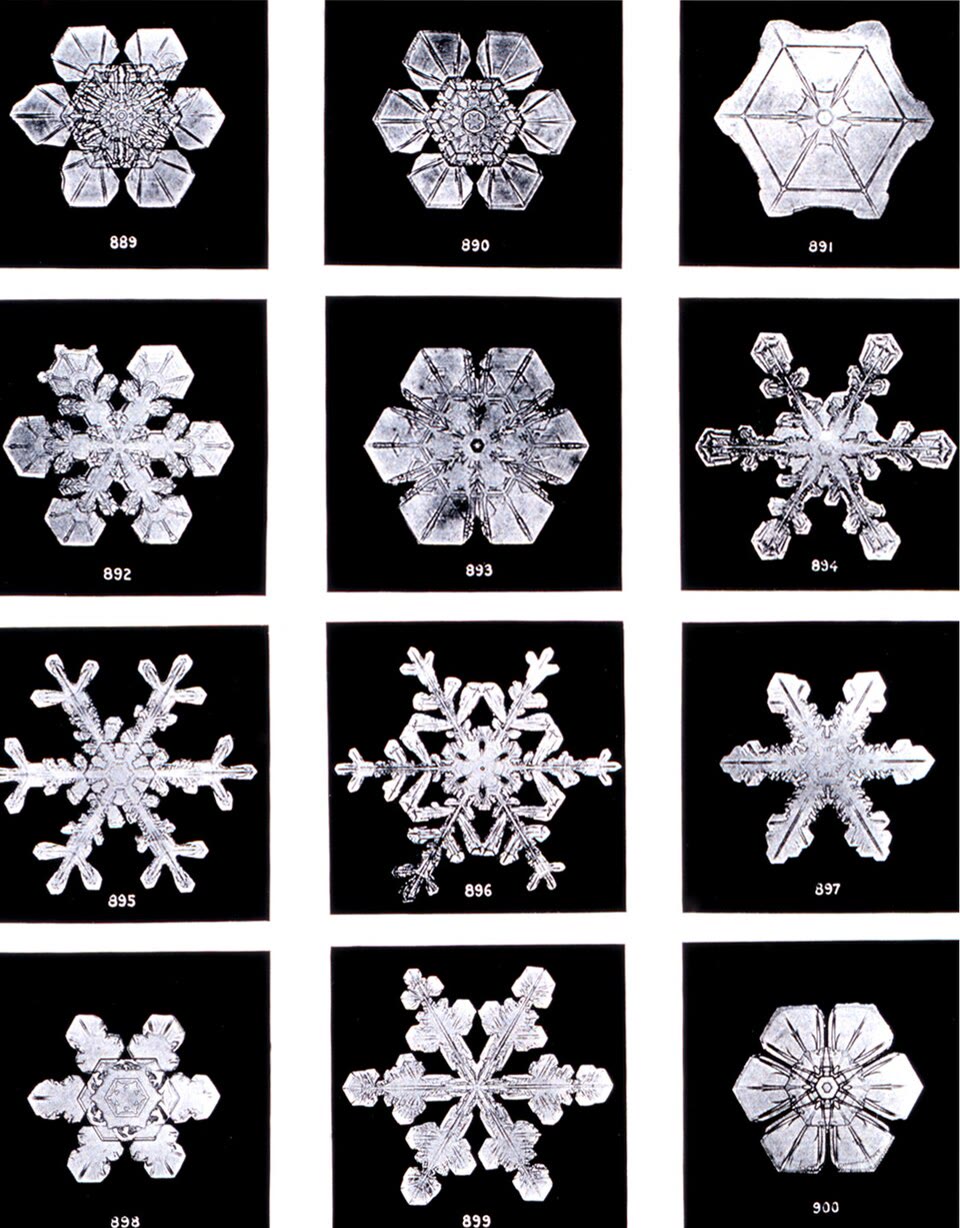
In ordinary ice each water molecule is hydrogen-bonded to four others at the corners of a tetrahedron: two by its own hydrogens and two by its lone pairs. This open, hexagonal network, imposed by the directions of the hydrogen bonds, leaves much empty space: ice is less dense than liquid water, in which the network is partly broken and the molecules come closer. The hexagonal symmetry of the network shows in the six-fold shape of snow crystals.