সব বই

পেশাদার

1 Markets I: The Ecosystem and Exchange-Traded Marketsবাজার অনলাইন 2 Markets II: Rates, FX and Creditবাজার অনলাইন 3 Markets III: Commodities, Energy and Cryptoবাজার অনলাইন 4 Quantitative Methodsপদ্ধতি অনলাইন 5 Derivatives and Volatilityডেরিভেটিভস অনলাইন 6 Rates, Credit, XVA and Riskসুদহার, ঋণ ও ঝুঁকি অনলাইন 7 Research Craft: Predictors, Backtests, Measurement, Portfoliosগবেষণা অনলাইন 8 Strategies I: Equities and Futuresকৌশল অনলাইন 9 Strategies II: Volatility, Relative Value, Macro and the Bank Desksকৌশল অনলাইন 10 Microstructure and Executionএক্সিকিউশন অনলাইন 11 Market Making and High-Frequency Tradingমার্কেট মেকিং অনলাইন 12 Machine Learning for Marketsমেশিন লার্নিং অনলাইন 13 Low-Latency Softwareপ্রযুক্তি অনলাইন 14 Networks, Hardware and Trading Infrastructureপ্রযুক্তি অনলাইন 15 Research, Data and Risk Platformsপ্রযুক্তি অনলাইন 16 The Desk and the Firmপ্রতিষ্ঠান অনলাইন 17 The Industry: Firms, Roles and Careersক্যারিয়ার অনলাইন 18 Interviews I: Maths, Probability and Speedক্যারিয়ার অনলাইন 19 Interviews II: Markets, Trading Games and the Final Roundক্যারিয়ার অনলাইন 20 Interviews III: Codeক্যারিয়ার অনলাইন
অ্যাপ পরিচিতি Coach সাইন ইন পড়া শুরু করো

বইগুলো এখনো বাংলা ভাষায় পাওয়া যায় না — ইংরেজি সংস্করণ দেখানো হচ্ছে।

Chemistry · পরিভাষা

Molecular crystal কী?

Definition 6.14 University Chemistry — Year 1 · অধ্যায় 6 — Crystals II: Ionic, Covalent and Molecular Solids

A molecular crystal is a crystal of molecules held together by intermolecular forces — van der Waals interactions and, if possible, hydrogen bonds — while each molecule keeps its own covalent bonds: diiodine, dry ice COX2(s)\ce{CO2(s)}, ice, sugar.

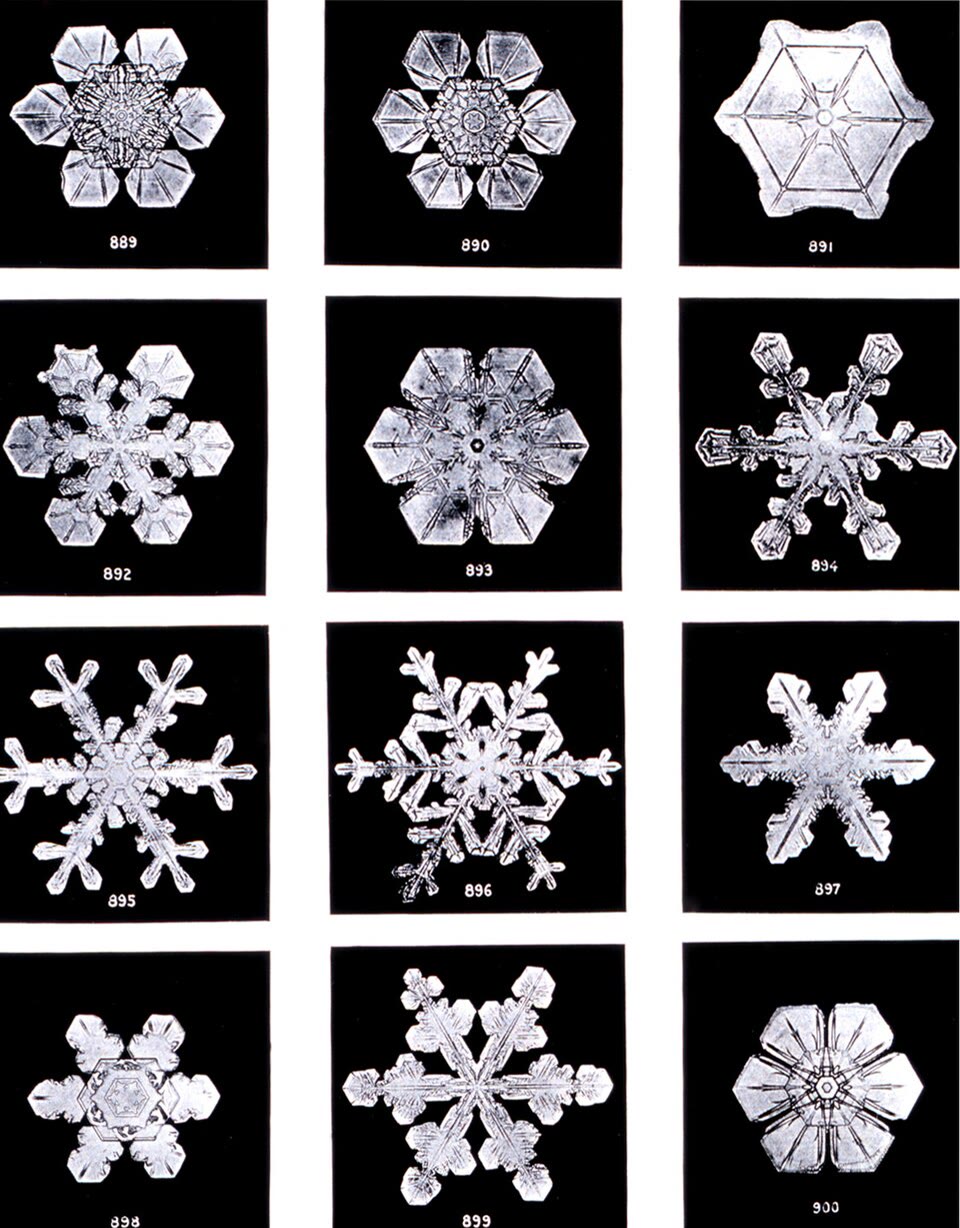
Snow crystals photographed by Wilson Bentley about 1902: every one has six-fold symmetry, the trace of the hexagonal network of hydrogen bonds in ice. Public domain.

উদাহরণ

Example 6.16 (Ice)

In ordinary ice each water molecule is hydrogen-bonded to four others at the corners of a tetrahedron: two by its own hydrogens and two by its lone pairs. This open, hexagonal network, imposed by the directions of the hydrogen bonds, leaves much empty space: ice is less dense than liquid water, in which the network is partly broken and the molecules come closer. The hexagonal symmetry of the network shows in the six-fold shape of snow crystals.

প্রসঙ্গসহ পড়ো →