
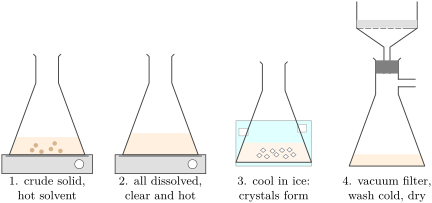
Recrystallisation purifies a solid by dissolving it in the smallest possible volume of a hot solvent, then letting the solution cool: the product, much less soluble in the cold, crystallises, while the impurities, present in small amounts, stay dissolved.
Chemistry · Glossary
What is Recrystallisation?
Recrystallisation purifies a solid by dissolving it in the minimum of a hot solvent in which it is very soluble hot and little soluble cold, then letting it crystallise on cooling; the impurities either stay dissolved in the cold solvent (the mother liquor) or, being insoluble, are removed beforehand by hot filtration.