সব বই

পেশাদার

1 Markets I: The Ecosystem and Exchange-Traded Marketsবাজার অনলাইন 2 Markets II: Rates, FX and Creditবাজার অনলাইন 3 Markets III: Commodities, Energy and Cryptoবাজার অনলাইন 4 Quantitative Methodsপদ্ধতি অনলাইন 5 Derivatives and Volatilityডেরিভেটিভস অনলাইন 6 Rates, Credit, XVA and Riskসুদহার, ঋণ ও ঝুঁকি অনলাইন 7 Research Craft: Predictors, Backtests, Measurement, Portfoliosগবেষণা অনলাইন 8 Strategies I: Equities and Futuresকৌশল অনলাইন 9 Strategies II: Volatility, Relative Value, Macro and the Bank Desksকৌশল অনলাইন 10 Microstructure and Executionএক্সিকিউশন অনলাইন 11 Market Making and High-Frequency Tradingমার্কেট মেকিং অনলাইন 12 Machine Learning for Marketsমেশিন লার্নিং অনলাইন 13 Low-Latency Softwareপ্রযুক্তি অনলাইন 14 Networks, Hardware and Trading Infrastructureপ্রযুক্তি অনলাইন 15 Research, Data and Risk Platformsপ্রযুক্তি অনলাইন 16 The Desk and the Firmপ্রতিষ্ঠান অনলাইন 17 The Industry: Firms, Roles and Careersক্যারিয়ার অনলাইন 18 Interviews I: Maths, Probability and Speedক্যারিয়ার অনলাইন 19 Interviews II: Markets, Trading Games and the Final Roundক্যারিয়ার অনলাইন 20 Interviews III: Codeক্যারিয়ার অনলাইন
অ্যাপ পরিচিতি Coach সাইন ইন পড়া শুরু করো

বইগুলো এখনো বাংলা ভাষায় পাওয়া যায় না — ইংরেজি সংস্করণ দেখানো হচ্ছে।

Earth and Space Sciences · পরিভাষা

Fossil কী?

অন্য নাম: mould · cast · trace fossil

Definition 21.3 Primary & Middle School Earth and Space Sciences · অধ্যায় 21 — Sediments and Fossils

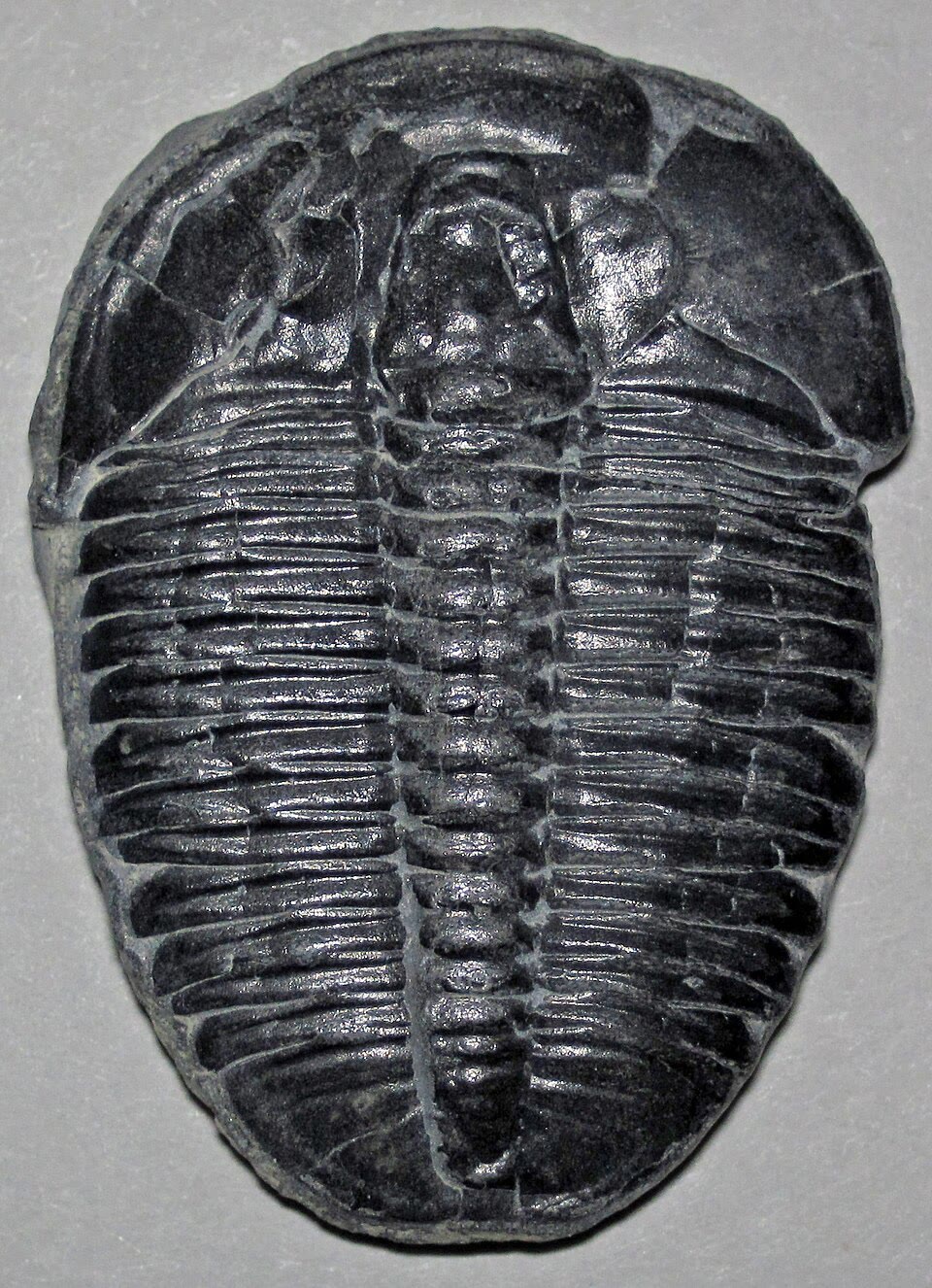
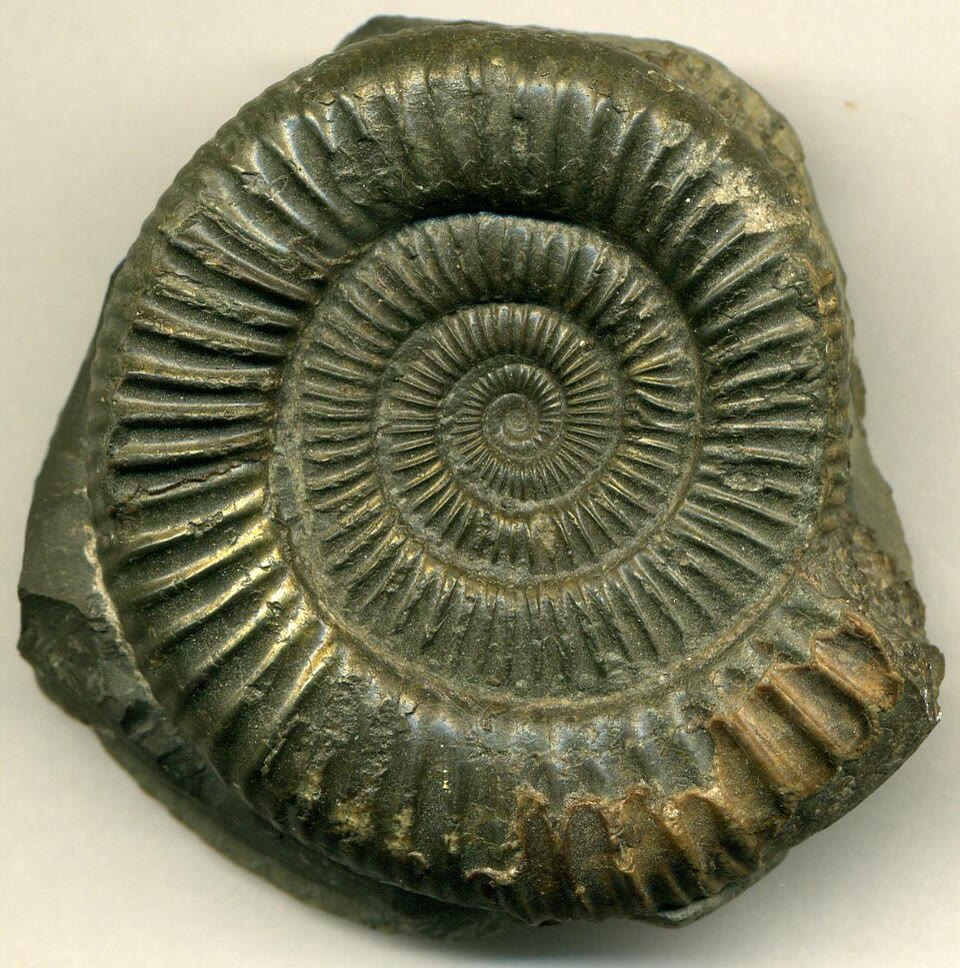
A fossil is the remains, or the trace, of a living thing of long ago, kept in rock. Some fossils are the hard parts of the body — a shell, a bone, a tooth, wood — turned to stone. Others keep only a shape: a mould is the hollow imprint left in the rock where a shell or a bone has dissolved; a cast is the copy that forms when a mould is filled with new mineral matter or sediment. A trace fossil is a sign of what an animal did — a footprint, a burrow, a trail — and not a part of its body.
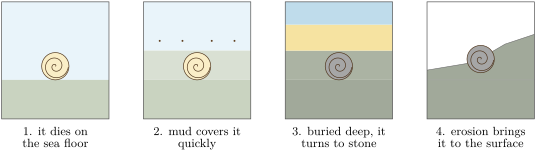
How a fossil forms (a drawing, not to scale): a shell is buried quickly under mud; buried deeper under new layers, it turns to stone; long afterwards, erosion wears away the layers above and the fossil appears at the surface.
Two fossils of animals with hard shells. Photographs: James St. John (CC BY 2.0, via Wikimedia Commons).
An ammonite, an extinct animal with a coiled shell, a relative of the squids and octopuses, 5.7 cm5.7\,\mathrm{cm} across, from the coast of Yorkshire (England).
Two fossils of animals with hard shells. Photographs: James St. John (CC BY 2.0, via Wikimedia Commons).
A trilobite, an extinct sea animal whose body has three lobes, about 2.6 cm2.6\,\mathrm{cm} across, from Utah (United States).
Two fossils of animals with hard shells. Photographs: James St. John (CC BY 2.0, via Wikimedia Commons).
প্রসঙ্গসহ পড়ো →