Primary & Middle School Earth and Space Sciences · Grades 1–9
21Sediments and Fossils
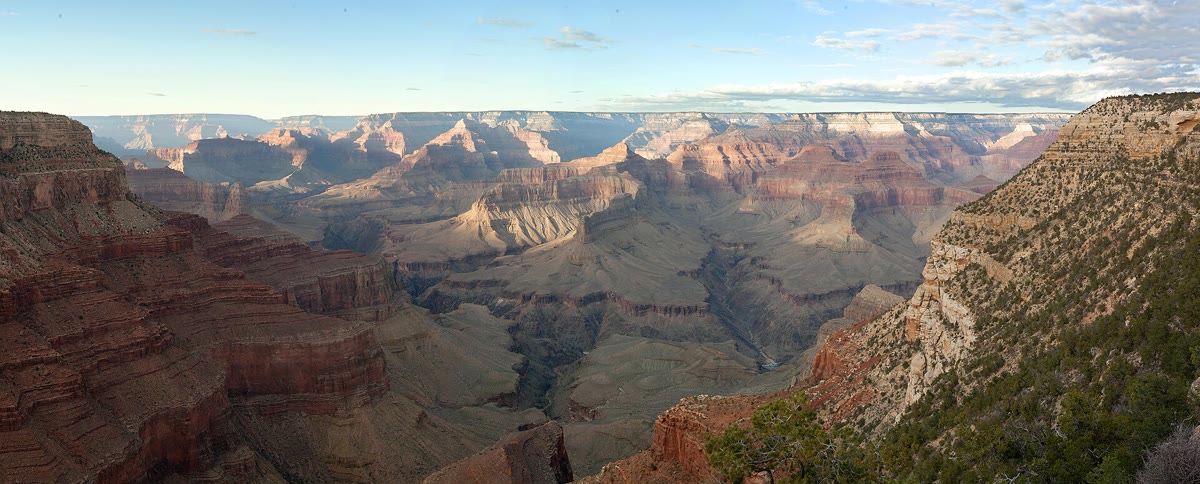
The Grand Canyon, in Arizona (United States), is on average deep. Its walls are made of layers of rock, one on top of the other, red, brown, grey and cream. In the topmost layer, the Kaibab Limestone, the rangers point out shells: the shells of brachiopods, animals that lived on the floor of a sea. That rock formed at the bottom of an ocean, and it now forms the rim of the canyon, high above the sea.
How does a pile of loose sand and mud become solid rock? How can a shell last for so long that it ends up inside a cliff? And what do layers and fossils tell us about places as they were long ago?
You already know
Rocks are slowly broken into pieces at the surface (weathering); water, wind and ice carry the pieces away (erosion) and lay them down where they slow down and stop (deposition): the heaviest first, the fine mud only where the water is almost still (Chapter 10). A sedimentary rock forms at the surface from grains of sand and mud, or from shells, laid down in layers and hardened: sandstone, shale, limestone. The rock cycle turns the rocks of each family, slowly, into the others (Chapter 15).
21.1 Sediments settle in layers
Wherever water, wind or ice drops what it was carrying, a loose deposit builds up: gravel and sand on a river bed, mud on the bottom of a lake, sand on a beach or in a dune, shells on the floor of the sea.
Definition 21.1 (Sediment)
A sediment is loose material laid down by water, wind or ice: gravel, sand, mud, or the shells and skeletons of living things. It collects at the bottom of rivers, lakes and seas, and on land where the wind or the ice drops it.
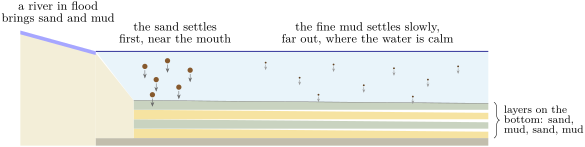
Sediments settle in a particular order. When muddy water slows down, the largest and heaviest grains sink first and the smallest and lightest last. Each time the water changes — a flood that brings sand, then calm weeks when only fine mud reaches the bottom — the grains that settle change too, and a new layer starts. Little by little, the bottom of a lake or of a sea is covered with a pile of layers, the oldest at the bottom of the pile.
Definition 21.2 (Sedimentary layer)
A sedimentary layer, or stratum (plural strata), is a sheet of sediment, or of the rock it became, laid down at one time. It has a base and a top, and it differs from the layers above and below it in the size of its grains or in what it is made of.
Sediments settle from water or air, so they are laid down flat, like the pages of a book lying on a table. When layers are found tilted or folded, something moved them after they formed. Layering is the clearest mark of a sedimentary rock: you saw it in the walls of the Grand Canyon.
In the lab — Layers in a jar (in class, with the teacher)
Put a handful of gravel, two handfuls of sand and a few spoonfuls of soil in a tall glass jar; fill it with water, close it tightly and shake it. Set it down and watch for a few minutes: the gravel reaches the bottom at once, the sand a little later, and the fine mud keeps the water cloudy for hours. The next day, add a little more soil and sand, shake gently, and let it settle again. How many layers can you count? Which grains are at the bottom of each one?
21.2 From sediment to rock
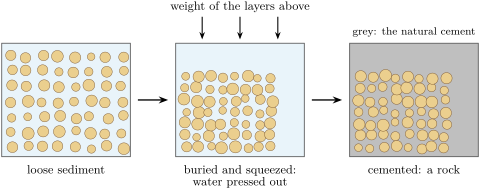
A layer does not stay on top for long. Other layers settle over it, then others, and it is buried deeper and deeper. Under the weight of the layers above, the grains are pressed closer together and the water between them is squeezed out. Water seeping through the pile leaves minerals between the grains, a natural cement that sticks them together. Over a long time, with more layers piling up and slow chemical changes, the loose sediment at the bottom of the pile becomes rock.
Each kind of sediment gives its own rock.
| sediment | the rock it becomes |
|---|---|
| gravel and pebbles | conglomerate |
| sand | sandstone |
| mud | mudstone, or shale when it splits into thin sheets |
| shells and skeletons | limestone |
| plant remains, buried in a swamp | coal |
Most of the rocks you can see at the surface of the Earth are sedimentary. The pile of layers they form is the history book of the place: each layer is a page, and the oldest pages are at the bottom.
21.3 How a fossil forms
Definition 21.3 (Fossil)
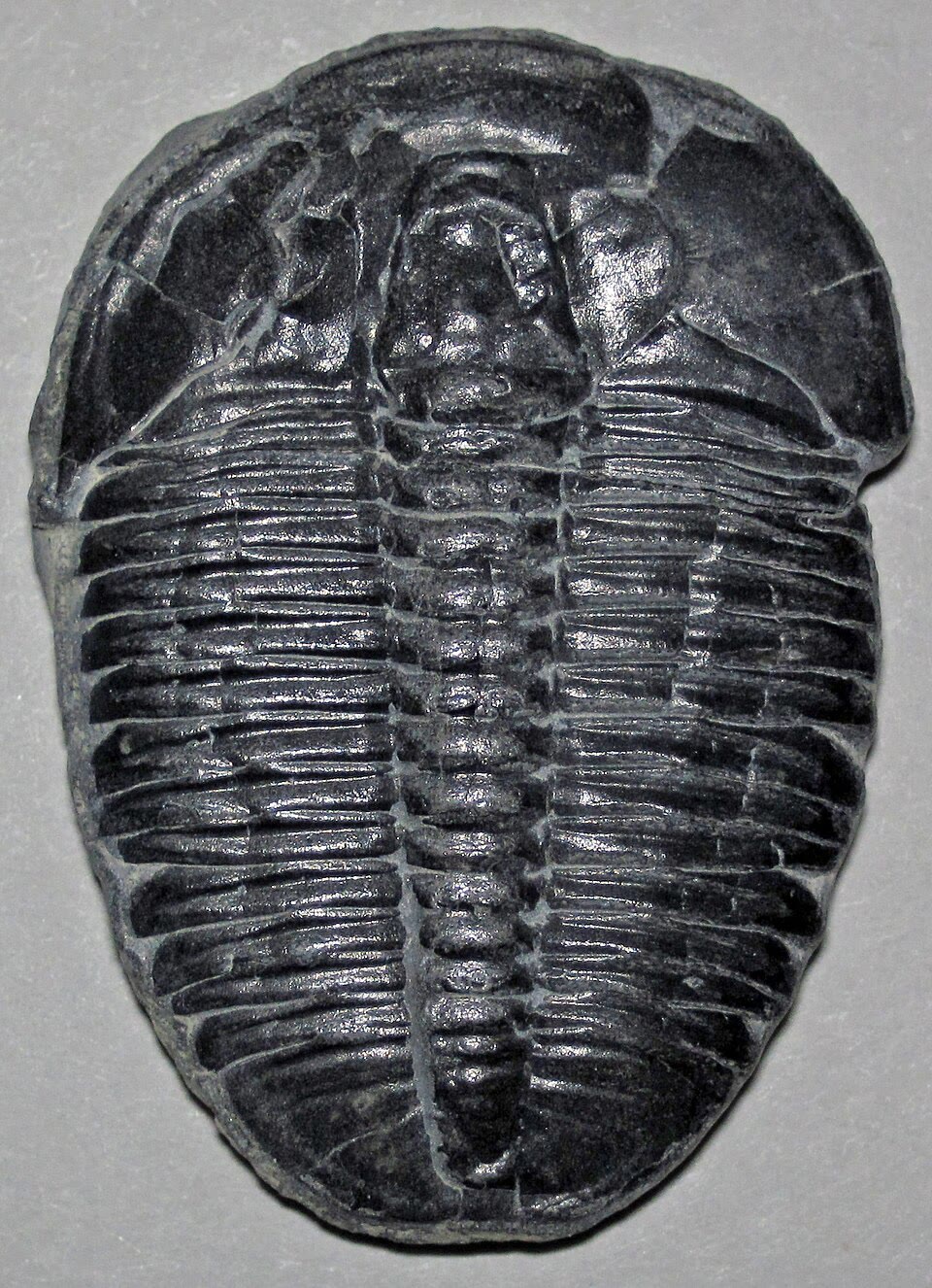
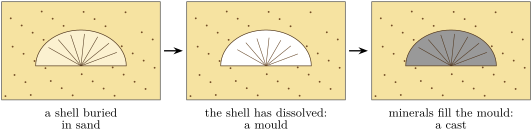
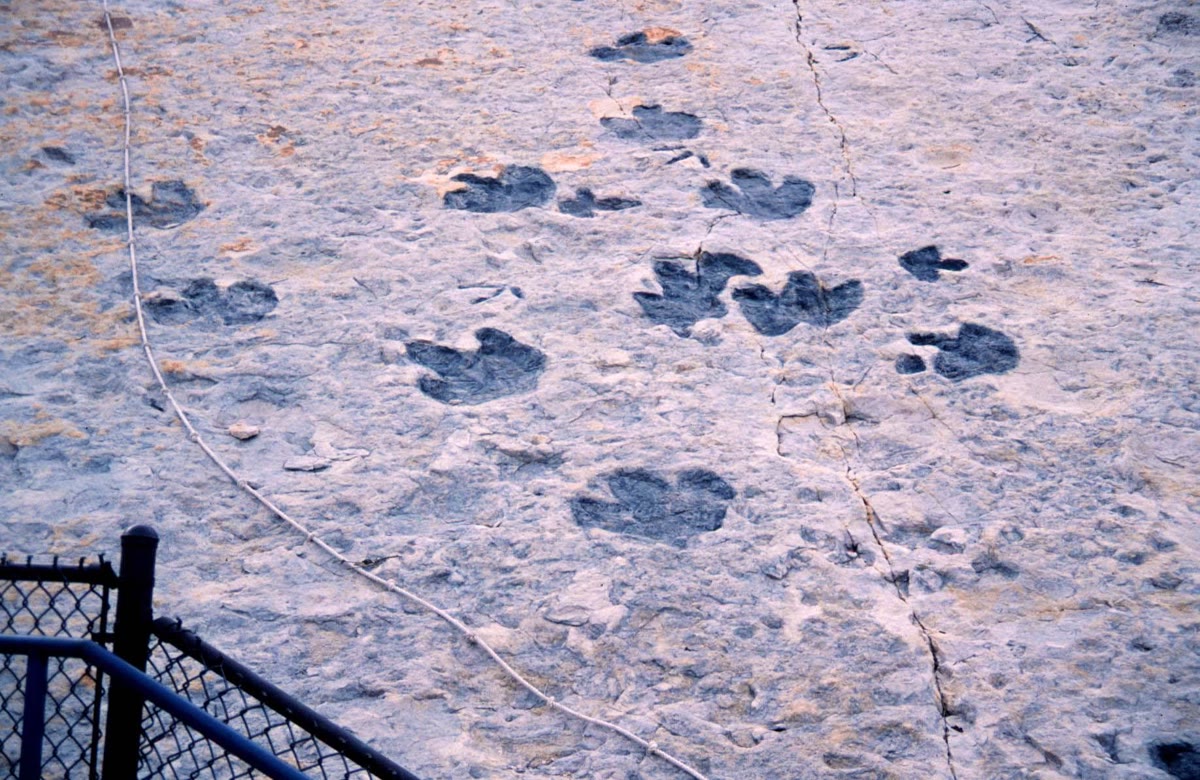
A fossil is the remains, or the trace, of a living thing of long ago, kept in rock. Some fossils are the hard parts of the body — a shell, a bone, a tooth, wood — turned to stone. Others keep only a shape: a mould is the hollow imprint left in the rock where a shell or a bone has dissolved; a cast is the copy that forms when a mould is filled with new mineral matter or sediment. A trace fossil is a sign of what an animal did — a footprint, a burrow, a trail — and not a part of its body.
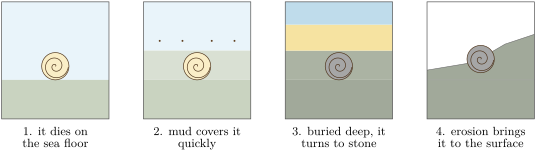
A fossil starts its life as a dead animal or plant on the bottom of a sea or a lake. If it stays uncovered, bacteria break it down and the water slowly dissolves what is left. It has a chance only if it is buried quickly, under sediment that settles over it and shuts it off. Then, as the sediment turns to rock, water seeping through the layers brings minerals that fill every tiny hole of the shell or the bone: it turns to stone. Long afterwards, the layers above may be worn away, and the fossil appears at the surface.
Most living things leave no fossil at all. Soft bodies rot before they can be buried; even shells and bones break or dissolve if they lie uncovered for long. The best place to become a fossil is the bottom of a quiet sea or lake, where fine mud settles over the remains and protects them. That is why the fossils found in rocks are mostly shells, and the tiny shells and remains of microscopic plants and animals; dinosaurs, the most famous fossils, are only a very small part of them.
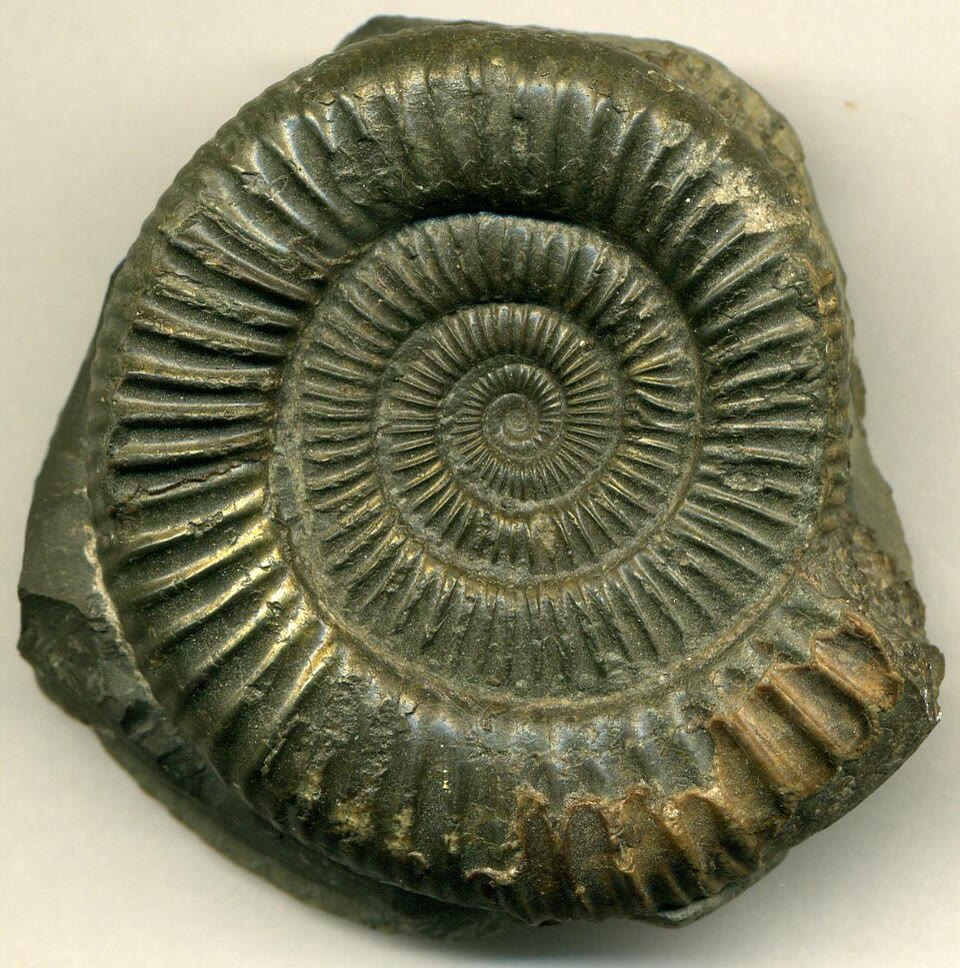
Sometimes the shell itself does not last. Buried in sand, it is slowly dissolved by the water seeping through the grains, and only a hollow remains, with the shape of the shell printed on its walls: a mould. If minerals later settle in the hollow and fill it, they make a copy of the shell: a cast.
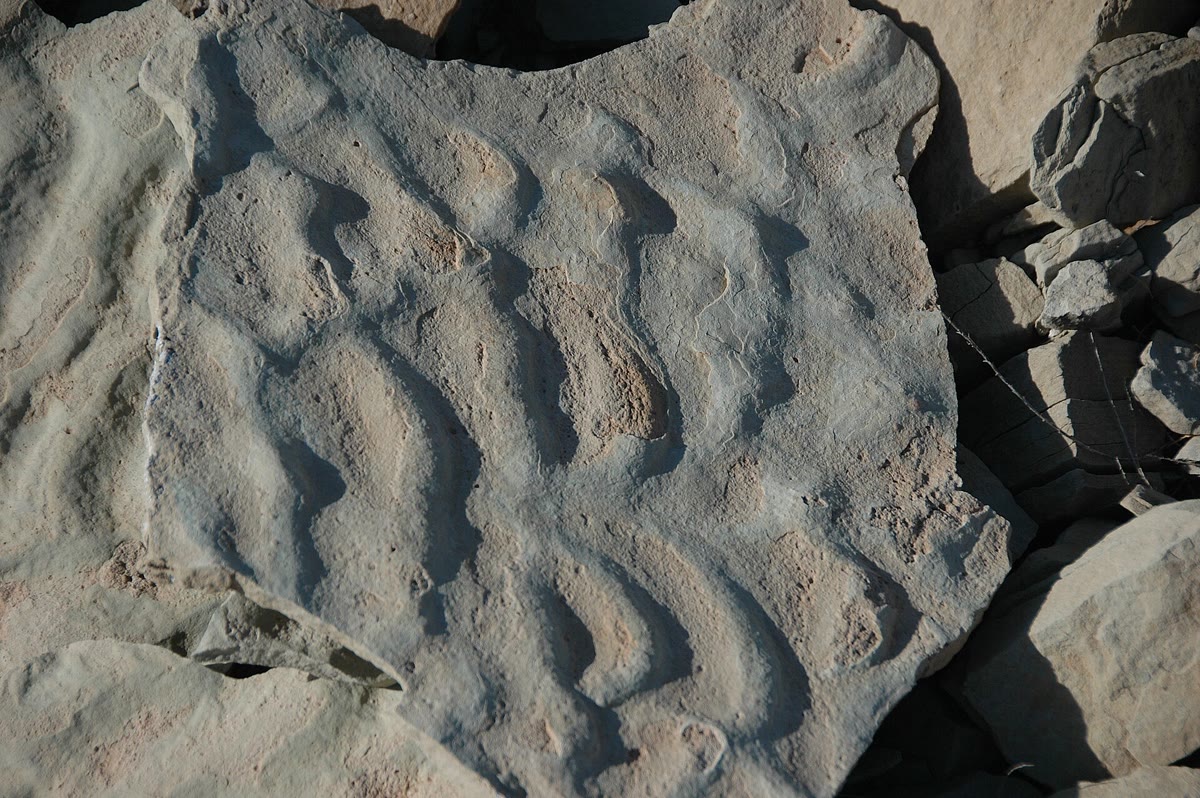
Animals also leave fossils of what they did. An animal walking on the soft, wet mud of a river bank or a shore leaves footprints. Most are washed away by the next wave or the next flood. But if sand covers them before they are erased, the footprint is filled, the sand later turns to sandstone, and when the rock splits along the layer, it shows the footprint and, on the other side, its cast.
Biology uses fossils to follow the long history of living things. In this book, fossils are clues of another kind: they tell us what the place was like when the animal lived there.
21.4 Layers and fossils, a record of the past
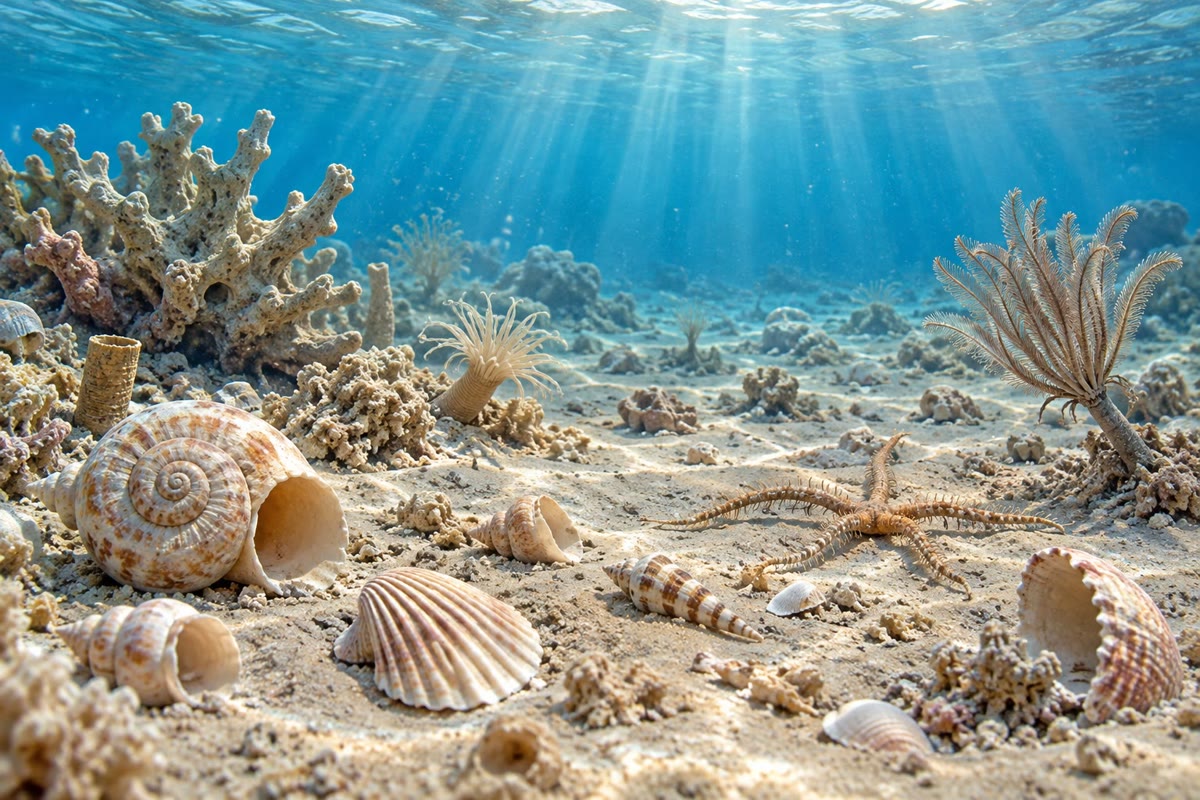
Each layer keeps the marks of the place where it was laid down. Reefs of coral grow today in warm, clear, shallow seas; ripple marks form on sand in shallow water, at the edge of a lake, a river or a sea; coal formed from the plants of ancient forests and marshes; brachiopods, crinoids and trilobites lived only in the sea. When the same clues are found in an old layer, the place was probably like that when the layer formed.
| clue in the layer | the place when the layer formed |
|---|---|
| corals | a warm, shallow, clear sea |
| shells of sea animals (brachiopods, crinoids, trilobites) | a sea |
| ripple marks on the surface of a layer | shallow water, at the edge of a lake, a river or a sea |
| footprints | soft, wet mud or sand, often on a shore or a river bank |
| coal | a swamp forest or a marsh |
| leaves and dragonfly wings | land, with plants growing |
Method 21.4 (Reading a layer)
- Look at the grains: coarse grains settle where the water moves fast, fine mud only where it is calm.
- Look for fossils and marks (corals, shells, footprints, ripple marks, plant remains, coal) and use the table above.
- Put the clues together into one picture of the place: land or sea, shallow or deep, calm or moving water.
Example 21.5 (The top of the Grand Canyon)
The Kaibab Limestone, the top layer of the Grand Canyon, is full of brachiopod shells and the stem pieces of crinoids, both sea animals. It formed on the floor of a sea. Today the same layer lies up to about ( feet) above sea level: since it formed, the whole region has been raised.
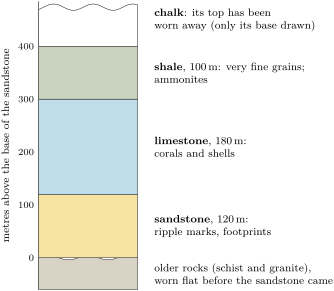
A pile of layers can be drawn as a column: the layers stacked in the order they formed, with their thickness to scale and their clues noted at the side. The column of the Varden Hills, the invented region of the exercises of this series, is below.
Remark 21.6 (Look, photograph, leave it)
In many protected places, taking a fossil away is forbidden: in the Grand Canyon, for example, it is against the law to dig up, move or take any fossil. A visitor who finds one takes a photograph or makes a drawing, leaves it where it is for others to see and for scientists to study, and tells a ranger.
In the field — Sediments being laid down today
On a beach, a lake shore or the bank of a stream, with an adult, look at the sand under shallow water: the moving water shapes it into ripples, like the ones kept in the old sandstone. Leave a footprint in the wet sand near the water’s edge and watch what the next waves do to it. After a rainy day, look at a puddle that has dried out: a thin skin of fine mud often covers the sand at its bottom — the finest grains settled last, when the water was still. Draw what you see, and note where and when.
21.5 Exercises
Exercise 21.1 ★
Match each word with its meaning: sediment; stratum; fossil; mould; cast; trace fossil. (a) A hollow left in a rock where a shell has dissolved. (b) A footprint or a burrow kept in a rock. (c) Loose material laid down by water, wind or ice. (d) A stone copy made when a hollow fills with minerals. (e) A sheet of sediment laid down at one time. (f) The remains or trace of a living thing of long ago, kept in rock.
Exercise 21.2 ★
Put these steps in order, to tell how a shell becomes a fossil at the surface: (a) erosion wears away the layers above it; (b) the animal dies on the sea floor; (c) new layers pile up and the shell turns to stone; (d) mud covers the shell quickly.
Exercise 21.3 ★
Use the table of clues. Where did each layer form? (a) A limestone full of corals. (b) A sandstone whose surface shows ripple marks. (c) A dark layer of coal. (d) A shale with leaf prints and the wing of a dragonfly.
Exercise 21.4 ★
True or false? Correct the false ones. (a) Every animal that dies becomes a fossil one day. (b) A footprint can be a fossil. (c) When muddy water slows down, the fine mud settles first. (d) Sediments are laid down flat.
Solution
Solution of Exercise 21.4.
(a) False: most living things leave no fossil; they rot or dissolve before they are buried. (b) True: it is a trace fossil. (c) False: the largest and heaviest grains settle first, the fine mud last. (d) True.
Exercise 21.5 ★★
Use the column of the Varden Hills. (a) Give the thickness of the sandstone, the limestone and the shale. (b) What is their total thickness? (c) What percentage of this total is limestone? Round to the nearest whole number. (d) Why does the column give no thickness for the chalk?
Solution
Solution of Exercise 21.5.
(a) Sandstone , limestone , shale . (b) . (c) : 45 %. (d) Its top has been worn away by erosion: what is left is not the whole layer, and how much is left changes from place to place.
Exercise 21.6 ★★
A pupil shakes a jar of water with gravel, sand and mud, and lets it settle. (a) Draw the jar the next day, and label the layers. (b) Why is the water still cloudy after one hour? (c) She adds sand and mud again and lets it settle. What does she see at the bottom now? (d) Which layer of the jar formed first?
Solution
Solution of Exercise 21.6.
(a) From the bottom up: gravel, then sand, then mud on top, under the clear water. (b) The tiny mud grains sink very slowly: they are still falling after an hour. (c) A second set of layers on top of the first: sand, then mud again. (d) The gravel at the very bottom.
Exercise 21.7 ★★
Which of these has the best chance of becoming a fossil, and which the least? Explain. (a) A jellyfish washed onto a rocky shore. (b) A snail shell buried in the mud of a calm lake. (c) A bone lying for years on a dry plain. (d) A clam shell covered by sand in a river flood.
Solution
Solution of Exercise 21.7.
Best: (b), a hard shell, buried quickly under fine mud in calm water. Then (d): the shell is hard and buried, but a flood can also move and break it. Least: (a), a soft body with no hard parts, on rocks where no mud settles to cover it. (c) is not much better: the bone stays uncovered and is broken down and worn away.
Exercise 21.8 ★★
A shell is buried in sand that becomes sandstone. Water seeping through the rock dissolves the shell completely. (a) What is left in the rock? (b) Later, minerals fill this hollow. What forms? (c) Is the shell itself still there? (d) Why are moulds and casts found more often in sandstone than in shale? (Think about how easily water passes between the grains.)
Solution
Solution of Exercise 21.8.
(a) A hollow with the shape of the shell printed on its walls: a mould. (b) A cast, a stone copy of the shell. (c) No: the shell has dissolved; the cast is made of new minerals. (d) Water passes easily between the large grains of sand, so it can reach and dissolve the shell; in fine mud it passes much less easily.
Exercise 21.9 ★★
The Grand Canyon is on average deep. (a) Write this depth in metres. (b) Suppose the canyon walls were made of layers thick each: how many layers would fit from the rim to the bottom? (c) A layer of is what percentage of the depth?
Solution
Solution of Exercise 21.9.
(a) . (b) layers. (c) : 10 %.
Exercise 21.10 ★★
Dinosaur footprints are found in a sandstone. (a) Were the dinosaurs walking on hard rock? Explain. (b) Why do most footprints left on a muddy shore disappear? (c) What had to happen soon after the dinosaurs passed for the footprints to be kept? (d) Is a footprint a body fossil or a trace fossil?
Solution
Solution of Exercise 21.10.
(a) No: a foot leaves a print only in soft ground, wet sand or mud; the ground became rock later. (b) The next wave or flood washes them away. (c) New sediment had to cover them and fill them quickly, before they were erased. (d) A trace fossil: it shows what the animal did, not a part of its body.
Exercise 21.11 ★★★
In a lake, every flood leaves a layer of sand about thick, and the calm weeks after it a layer of mud about thick (exercise data). (a) How thick, in millimetres, is one pair of layers? (b) A core taken from the lake bottom is long and made only of such pairs. How many floods does it record? (c) Near the river mouth the sand layers are thicker, far out they are thinner. Explain why. (d) Why is there more mud than sand far from the mouth?
Solution
Solution of Exercise 21.11.
(a) . (b) pairs: the core records 40 floods. (c) The sand is heavy: it settles soon after the river enters the lake, near the mouth; only a little of it travels far. (d) Far out, only the fine mud is still in the water: it settles there slowly, when the water is calm.
Exercise 21.12 ★★★
The fossils found in rocks are mostly shells and tiny remains; fossils of soft animals are rare, and dinosaurs are only a very small part of all fossils. (a) Explain why shells are so common. (b) Explain why soft animals are rare. (c) A scientist wants to know all the animals that lived in an ancient sea. Can the fossils give the full list? Explain.
Solution
Solution of Exercise 21.12.
(a) Shells are hard: they last long enough to be buried, and many animals with shells lived on the sea floor, where mud settles over them. (b) Soft bodies rot before they can be buried. (c) No: soft animals almost never leave fossils, so the list from fossils is incomplete; it shows mostly the animals with shells or bones.
21.6 Problem: The column of the Varden Hills
Problem 21.1
Weekend problem — the layers of the Varden Hills are read one by one, their fossils tell where they formed, and the time needed to pile up the limestone is worked out
Use the column of the Varden Hills in this chapter. Its sandstone shows ripple marks and footprints; its limestone holds corals and shells; its shale is made of very fine grains, with ammonites; the chalk at the top has been partly worn away.
Part I — Reading the layers.
- List the four layers, from the first one laid down to the last.
- Give the thickness of the sandstone, the limestone and the shale, and their total.
- What percentage of this total is limestone?
- Why can nobody say how thick the chalk was when it formed?
Part II — The fossils in them.
- Where did the sandstone form? Give two clues.
- Where did the limestone form? Give the clue.
- The shale is made of very fine grains. Was the water calm or moving when it was laid down? Explain.
- Tell the story of the place in three sentences, from the sandstone to the shale.
Part III — How long it took.
- Write the thickness of the limestone in centimetres.
- Suppose the sandstone piled up by every 20 years. How many years did its take?
- Suppose the limestone piled up by every 100 years. How many years did of limestone take?
- How many years did the of limestone take? How many times longer is that than the sandstone?
Solution
Solution of Problem 21.1.
1. Sandstone, limestone, shale, chalk (the first at the bottom of the column).
2. , and ; total .
3. : 45 %.
4. Its top has been worn away: the upper part of the layer is gone, and nobody can measure what is no longer there.
5. In shallow water at the edge of a lake, a river or a sea: ripple marks form on sand in shallow water, and footprints are left in soft, wet sand or mud, often on a shore.
6. In a warm, shallow, clear sea: the corals.
7. Calm: fine mud settles only where the water is almost still.
8. First the place was a shore, with shallow water and soft sand where animals walked. Then the sea covered it: a warm, shallow sea where corals grew and shells piled up. Later the water became calmer, perhaps deeper, and only fine mud settled, with the shells of ammonites, animals related to squids and octopuses.
9. cm.
10. cm, and years.
11. cm, and years.
12. : about 1 800 000 years, almost two million years. That is times longer than the sandstone.