全部书籍

专业

应用 关于 Coach 登录 开始阅读

书籍暂未推出简体中文版——当前显示英文版。

Earth and Space Sciences · 术语表

什么是 Fossil?

又称: mould · cast · trace fossil

Definition 21.3 Primary & Middle School Earth and Space Sciences · 第 21 章 — Sediments and Fossils

A fossil is the remains, or the trace, of a living thing of long ago, kept in rock. Some fossils are the hard parts of the body — a shell, a bone, a tooth, wood — turned to stone. Others keep only a shape: a mould is the hollow imprint left in the rock where a shell or a bone has dissolved; a cast is the copy that forms when a mould is filled with new mineral matter or sediment. A trace fossil is a sign of what an animal did — a footprint, a burrow, a trail — and not a part of its body.
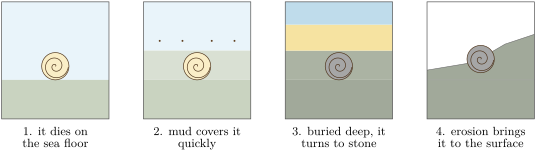
How a fossil forms (a drawing, not to scale): a shell is buried quickly under mud; buried deeper under new layers, it turns to stone; long afterwards, erosion wears away the layers above and the fossil appears at the surface.
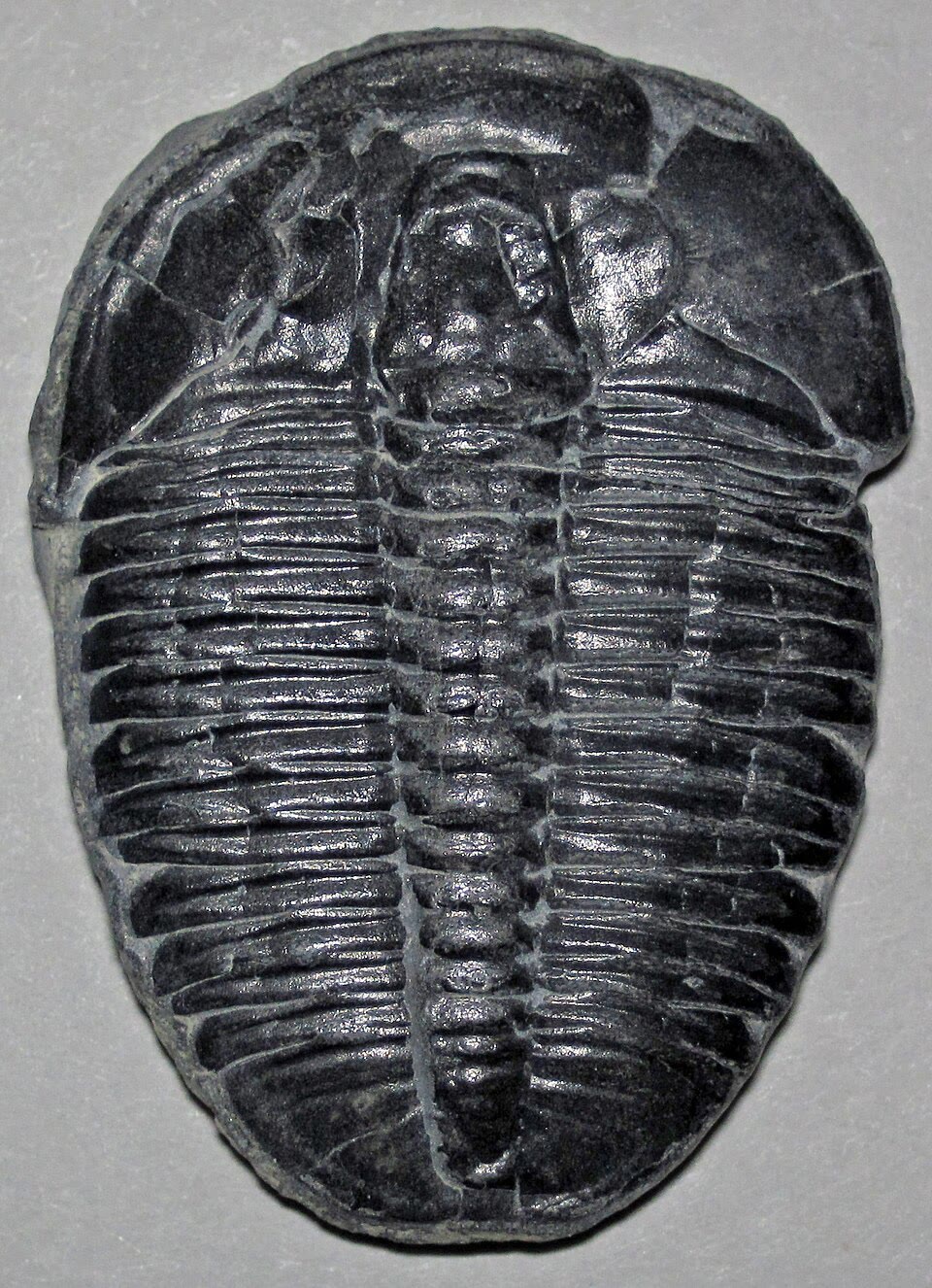
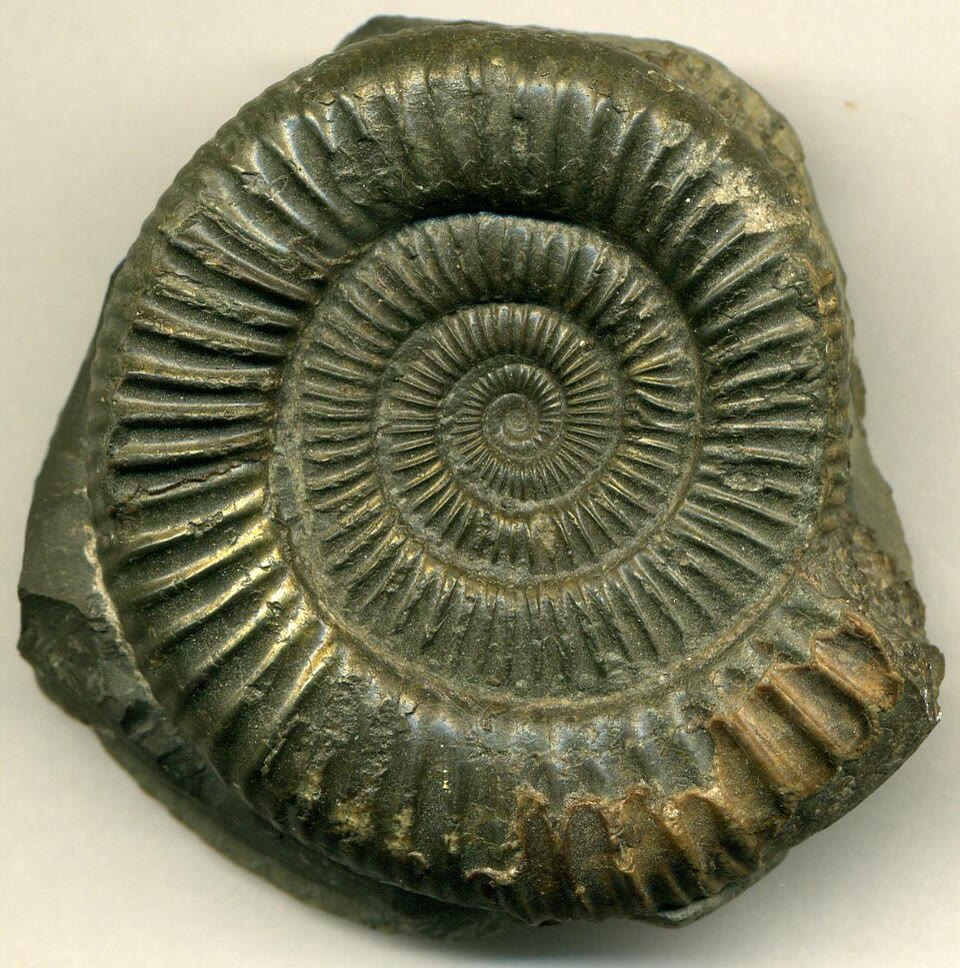
Two fossils of animals with hard shells. Photographs: James St. John (CC BY 2.0, via Wikimedia Commons).
An ammonite, an extinct animal with a coiled shell, a relative of the squids and octopuses, 5.7 cm5.7\,\mathrm{cm} across, from the coast of Yorkshire (England).
Two fossils of animals with hard shells. Photographs: James St. John (CC BY 2.0, via Wikimedia Commons).
A trilobite, an extinct sea animal whose body has three lobes, about 2.6 cm2.6\,\mathrm{cm} across, from Utah (United States).
Two fossils of animals with hard shells. Photographs: James St. John (CC BY 2.0, via Wikimedia Commons).
在原文中阅读 →