
Biology · Glossary

What is Ancestral and derived states?

Definition 26.4 High School Biology · Chapter 26 — Reading Kinship: Phylogenetic Trees

A character is a feature that varies among the species compared (the presence of a vertebral column, of four limbs, of an amniotic egg, of hair). Each character has an ancestral state — the one the common ancestor of the group had — and one or more derived states that appeared later in some lineage. Only shared derived states indicate kinship: two species sharing a derived state inherited it from the ancestor in which it arose. A shared ancestral state says nothing, since everyone’s ancestor had it.
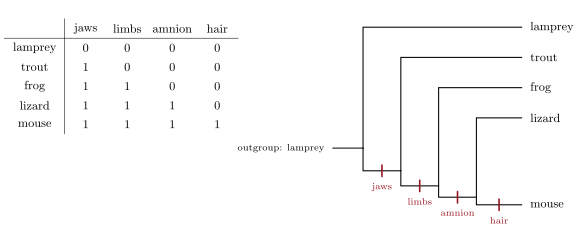
From matrix to tree. Each derived state (1) shared by a set of species marks the node of their common ancestor; the red bars show where each character appeared. The lamprey, lacking every derived state, is the outgroup that fixes the ancestral states.
Read in context →