Coach
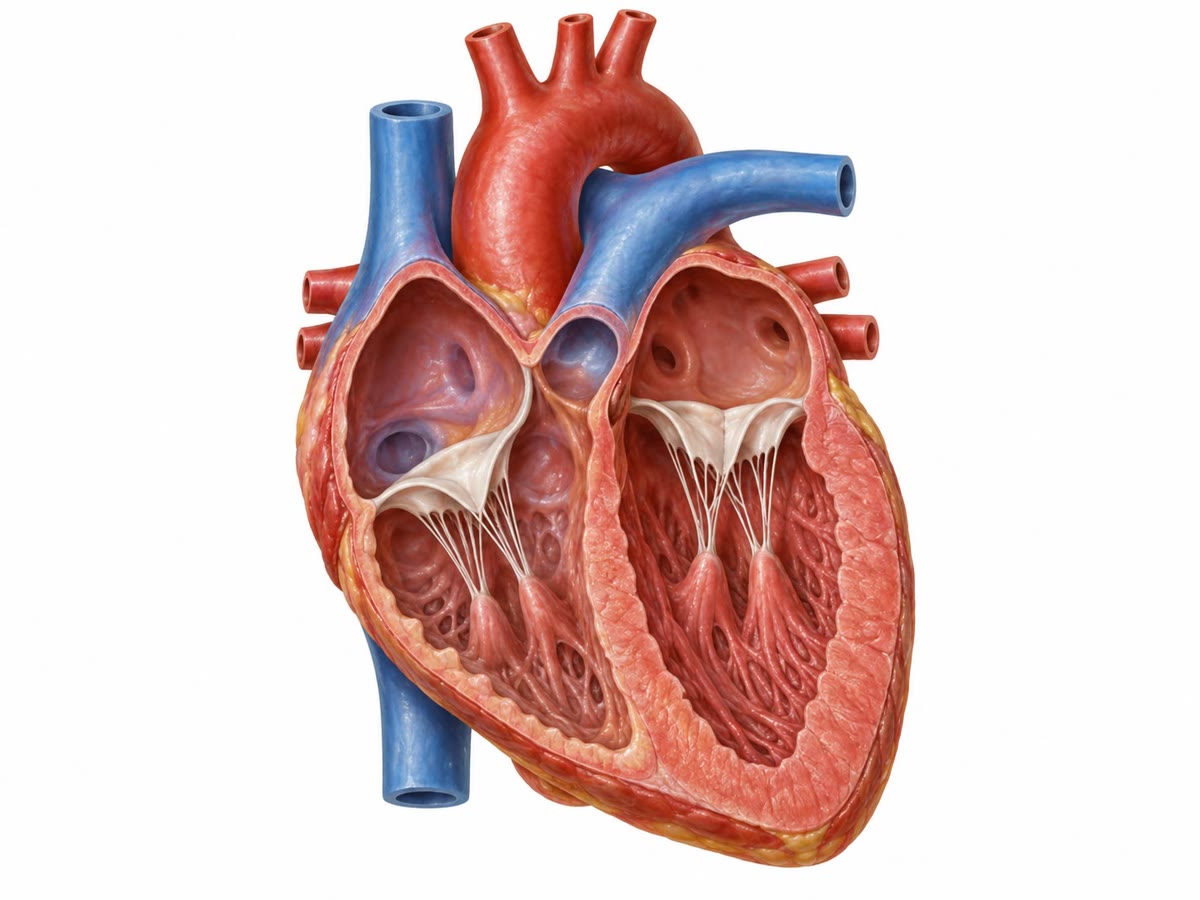
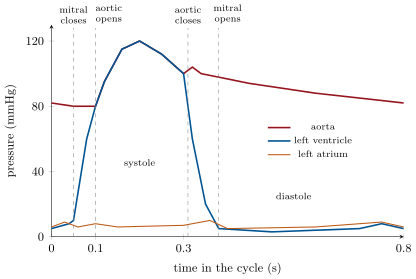
CoachThe heart is two pumps side by side, each an atrium that receives blood from the veins and a ventricle that ejects it into an artery. The right heart takes blood from the venae cavae and sends it to the lungs through the pulmonary artery; the left heart takes it back from the pulmonary veins and sends it round the body through the aorta. Four valves make the flow one-way: the atrioventricular valves (tricuspid on the right, mitral on the left), flaps tethered by cords to papillary muscles so that they cannot be blown back into the atrium; and the semilunar valves (pulmonary and aortic), three pockets that fill and seal when the arterial pressure exceeds the ventricle’s. The valves are passive: they open and close on pressure differences alone. The ventricular wall is myocardium, striated muscle of branched cells joined end to end by intercalated discs full of gap junctions, so that the whole ventricle is electrically one cell and contracts as one; the left ventricle’s wall is three times thicker than the right’s because it pumps against five times the pressure. The heart muscle is fed by its own coronary arteries, which fill in diastole, and it runs almost entirely on aerobic metabolism — it cannot borrow.