
সব বই

পেশাদার

1 Markets I: The Ecosystem and Exchange-Traded Marketsবাজার অনলাইন 2 Markets II: Rates, FX and Creditবাজার অনলাইন 3 Markets III: Commodities, Energy and Cryptoবাজার অনলাইন 4 Quantitative Methodsপদ্ধতি অনলাইন 5 Derivatives and Volatilityডেরিভেটিভস অনলাইন 6 Rates, Credit, XVA and Riskসুদহার, ঋণ ও ঝুঁকি অনলাইন 7 Research Craft: Predictors, Backtests, Measurement, Portfoliosগবেষণা অনলাইন 8 Strategies I: Equities and Futuresকৌশল অনলাইন 9 Strategies II: Volatility, Relative Value, Macro and the Bank Desksকৌশল অনলাইন 10 Microstructure and Executionএক্সিকিউশন অনলাইন 11 Market Making and High-Frequency Tradingমার্কেট মেকিং অনলাইন 12 Machine Learning for Marketsমেশিন লার্নিং অনলাইন 13 Low-Latency Softwareপ্রযুক্তি অনলাইন 14 Networks, Hardware and Trading Infrastructureপ্রযুক্তি অনলাইন 15 Research, Data and Risk Platformsপ্রযুক্তি অনলাইন 16 The Desk and the Firmপ্রতিষ্ঠান অনলাইন 17 The Industry: Firms, Roles and Careersক্যারিয়ার অনলাইন 18 Interviews I: Maths, Probability and Speedক্যারিয়ার অনলাইন 19 Interviews II: Markets, Trading Games and the Final Roundক্যারিয়ার অনলাইন 20 Interviews III: Codeক্যারিয়ার অনলাইন
অ্যাপ পরিচিতি Coach সাইন ইন পড়া শুরু করো

বইগুলো এখনো বাংলা ভাষায় পাওয়া যায় না — ইংরেজি সংস্করণ দেখানো হচ্ছে।

Biology · পরিভাষা

Chambers and valves কী?

Definition 17.1 University Biology — Year 2 · অধ্যায় 17 — The Heart and the Cardiac Cycle

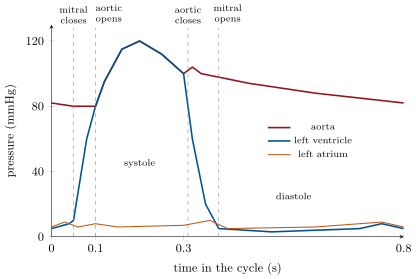
The heart is two pumps side by side, each an atrium that receives blood from the veins and a ventricle that ejects it into an artery. The right heart takes blood from the venae cavae and sends it to the lungs through the pulmonary artery; the left heart takes it back from the pulmonary veins and sends it round the body through the aorta. Four valves make the flow one-way: the atrioventricular valves (tricuspid on the right, mitral on the left), flaps tethered by cords to papillary muscles so that they cannot be blown back into the atrium; and the semilunar valves (pulmonary and aortic), three pockets that fill and seal when the arterial pressure exceeds the ventricle’s. The valves are passive: they open and close on pressure differences alone. The ventricular wall is myocardium, striated muscle of branched cells joined end to end by intercalated discs full of gap junctions, so that the whole ventricle is electrically one cell and contracts as one; the left ventricle’s wall is three times thicker than the right’s because it pumps against five times the pressure. The heart muscle is fed by its own coronary arteries, which fill in diastole, and it runs almost entirely on aerobic metabolism — it cannot borrow.
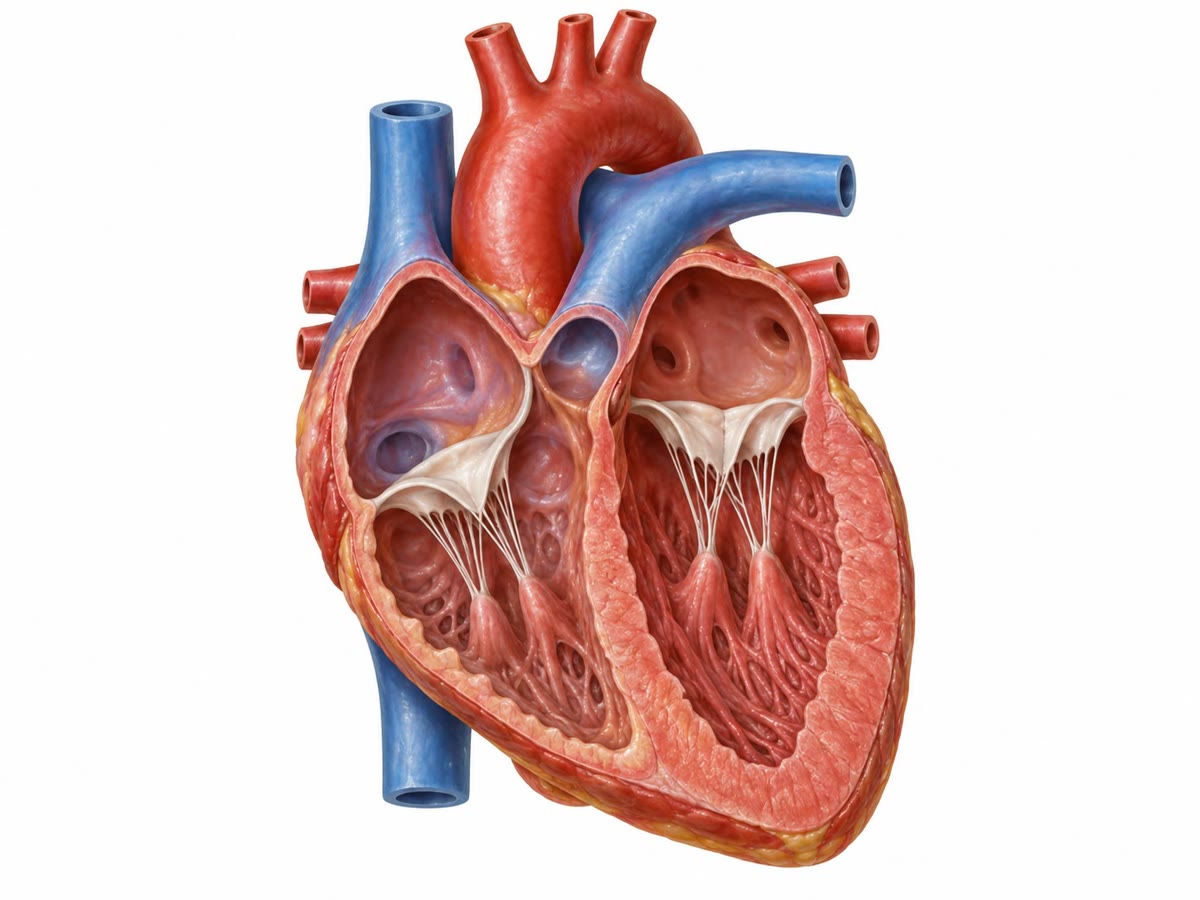
The heart in frontal section: two atria above, two ventricles below, the thick left ventricle, the atrioventricular valves with their cords, and the two great arteries leaving the top.
Pressures in the left heart through one beat. The ventricle squeezes a closed chamber until it exceeds the aortic pressure, ejects while it is above it, relaxes until it falls below the atrial pressure, and fills.
প্রসঙ্গসহ পড়ো →