 Coach
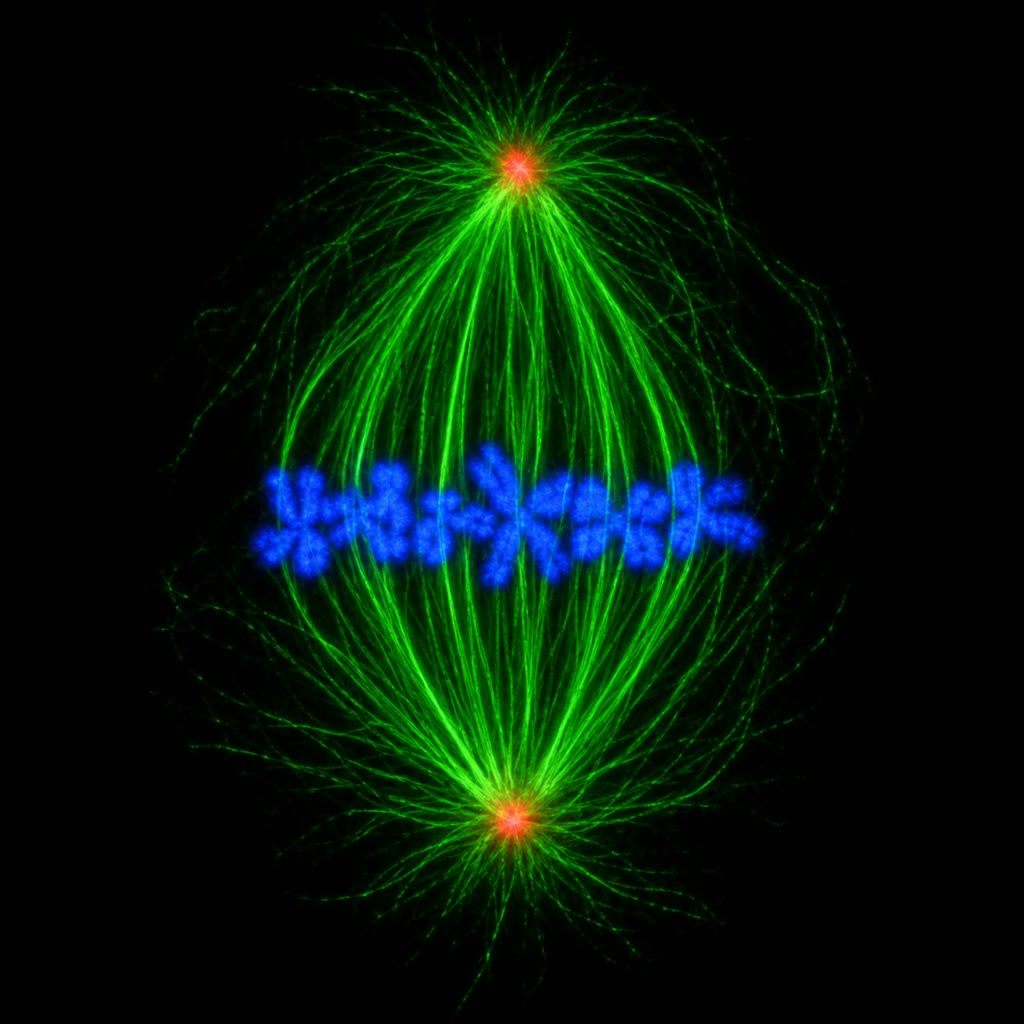
CoachA checkpoint is a control that halts the cycle at a transition until a condition is satisfied, by acting on the engine — inhibiting a CDK or an ubiquitin ligase. Three matter most. The restriction point in late G1 (Start in yeast): the cell proceeds only if growth factors, nutrients and size permit; beyond it the cycle completes without them. The G2/M checkpoint: damaged or unreplicated DNA, signalled by the ATM/ATR kinases of Chapter 3, keeps Cdc25 inhibited and so keeps Cdk1 phosphorylated and inactive. The spindle assembly checkpoint: a single kinetochore not attached to microtubules produces a diffusible inhibitor (Mad2 bound to Cdc20) that keeps the APC/C off, so that anaphase waits for the last chromosome. A fourth control has no waiting step but is equally strict: replication licensing. Origins are loaded with the MCM helicase only in G1, when CDK activity is low, and the loading factors are destroyed or inhibited once S phase begins, so that each origin fires once and only once per cycle — the reason a G2 nucleus in Rao and Johnson’s fusions could not be made to replicate.
Examples
Example 10.3 (Why the frog egg is a clock)
A fertilised frog egg divides twelve times in six hours with no growth, no transcription and no checkpoints, at intervals of : it is the oscillator of the theorem running bare, and an extract of its cytoplasm in a test tube goes on cycling, cyclin rising and falling, with nothing to divide. Adding a non-degradable cyclin B locks the extract in mitosis, since can never fall below ; blocking cyclin synthesis locks it in interphase. In a somatic cell the same engine is wrapped in the controls of the next section, which hold it at the thresholds until conditions are met, so that the period becomes a day rather than half an hour and can be indefinitely long.